REVIEW · BALINESE COOKING CLASSES
authentic Balinese organic cooking class in Ubud
Book on Viator →Operated by Amara Bali Family Tour · Bookable on Viator
Your lunch starts in the garden.
This Ubud organic cooking class is different from the usual recipe-only format because you learn the ingredients first, including what makes them organic and how they’re used in Balinese cooking. I especially liked the hands-on ingredient picking experience tied to the farm’s harvest timing, plus the fact that the kitchen work relies mostly on simple, manual tools.
One thing to consider: this is an outdoor-farm-and-garden experience for a few hours, so you should expect time outside and a steady pace from start to finish.
In This Review
- Key Takeaways Before You Go
- Ubud Organic Cooking Starts With the Farm, Not the Recipe
- Pickup, Welcome Drink, and Meeting Your Chef in Real Time
- Garden Walkthrough: Picking Staples and Spices You Can Name
- From Ingredients to Dishes: Cooking With Mostly Manual Tools
- Your Lunch: Eating What You Cook in an Outdoor Setting
- Transport Back to Your Accommodation
- Optional Swing and Natural Waterfall Extras
- Price and Value: Does $47 Make Sense in Four Hours?
- Who This Cooking Class Is Best For
- Should You Book This Ubud Organic Cooking Class?
- FAQ
- How long is the organic cooking class in Ubud?
- What is the price per person?
- Do you offer pickup from my accommodation?
- Is a mobile ticket included?
- How large is the group?
- What happens first when I arrive?
- Do we harvest ingredients ourselves?
- What if the weather is bad?
- Is there free cancellation?
Key Takeaways Before You Go
- Organic, ingredient-first teaching instead of just following a recipe
- Farm harvesting during the plantation’s timing (so the food story feels real)
- Garden-grown spices and staples you can see where they come from
- Small group limit of 10 for a more personal class feel
- Mostly manual cooking tools that make the process practical and hands-on
- Your meal is what you cook, then you’re typically finished with a return drop-off
Ubud Organic Cooking Starts With the Farm, Not the Recipe
In Ubud, it’s easy to find a cooking class. What I found more satisfying here is the order of events. You don’t start by copying a dish you barely understand. You start by learning about the organic ingredients you’ll use, and the chef talks through how those ingredients function in Balinese food.
That ingredient-first approach changes how you cook afterward. You’re not just memorizing steps; you’re learning what certain herbs, staples, and spices are doing in the dish. It also makes the class feel closer to a real Balinese kitchen workflow, where ingredients and preparation methods matter as much as flavor.
And yes, you get to see the raw materials in a real setting: the farm and the garden where the plants for cooking are grown.
You can also read our reviews of more cooking classes in Ubud

Pickup, Welcome Drink, and Meeting Your Chef in Real Time
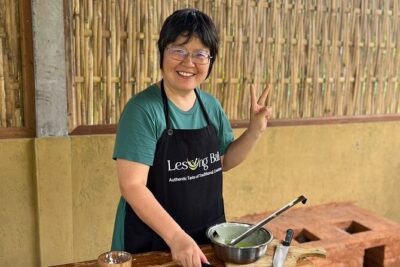
The experience starts with pickup from your accommodation in Ubud. That matters because you can focus on the day instead of coordinating transport in traffic. You’ll then head to the farm area where there’s a welcome drink, and the chef explains how the class works before you start cooking.
This pre-cooking orientation is more than a formality. When the chef sets expectations—what ingredients you’ll be using, what you’ll learn, and what the pacing will look like—it helps the rest of the afternoon feel smooth. The small-group size (up to 10 people) also tends to keep it interactive rather than rushed.
Garden Walkthrough: Picking Staples and Spices You Can Name
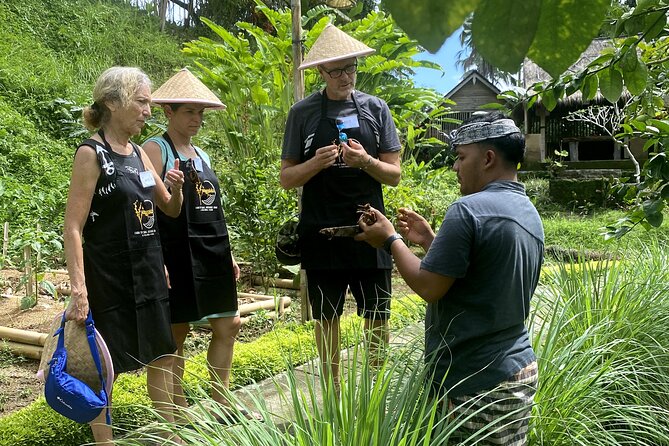
After the initial welcome, you move through the garden where ingredients for Balinese dishes are planted. This is where the class earns its organic emphasis in a tangible way. You’re not only told what to use—you’re guided on where it grows and why it’s part of Balinese cooking.
Then comes the best part: you pick certain staples directly from the farm during harvesting time. That detail makes a difference. Even if you’re not an agriculture nerd, it turns the meal into something you helped build from the start.
In the garden, the chef introduces Balinese food ingredients and their functions. One review also highlighted learning about medicinal uses of ingredients alongside food prep, which tells you the teaching isn’t limited to flavor. It’s about understanding ingredients in multiple ways, so you walk away with more than just a list of recipes.
If you like cooking classes that connect food to the ground beneath it—rather than just the final plate—this is exactly that.
From Ingredients to Dishes: Cooking With Mostly Manual Tools
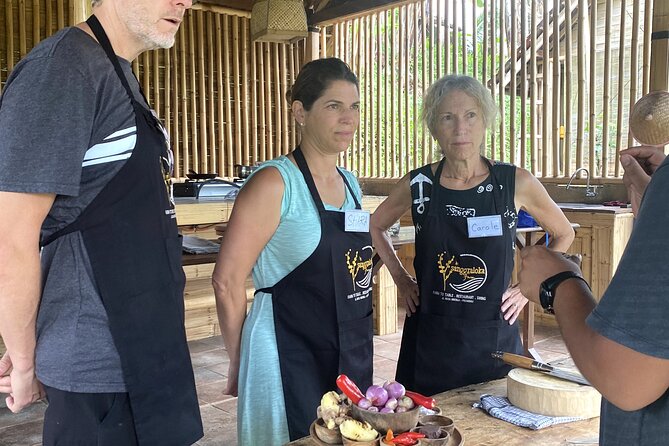
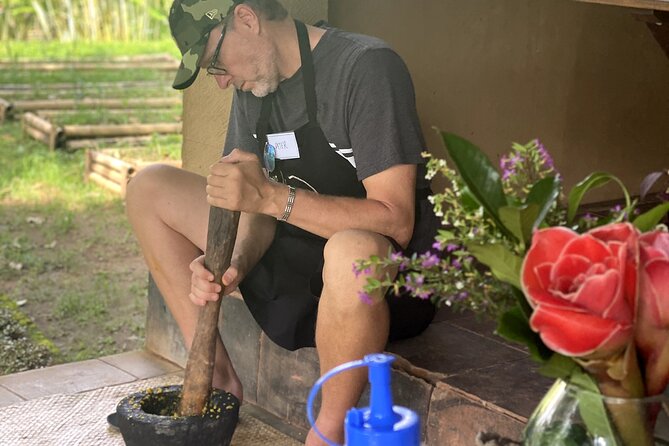
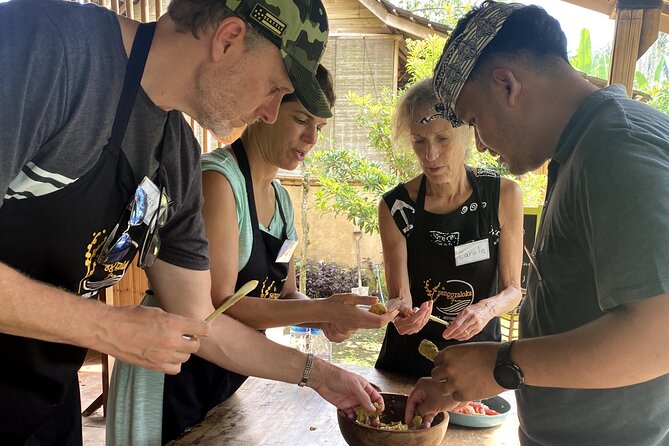
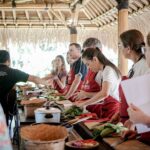
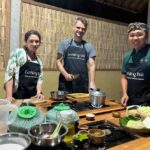
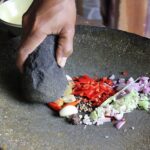
Now you get into the kitchen. The tools used for cooking are described as mostly manual, which shapes the experience in a practical way. You’ll feel the work more directly—grinding, mixing, and handling ingredients in a hands-on style rather than relying on modern shortcuts.
The chef guides you through preparing Balinese dishes, starting from the introduction of ingredients and moving step-by-step toward finished food. In one class example shared by a recent group, the teacher guided participants through making six different dishes. Even if your exact menu varies, the structure stays the same: you learn, you cook, and you end up eating the results of your own work.
What I like about this format is that it’s easier to replicate later at home. When a chef explains what an ingredient does and you’re actively involved in preparation, you’re more likely to understand the logic behind the dish rather than treating it like a one-time performance.
Your Lunch: Eating What You Cook in an Outdoor Setting
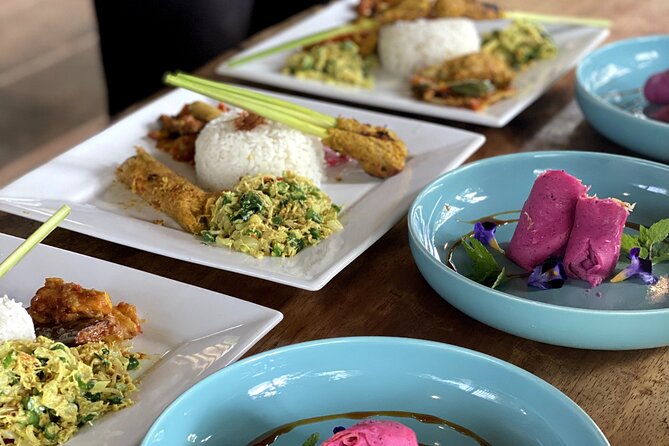
After cooking, you enjoy your original cooking lunch—what you made during the session. That’s the payoff for the effort. There’s no awkward moment where everyone watches someone else eat. You get to taste your own work.
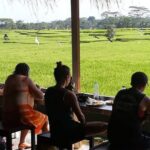
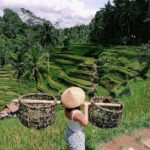
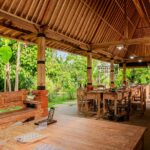
One review specifically mentioned eating over a rice terrace, which adds a scenic element to the meal. The class setting includes outdoors time tied to the farm and garden, so the lunch tends to feel like part of the environment rather than a separate restaurant stop.
This lunch moment also helps you learn faster. You can adjust your understanding right away: if a spice felt strong while you were handling it, you taste how it balances in the finished dish. If an ingredient seemed unusual during prep, you discover how it contributes to the overall flavor.
You can also read our reviews of more tours and experiences in Ubud

Transport Back to Your Accommodation
When the activities are done, you’re dropped back to your accommodation. That’s not just convenience—it’s one less variable. You don’t have to guess how long you’ll be out, and you don’t need to plan another ride after your meal.
For a four-hour experience, this end-to-end flow is a big part of the value. You can keep the rest of your day flexible, since the pickup and return are built into the schedule.
Optional Swing and Natural Waterfall Extras
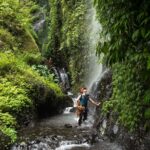
Some sessions include optional activities such as a swing and a natural waterfall. These add-ons can be a nice way to turn the day into more than just cooking, especially if you’re visiting Ubud for views and outdoor scenery.
Because these are described as optional, you should treat them as a bonus. If you’d rather focus strictly on cooking and learning, you can likely skip extra time and keep the day on track.
Price and Value: Does $47 Make Sense in Four Hours?
At $47 per person for about four hours, you’re paying for a guided, full-circle experience: pickup, farm and garden ingredient learning, cooking instruction, and the lunch you cook yourself.
Here’s why the price feels reasonable for what you actually get:
- You’re not just watching or eating. You’re actively cooking and harvesting staples during the farm’s timing.
- The class is small (up to 10 people). That tends to improve the teaching experience versus large groups.
- You receive transportation support inside Ubud via pickup and return drop-off, which saves time and hassle.
- Manual cooking and ingredient-first teaching add real skill-building value, not just a fun meal story.
If you typically pay similar money for cooking classes that focus mainly on the cooking portion, this one’s value comes from the ingredient learning in the farm and garden. That’s where the day earns its identity as organic and family-farm based.
Who This Cooking Class Is Best For
This experience is a strong match if you:
- Want a Balinese cooking class that starts with ingredients, not just recipes
- Like farm-to-table learning where you can connect plants to dishes
- Prefer a smaller setting with up to 10 people instead of a big group machine
- Enjoy practical cooking instruction using mostly manual tools
It may be less ideal if you:
- Want a fully indoor class with minimal outdoor time
- Prefer a quick, purely restaurant-style cooking demo where you don’t touch ingredients much
Should You Book This Ubud Organic Cooking Class?
If you want something more authentic than a standard recipe lesson, I think you’ll like this. The combination of organic ingredient focus, farm harvesting timing, and hands-on cooking plus your own lunch makes it feel complete.
Book it if you’re the type who likes to understand what you’re eating and why. Skip it if you mainly want a light activity that requires little effort. For the $47 price point and roughly four hours, this is the kind of class that leaves you with practical knowledge you can use, not just a full stomach and a photo.
FAQ
How long is the organic cooking class in Ubud?
It runs for about 4 hours.
What is the price per person?
The price is $47 per person.
Do you offer pickup from my accommodation?
Yes. Pickup is offered from your accommodation in Ubud, and you’re dropped back at the end.
Is a mobile ticket included?
Yes, the experience offers a mobile ticket.
How large is the group?
The class has a maximum of 10 travelers.
What happens first when I arrive?
You’ll be taken to the farm, receive a welcome drink, and your chef will explain the class before you start cooking.
Do we harvest ingredients ourselves?
You can directly pick staples from the farm during the harvesting time of the plantation, and you’ll then use those ingredients in the cooking process.
What if the weather is bad?
This experience requires good weather. If it’s canceled due to poor weather, you’ll be offered a different date or a full refund.
Is there free cancellation?
Yes. You can cancel up to 24 hours in advance for a full refund.