REVIEW · JUNGLE SWING EXPERIENCES
Ubud: Monkey Forest, Jungle Swing, Rice Terrace, and Water Temple
Book on Viator →Operated by Smile Bali Tours · Bookable on Viator
One day in Ubud feels like a whole chapter. This private day out strings together Monkey Forest, Tirta Empul, rice terraces, a jungle swing, and Tegenungan Waterfall, with an English-speaking driver-guide and round-trip pickup. It works because the day has contrast: sacred water rituals, jungle time, and those classic green paddies for photos.
I especially like the pacing and the planning. You get the driving and narration handled, plus bottled water and a sarong for temple visits. The one caution is weather: Ubud can throw rain at you, and that can affect what you’re able to access safely—especially at the waterfall and rice terraces.
In This Review
- Key Things You’ll Notice on This Ubud Day Trip
- Why This Ubud Mix Works: Jungle, Rice, and Temple Stops in One Day
- The Route and Timing: About 8–10 Hours and Realistic Pacing
- Tegenungan Waterfall: Views, Photos, and a Swim-Ready Stop
- Tirta Empul Water Temple: Holy Spring Purification in a Sacred Space
- Tegalalang Rice Terrace Stroll: Green Paddies and Daily Farming Life
- Monkey Forest Sanctuary: Monkeys, Shade, and Photo Etiquette
- Happy Swing Bali: The Jungle View Thrill (and How to Maximize Your Photos)
- Celuk Village and Ubud Center Market: Silver Crafts and Small Finds
- Price and What You’ll Pay Extra: Getting Value Out of $31
- What to Pack and How to Handle Weather and Crowds
- Who This Tour Fits Best (and Who Might Prefer Something Else)
- Should You Book This Ubud Day Trip?
- FAQ
- How long is the Ubud Monkey Forest, Jungle Swing, Rice Terrace, and Water Temple tour?
- Does the tour include pickup and drop-off?
- Is this tour private?
- What’s included in the price?
- Are entrance fees included?
- Where does the itinerary stop first?
- Can I swim at the waterfall?
- What happens if the weather is bad?
Key Things You’ll Notice on This Ubud Day Trip
- A private route that still feels packed with variety, from monkeys to temples to a waterfall swim option
- Tegenungan Waterfall as a morning-or-midday anchor, with time for views, photos, and possibly going down to the water
- Tirta Empul’s holy spring purification, using the petirtaan bathing structure for ritual cleansing
- Tegalalang rice terraces on foot, with a stroll through the famous paddies and daily farm life
- Happy Swing Bali with jungle views, plus enough time to get photos before/after depending on your pace
- A Celuk Village stop for silver crafting, then a quick Ubud center market add-on
Why This Ubud Mix Works: Jungle, Rice, and Temple Stops in One Day
This tour is built for travelers who want more than one kind of Bali day. You’re not just doing temples, and you’re not just doing nature either. You’re stacking them: sacred water at Tirta Empul, primates in the Sacred Monkey Forest Sanctuary, and countryside at Tegalalang—then topping it with the adrenaline of Happy Swing Bali.
I like that the itinerary is practical. It’s organized into real time blocks at each location (often around an hour each), and you’re not stuck waiting around with nothing to do. And the guide part matters: in reviews, guides like Wah, Vitho, Ary, and Wayan are praised for filling the drive with context about Bali and what you’re seeing through the windows.
One more thing: there’s usually flexibility in order. Even with an outlined sequence, guides often adjust timing based on weather and conditions, so you can still hit the main sights without feeling like you’re running a checklist at gunpoint.
You can also read our reviews of more tours and experiences in Ubud.


The Route and Timing: About 8–10 Hours and Realistic Pacing
Plan on 8 to 10 hours total. That long window sounds like a lot until you realize the day includes driving time through Ubud and the surrounding countryside, plus the time it takes to walk, change shoes/sandals, take photos, and move between stops.
You’ll typically start with Tegenungan Waterfall on the planned itinerary, then head to Tirta Empul, followed by Tegalalang Rice Terrace, then the Monkey Forest, and finally Happy Swing Bali. After that, there’s a short cultural/market add-on like Celuk Village (silver crafting) and a traditional art market in Ubud center.
Here’s the main pacing tip: your time at the swing can change the rest of the schedule. One review noted how a long swing session can eat up time and force the guide to trim later stops. So if you want a lot of photos, be honest with your guide at the start and agree on a photo-and-swing pace that keeps the rest of the day intact.
Tegenungan Waterfall: Views, Photos, and a Swim-Ready Stop
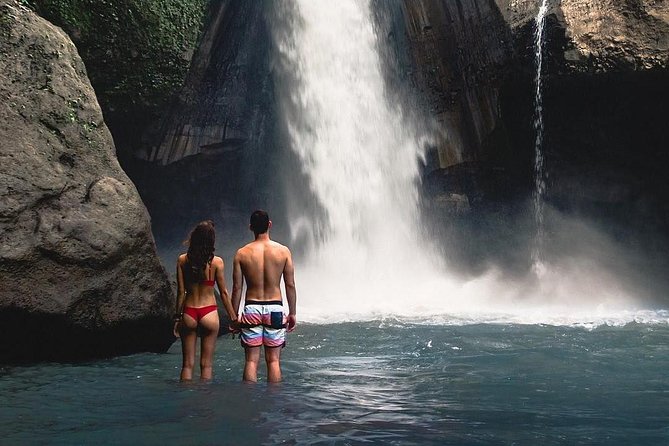
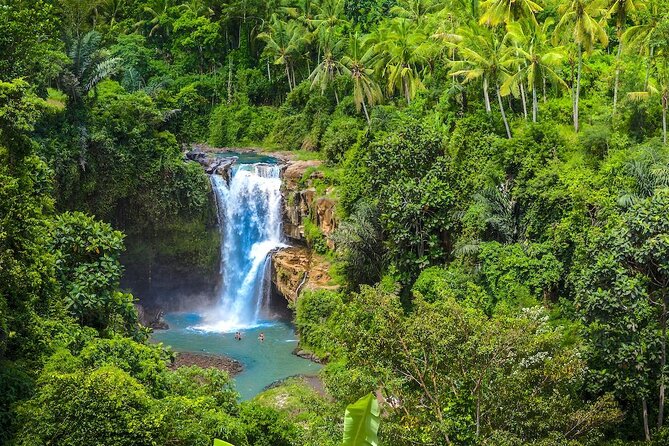
Tegenungan Waterfall is the nature hit. The stop is designed with options: you can view it from a hill, take photos from above, or go down toward the water. The plan even mentions the chance to take a swim, which is a big reason people like this stop.
If the goal is photos, you’ll want to arrive with your phone/camera ready but also with some patience. Waterfalls attract people, and the best shots often mean waiting for a clear angle or for the crowd to shift. The good news is you’re not locked into one spot—there’s viewing plus the possibility of getting closer.
Weather is the wildcard. One review described a day where heavy rain reduced access to the water and even made parts of the rice terrace unsafe to visit. On a dry day, you’ll likely get the full waterfall experience; in rain, treat it as a “views first” stop and keep your expectations flexible.
Tirta Empul Water Temple: Holy Spring Purification in a Sacred Space
Tirta Empul is about ritual purification. Even if you don’t know Balinese Hindu customs, you can feel the purpose when you’re standing in the bathing structure area. The temple compound centers on the petirtaan, a bathing structure fed by holy spring water, where devotees go for ritual cleansing.
The tour provides a Balinese sarong for your temple visit, which is not just convenient—it’s required by many temple sites. You’ll also want to move gently and follow any signage or staff guidance on where you can walk versus where worshippers are actively bathing.
Timing matters here, too. You’ll get around one hour at this stop, which is long enough to watch what’s happening, learn the meaning from your guide, and still have time to keep the day on track. Guides often share the “why” behind landmarks while you’re traveling between sites, and reviews specifically mention guides explaining cultural context during the drive.
Tegalalang Rice Terrace Stroll: Green Paddies and Daily Farming Life
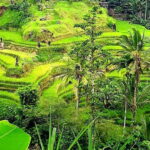
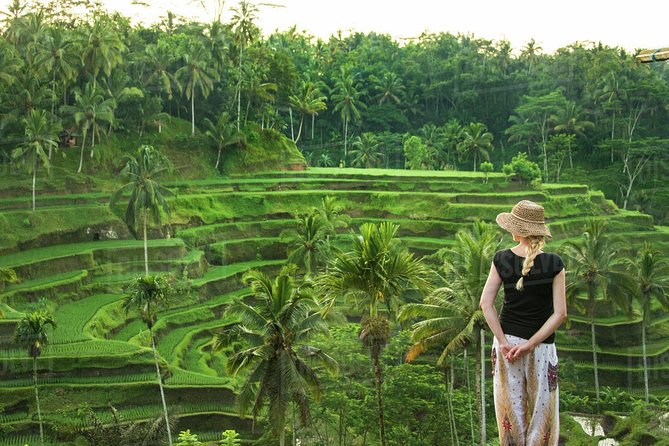
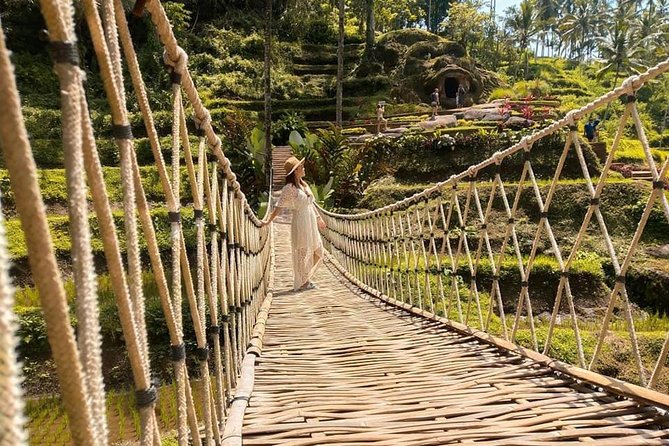
Tegalalang Rice Terrace is the classic postcard view, but the value is in the walk. You’ll have about one hour to stroll through the paddies and see how farmers do their daily work. It’s not just pretty scenery; it’s a living system that shapes how locals eat and earn.
This is also a stop where the weather can change what’s safe. In rain, paths can get slippery, and one review mentioned the terraces being skipped due to unsafe conditions. If rain shows up, ask your guide what’s still walkable and don’t force it. Bali rewards smart choices, not heroics.
If you like photos, go slowly. The terraces can look great from one angle, then suddenly better from a lower path or after turning a corner. Your guide can also help with timing—like when to walk so you’re not fighting the worst crowds at every viewpoint.

Monkey Forest Sanctuary: Monkeys, Shade, and Photo Etiquette
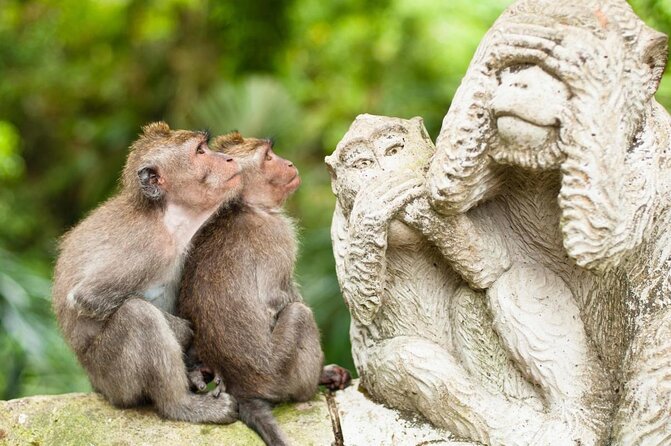
The Sacred Monkey Forest Sanctuary is famous for a reason. You’ll walk through thick jungle shade and see monkeys moving through the trees while birds, lizards, and butterflies add to the feel. It’s a strong contrast to the open views of the rice terraces.
A key practical note: keep your expectations for monkey interactions realistic. The goal isn’t to “pet a monkey,” it’s to observe them. The most enjoyable monkey encounters are the ones where you stay calm, keep your space, and let the animals do their thing.
You’ll have about 1 hour 30 minutes at the forest, which is enough time to cover the main paths without rushing. Reviews also mention photo-friendly pacing—guides helping you get shots without constantly being pulled along.
Bring a little common sense around snacks and phones. Keep items secured and avoid sudden movements. And if you’re traveling with kids, it helps to set rules before you enter so everyone enjoys the experience instead of chasing problems.
Happy Swing Bali: The Jungle View Thrill (and How to Maximize Your Photos)
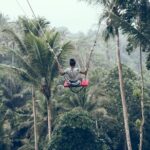
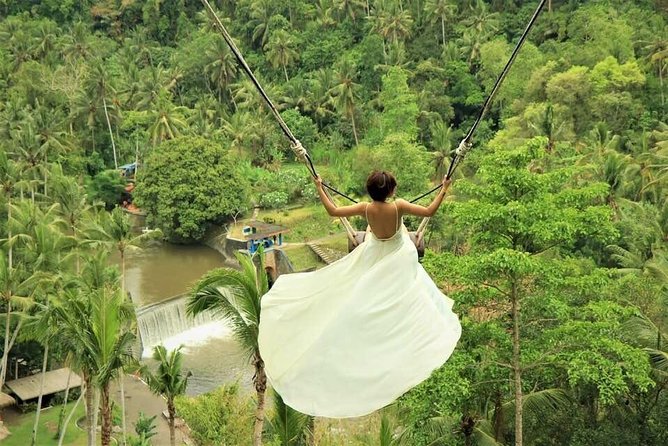
Happy Swing Bali is the adrenaline moment most people talk about. The pitch is simple: you swing with jungle views, and it’s fun in a way that’s harder to describe than to do. The tour includes about 1 hour 30 minutes, which gives time for the swing plus time to capture photos.
Two realities from the experience: first, the swing can be more time-consuming than you expect because of photos and setups. Second, the way the swing staff manage the line can affect your mood. One review mentioned that staff facilitating the swing seemed impatient at times. If that happens, stay focused on what you want—ask your guide to keep things moving and keep your tone calm.
If you want your best photos, aim to do the swing when you’re not already exhausted. One review offered an excellent tip: go early so you’re not tired, and you get a better overall experience before you start dealing with later stops and changing plans. Your guide can also factor in crowding preferences and whether you want stairs or a more nature-heavy route around the area.
Celuk Village and Ubud Center Market: Silver Crafts and Small Finds
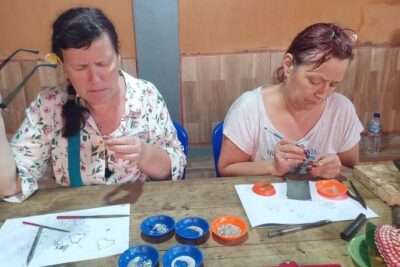
After the main nature-and-temple combo, you get a cultural detour in Celuk Village, a place known for silver crafting. It’s a short stop—about 30 minutes—so think of it as a look, a chance to ask questions, and maybe grab a small handmade piece rather than a full workshop visit.
Celuk is also a good energy reset. By the time you get here, you’ve usually spent hours walking and photographing. A short crafts stop is a nice change of pace without draining your legs.
Then there’s a traditional market in Ubud center for art and traditional work. The time isn’t listed with precision, but it’s clearly positioned as a light finale. This is the moment for last-minute gifts, postcards, and small souvenirs that won’t dominate your luggage plan.
Price and What You’ll Pay Extra: Getting Value Out of $31
The advertised price is $31.00 per person, and that’s where the value can be good—especially because transportation is included. You’re getting private pickup and drop-off, an air-conditioned vehicle, an English-speaking driver-guide, bottled water, and temple sarong support.
But here’s the fine print you should check before you assume everything is covered: entrance fees and lunch are listed as not included unless you choose the all-inclusive option. The tour also notes that entrance fees and jungle swing are included only if you select the Ubud Tour – All Inclusive plan.
So how do you judge value? Add up what you’d pay separately if you booked each site on your own (transport, entry fees, and the swing). Then ask yourself how much you care about reducing stress. If you want one organized day with minimal planning and someone else handling the route, the $31 base price can feel like a bargain. If you’re already planning to pay entrance fees anyway, the all-inclusive choice can be worth it just to avoid decision fatigue mid-trip.
What to Pack and How to Handle Weather and Crowds
You’re visiting a waterfall, rice terraces, a forest, and temples. That combo means your gear matters more than usual.
Bring water needs in mind (the tour includes bottled water), and wear shoes you trust on uneven paths. Temple visits usually require appropriate clothing behavior, and you’ll get a sarong for the visit. Still, plan on modest comfort for photos and walking.
For weather: Ubud is a rainforest island. If rain hits, your day can shift. One review described that heavy rain made the water temple and terraces harder to experience safely and removed the chance to swim at the waterfall. That doesn’t mean you’re stuck—just be ready for an altered plan. The tour is explicitly described as weather-dependent, and guides often rearrange order to help.
Crowds are real at Monkey Forest and popular viewpoints. Your best move is attitude and timing: accept the busier moments, and let your guide steer you through with less wasted time.
Who This Tour Fits Best (and Who Might Prefer Something Else)
This is ideal if you want one full day that checks multiple boxes: monkeys, terraces, temple culture, and a fun swing moment. It’s also a smart pick if you appreciate driving time with explanations, since reviews repeatedly highlight guides like Wah, Vitho, and Ary sharing facts and local context during transfers.
It’s also a good “starter Bali” day. If you’re staying near the beach (Kuta, Seminyak, Canggu, Legian, Jimbaran, Nusa Dua, Sanur) or in Ubud itself, the pickup list makes it workable from multiple bases.
Who might skip it? If you hate long car days, you may prefer a slower format. Also, if you’re extremely photo-sensitive and want no changes to the plan at all, weather can force adjustments. The tour is built for flexibility, not for guaranteeing every activity happens in every condition.
Should You Book This Ubud Day Trip?
If your goal is a high variety Ubud day with included transport and time at five major stops, I’d say yes. The mix makes sense: start with waterfall vibes, move into holy spring culture at Tirta Empul, walk the rice terraces, then switch to monkeys and the swing. That structure keeps the day from feeling repetitive.
Before you hit book, do two quick checks. First, decide whether you want the all-inclusive option so entrance fees and the jungle swing are covered. Second, be realistic about weather. If rain is in the forecast, ask your guide to prioritize the most important stops and keep the rest flexible.
If you want a guide experience that feels personal, keep an eye on guide names praised in reviews—people cite Wayan, Vitho, Ary, Adik, Dika, Komang, Legi, and Putu Vitho. Any of those styles can change your day from a checklist into a story you’ll remember.
FAQ
How long is the Ubud Monkey Forest, Jungle Swing, Rice Terrace, and Water Temple tour?
It runs about 8 to 10 hours.
Does the tour include pickup and drop-off?
Yes. Pickup and drop-off are included from Ubud and several nearby areas, including Kuta, Seminyak, Canggu, Legian, Jimbaran, Nusa Dua, and Sanur.
Is this tour private?
Yes. It’s described as a private tour/activity, so only your group participates.
What’s included in the price?
Included features list an English-speaking driver-guide, a comfortable air-conditioned vehicle, traditional Balinese sarong for the temple visit, bottled water, and the tour includes jungle swing and entrance fees only if you choose the Ubud Tour – All Inclusive option.
Are entrance fees included?
Entrance fees are listed as extra unless you select the all-inclusive option.
Where does the itinerary stop first?
The planned itinerary starts with Tegenungan Waterfall, then continues to Tirta Empul, Tegalalang Rice Terrace, Sacred Monkey Forest Sanctuary, Happy Swing Bali, and then Celuk Village plus a traditional market in Ubud center.
Can I swim at the waterfall?
The plan for Tegenungan Waterfall mentions that you can go down to the water and even take a swim.
What happens if the weather is bad?
The experience is noted as requiring good weather. If it’s canceled due to poor weather, you’ll be offered a different date or a full refund.