REVIEW · BALINESE COOKING CLASSES
Exclusive Authentic Balinese Cooking Class at Family home
Book on Viator →Operated by Nipala cooking class by Kedongding · Bookable on Viator
Cooking here starts at the market, not the kitchen. This private Balinese cooking class near Ubud takes you from Payangan Market to a family compound kitchen where you chop, pound, grind, grill, and eat what you made.
What I really like is the hands-on setup, with each person cooking at their own station, and the sense that you’re learning how Balinese food is built, not just following steps. The main thing to consider is that the day runs about 6 hours and the outdoor parts (market + open kitchen) mean you’ll want decent weather.
In This Review
- Key things that make this class worth your time
- From Payangan Market to a Balinese Compound Kitchen
- The Hands-On Balinese Spice System (Chop vs Grind)
- What You’ll Cook: Dishes With Real Names and Real Technique
- Morning vs Afternoon Flow: When Your Cooking Becomes Your Meal
- Price and Logistics: What $75 Covers (and What to Watch)
- Group Size and the Real Learning Pace
- Coffee, Certificate, and the Little Things That Make It Stick
- Who This Cooking Class Is Best For
- Should You Book This Ubud Cooking Class?
- FAQ
- Where does the cooking class start?
- How long is the class?
- Is this a private cooking class?
- Do I get pickup and drop-off?
- Can I eat vegetarian?
- What dishes are included?
- Do we cook ourselves or watch?
- What do I take home?
- Is bottled water provided?
Key things that make this class worth your time
- Payangan Market first: learn ingredients up close before you ever touch a cutting board
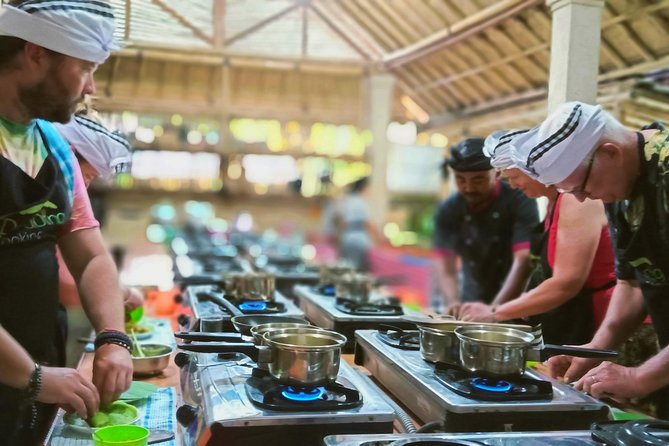
- Family compound, open kitchen: you’re cooking in a real home environment, not a studio
- Traditional spice prep: get the practical differences between chopping on wood and grinding in a stone mortar
- True student-led cooking: you do the prep and cooking, with guidance—not just watching
- Food you can name and repeat: multiple Balinese dishes plus a written recipe book to take home
- Private group size (max 12): small enough to ask questions and get hands-on attention
From Payangan Market to a Balinese Compound Kitchen
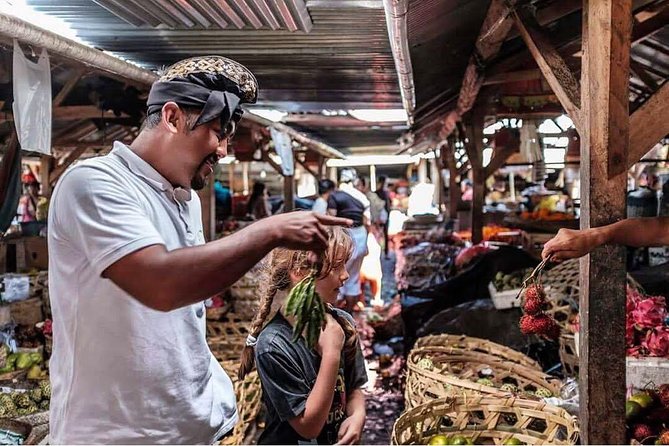
The day starts in Payangan Market, where you can see the actual ingredients that shape Balinese cooking. Expect a real market atmosphere with seasonal produce and the kinds of foods you don’t always recognize from supermarket shelves. This matters because Balinese flavor isn’t just about one sauce or one spice—it’s built from multiple ingredients working together.
After the market, you head to a Balinese compound house (a family home setup) and begin with a welcome drink—Bali coffee or tea—plus Balinese cake. It’s a small moment, but it sets the tone: you’re not on a factory tour. You’re being hosted.
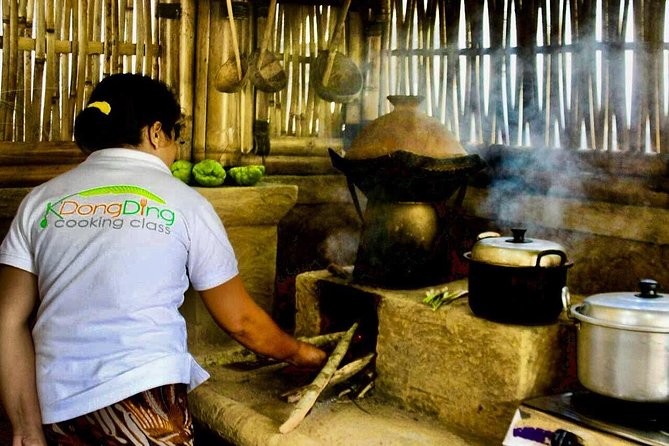
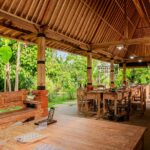
Then comes the kitchen itself: a traditional open kitchen setup. The open-air format keeps it cooler and makes the process feel more grounded. You’ll also get time for a compound tour, and some classes include personal touches like chatting about how the family lives and works at home. In at least one class, the family also shared details like native-bee honey and even a rescued pet monkey during the compound walk.
Why this is good value: most Ubud cooking classes jump straight to cooking. Here, you get the ingredient context first, so when you’re later tasting and adjusting flavors, it actually makes sense.
You can also read our reviews of more cooking classes in Ubud

The Hands-On Balinese Spice System (Chop vs Grind)
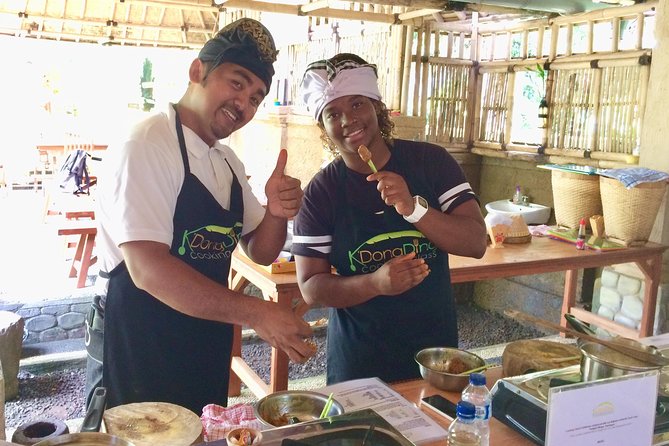
Balinese cooking can look similar on the plate—then you taste it and realize the foundation is different. The key skill you’ll practice is spice preparation, especially making paste and sauce bases.
You’ll learn two traditional prep approaches:
- Chopped on a wooden chopping block
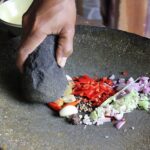
- Ground in a stone mortar
That choice isn’t trivia. It changes texture, and texture changes how flavors release while cooking. In an open kitchen, you can feel the difference as you work the ingredients into your paste or chop-mix and then cook from there.
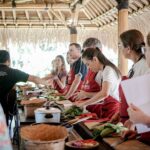
You’ll also do the hands-on “starter work” that many home cooks never get to experience: tasting ingredients, testing spice combinations, and working with traditional tools. The class emphasizes that the preparation is performed by the students, while the instructor guides. That’s a big deal, because you leave with muscle memory—knowing what the mixture should feel like, not just what it should taste like.
If you like to cook at home, this is where you’ll get most of your long-term payoff. You don’t just learn recipes; you learn how Balinese kitchens build flavor.
What You’ll Cook: Dishes With Real Names and Real Technique
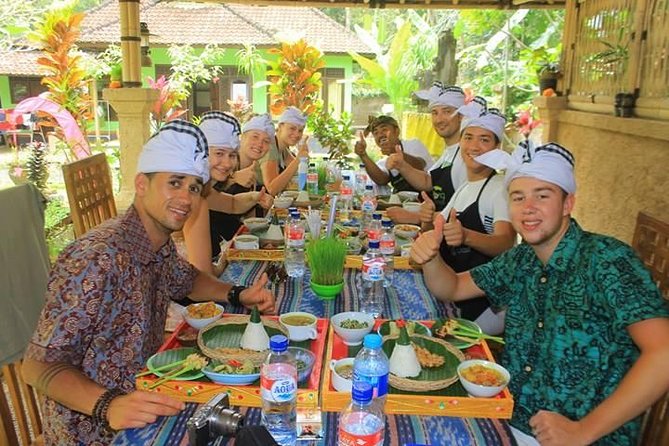
The menu includes several recognizable Balinese dishes, and the class gives you a mix of vegetable-forward options and protein-based choices (with vegetarian versions available).
From the dishes listed, you can expect to make things such as:
- JUKUT URAB (V)
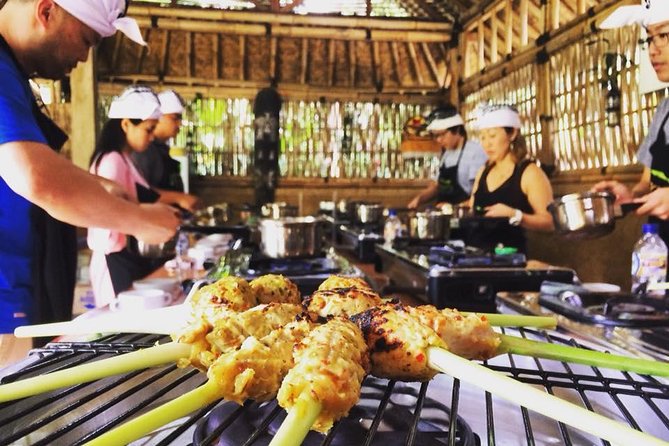
- SATE LILIT AYAM (V/TOFU)
- CALON BE SIAP WITH CHAYOTE SOUP (V/TOFU)
- TAHU MESANTEN (V)
- DADAR GULUNG (V) ala kdongding
A quick note on the vegetarian side: the class is described as vegetarian applicable, as long as you tell them in advance so they can prepare accordingly.
Here’s why those dish types are useful for you:
- You get practice making spice bases and then applying them to different cooking styles.
- You’ll see how vegetarian versions still feel “Balinese,” rather than swapped with bland substitutes.
- You’ll likely notice that many dishes rely on sauce-paste depth, not just herbs thrown in at the end.
You also get a recipes book and a culinary workshop certificate, which helps if you want to recreate the dishes later without guessing amounts.
Morning vs Afternoon Flow: When Your Cooking Becomes Your Meal
The experience can run in a morning market format or an afternoon market format. The structure is similar, but the food timing changes.
- Morning class: includes lunch, and the menu is made by you before you eat it.
- Afternoon class: includes dinner, and again the menu is made by you before you sit down.
Either way, you’re not cooking “for later.” You’re cooking and eating in the same session. That helps you learn in real time: you taste what your spice paste, grilling, and sauce work produces, then you can understand what to adjust.
Also, you’ll have snacks during the class. Plus you can refill bottle water at the class for free. Still, the instructions note that bottled water isn’t provided—bring your own bottle to help reduce single-use plastic.
Price and Logistics: What $75 Covers (and What to Watch)
At $75 for a private, hands-on cooking class of about 6 hours, the big value isn’t only the cooking. It’s the combination of:
- Market visit (Payangan Market)
- Pickup and drop-off in the Ubud area
- All ingredients, cooking tools, kitchen stations
- Round-trip transport included within the Ubud and Payangan areas
- A recipes book and certificate
In other words, your money supports the full “from ingredient to plate” experience, plus the instructor-guided practice.
The main logistics consideration is transport beyond Ubud/Payangan. There are extra charges if you stay farther out (example areas listed include Sanur, Seminyak, Legian, Nusa Dua, Jimbaran). Another practical point: the car is said to fit up to 6 passengers. If your group is larger, there’s an extra cost per additional person for 7–12.
If you’re traveling solo or as a couple, this price can feel like a bargain because you’re paying for a private setup without having to share your station time.
You can also read our reviews of more tours and experiences in Ubud

Group Size and the Real Learning Pace
This is private: only your group participates. The maximum is 12 people, and there’s a stated minimum of 1 person.
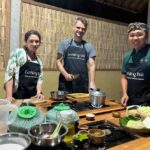
That small-group size is important because hands-on cooking needs space. The class provides a setup where every participant has their own station, along with cooking tools and a kitchen set of tools.
If you want to ask questions while you cook—about spice origins, process, and what each step is doing—this group size is a practical advantage. In classes led by instructors like Nyoman Mahendra (and also Wayan in some sessions), the instruction style is described as friendly and professional, with guidance that keeps you active rather than stuck in observation mode.
One more detail worth planning for: the class has a minimum age of 12 and requires kids to be accompanied by an adult.
Coffee, Certificate, and the Little Things That Make It Stick
Some experiences are fun, then you forget them. This one is designed to stick.
You’ll get:
- A welcome drink: Bali coffee or tea with Balinese cake
- Snacks during the session
- A recipes book you can use later
- A culinary workshop certificate
That certificate isn’t just a souvenir. It’s useful if you like keeping track of what you’ve learned and you want a clear record of your workshop.
Also, because the class emphasizes “students do the cooking,” you’re more likely to remember the steps and recreate them. You won’t just taste a meal; you’ll know how it was assembled.
Who This Cooking Class Is Best For
You’ll get the most out of this class if you:
- Want authentic Balinese cooking technique, not just a meal
- Enjoy cooking and want to practice spice pastes with traditional tools
- Appreciate market context and local life around food
- Prefer a smaller, private group experience
If you’re the type who likes taking cooking home as a skill, this is a strong choice. If you mainly want a short, low-effort activity, this may feel like a commitment because it’s a full-work session of prep + cooking + eating for about 6 hours.
Should You Book This Ubud Cooking Class?
If you want a Ubud activity that actually teaches you something you can repeat, I’d book it. The combination of Payangan Market + family compound open kitchen + student-led hands-on cooking is exactly the kind of structure that turns a vacation meal into real learning.
Book it especially if:
- You’re excited to work with spices and sauces (and you like doing, not watching)
- You want a vegetarian option and are willing to communicate needs in advance
- You value pickup in the Ubud area and a complete package (ingredients, tools, recipes book)
The only reason I’d hesitate is if you hate weather-dependent outdoor time, since the experience requires good weather and uses an open kitchen setup. If the forecast looks iffy, keep your plan flexible.
FAQ
Where does the cooking class start?
It starts at Payangan Market (Unnamed Road, Melinggih, Kec. Payangan, Kabupaten Gianyar, Bali 80572) and ends back at the meeting point.
How long is the class?
It runs for about 6 hours.
Is this a private cooking class?
Yes. It’s private, with a minimum of 1 person and a maximum of 12 people.
Do I get pickup and drop-off?
Yes, free pickup and drop-off are included in the Ubud area (and the Payangan area is included for free pickup transport). Staying outside Ubud/Payangan can involve an extra return-transfer charge.
Can I eat vegetarian?
Yes. The class is vegetarian applicable, but you should let them know in advance so they can prepare the vegetarian version.
What dishes are included?
The menu includes dishes such as JUKUT URAB (V), SATE LILIT AYAM (V/TOFU), CALON BE SIAP WITH CHAYOTE SOUP (V/TOFU), TAHU MESANTEN (V), and DADAR GULUNG (V).
Do we cook ourselves or watch?
You cook yourself. All prep work and cooking are hands-on experiences performed by the students, with guidance from the local chef.
What do I take home?
You receive a recipes book and a culinary workshop certificate.
Is bottled water provided?
No bottled water is provided. You should bring your own bottle, and you can refill water at the class for free.