REVIEW · BALINESE COOKING CLASSES
Bali Cooking Class with Culture Experience
Book on Viator →Operated by Lobong Culinary Experience · Bookable on Viator
A morning market, then a home kitchen. That mix is what makes this Bali cooking class in Ubud feel so real: you shop like locals, meet the people behind the food, and then cook a full meal yourself. I like the hands-on way you learn Balinese flavor building, from herbs and spices to the finishing steps that make dishes taste right. I also love that you leave with an illustrated instruction booklet so the experience doesn’t vanish the next day.
One heads-up: the start time is 7:30 am, so if you’re not a morning person or you want a slow start to your vacation, plan your expectations accordingly.
In This Review
- Key Highlights You’ll Care About
- Ubud at 7:30 am: why this timing works
- The Lobong market stop: herbs, spices, and produce with a purpose
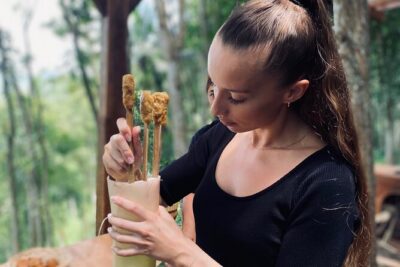
- Coffee with Dewa, plus Pisang Goreng before you cook
- The illustrated booklet: your recipe safety net for home cooking
- Chef-led cooking in the pavilion: making a full Balinese menu
- Lunch you prepared, plus a gratitude ritual
- Value check: is $62 for a 6-hour cooking class worth it?
- Should you book Lobong Culinary Experience in Ubud?
- FAQ
- What location is this Bali cooking class in?
- How long does the experience last?
- What time does it start?
- Is pickup included?
- How big is the group?
- Do I visit a market before cooking?
- Is there food included besides cooking?
- Do I get recipes or instructions to take home?
- How does the ticket work?
- Is free cancellation available?
Key Highlights You’ll Care About
- Morning market ingredient shopping with a Family Host who buys and explains what goes into the class
- Dewa’s coffee or tea plus Pisang Goreng to kick things off with a real taste of Balinese snacking
- Small-group cooking (maximum 12 travelers) and a professional chef guiding you through a full menu
- A complete meal you make, including an appetizer, multiple main dishes, sides, and dessert
- Take-home illustrated booklet with recipes, directions, photos, tips, and space for notes
- A gratitude moment after lunch that ties the meal to Balinese home culture
Ubud at 7:30 am: why this timing works
This class runs for about 6 hours and starts at 7:30 am, with pickup offered from central Ubud hotels. That early start matters more than it sounds. Markets are best when ingredients are fresh and the day still has energy. Plus, you’ll be done cooking and eating long before your afternoon plans start getting serious.
The group stays small, with a maximum of 12 travelers, which usually means you get real attention instead of feeling like one more name on a clipboard. If you like asking questions, watching technique up close, or just keeping the pace comfortable, this size helps.
Practical tip: you’ll likely be walking between spots (market, then home/cooking pavilion). Wear comfortable shoes and plan to be a bit flexible with timing. Morning schedules in Ubud can be wonderfully smooth, but they’re still morning schedules.
You can also read our reviews of more cooking classes in Ubud


The Lobong market stop: herbs, spices, and produce with a purpose
Your morning begins at a local market, where your Family Host buys the fresh ingredients for the menu. The best part is not just shopping. Your host explains what you’re choosing and how those ingredients show up in Balinese cooking—fresh herbs, spices, fruits, and vegetables.
This is where the whole class gets its backbone. Instead of learning recipes as isolated steps, you learn why certain flavors matter. When you later cook, you’re not guessing. You’re connecting an ingredient you saw in the market with the role it plays at the stove.
From the experience details and the strong feedback, there’s also a fun angle: you may taste fruit you can’t easily find in the US. That kind of detail makes the market feel less like a tourist photo stop and more like a real supply run for dinner.
Possible drawback: markets move quickly. If you’re the kind of person who likes to linger and bargain for fun, you might feel slightly rushed. But if you’re there to learn ingredients and cook them, the pacing makes sense.
Coffee with Dewa, plus Pisang Goreng before you cook
Before you get into the kitchen work, you’ll be greeted with a hot drink (coffee or tea) or mineral water, plus Pisang Goreng—banana fritters—made fresh. Dewa is the named host for this part, and the fritters are specifically called out as his famous Pisang Goreng.
Then comes the cultural context, which is one reason people rate this class so highly. You’ll hear about Balinese life, including families and home shrines, while staff double-check that the cooking pavilion is ready. In other words, it’s not straight from market chaos into apron time. You get a short runway to understand the setting you’re about to cook in.
What I like about this part is the contrast. Eating banana fritters and sipping something warm is comforting, but the conversation keeps your brain engaged. You’re still a visitor, but you’re not just waiting to be fed. You’re being oriented.
Small consideration: if you’re expecting a lecture-heavy session, this isn’t that. It’s more story-and-context paced alongside preparations. If that’s your style, you’ll probably enjoy it.
The illustrated booklet: your recipe safety net for home cooking
Once things are ready, you’ll receive an illustrated instructional gift booklet. The contents are practical: the menu, recipes, directions, photos, tips, and space for personal notes.
This matters because Balinese dishes can feel intimidating when you only see ingredients and not process. The booklet helps you recreate the steps without guessing. Photos reduce confusion, directions keep the workflow clear, and notes let you adapt later.
Also, the booklet isn’t just a list of recipes. It’s built as a learning tool, which means you can review it after you’ve cooked the dishes once. That repetition is how skills actually stick.
If your goal is to cook Balinese food again for friends, this take-home component is a big part of the value. A class can be memorable, but memory fades. Paper instructions keep the experience alive.
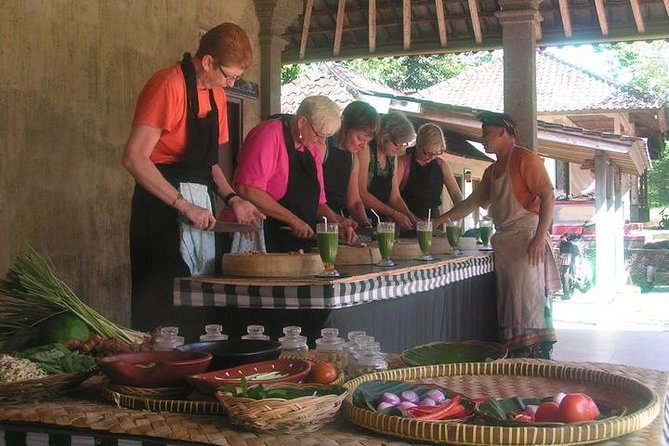
Chef-led cooking in the pavilion: making a full Balinese menu
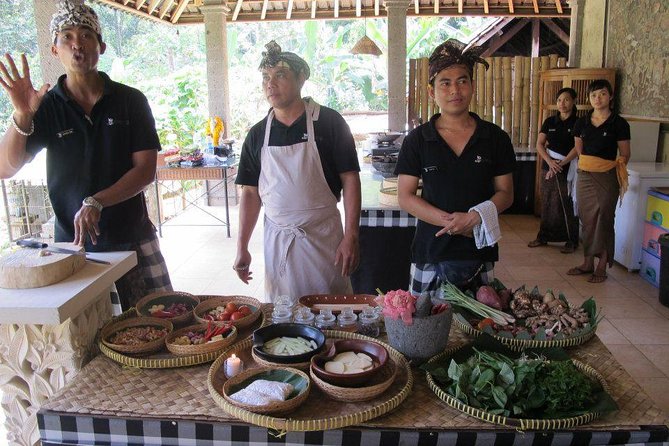
Now for the main event: cooking with a professional chef at the cooking pavilion. This isn’t a one-dish class. You’ll be guided to prepare a complete menu that includes:
- an appetizer
- multiple traditional entrees (main dishes)
- accompanying side dishes
- dessert
The details matter here. Learning multiple dishes in one session gives you a broader sense of Balinese flavor structure. You’re not just practicing one technique. You’re seeing how spice blends, herbs, and ingredients shift across an entire meal.
Because the class is small, you’ll likely get enough attention to correct mistakes and understand what the chef is aiming for. In a bigger group, cooking often turns into hurried teamwork. Here, it’s described as very well organized, so the flow stays workable.
One more detail I think is underrated: you’re not only cooking. You’re cooking inside a Balinese home setting. That changes your perspective. Even if you’re a skilled home cook, you’ll likely pick up technique and ingredient handling in a way that feels easier than watching videos later.
Possible drawback: because it’s a full menu, the day is busy. If you want a slower, lighter experience focused on tasting only, this may feel like real work. But if you love learning by doing, that pressure is also the fun part.
You can also read our reviews of more tours and experiences in Ubud


Lunch you prepared, plus a gratitude ritual
After cooking, you enjoy your freshly made lunch, including the dishes you prepared earlier. The structure is designed so you snack before cooking, cook through the course list, and then sit down to eat what you made.
One review detail that stands out is the mention of an ending ritual of gratitude after the meal. That’s a powerful reminder that, in many Balinese homes, food isn’t just a product. It’s tied to thanks, home life, and respect for the process.
Even if you don’t follow every cultural step perfectly, the fact that it’s included helps you understand what you’re eating. You’re not just consuming a menu. You’re participating in a small slice of home tradition.
If you have limited patience for ceremonies, it might feel like one more stop on the schedule. But if you enjoy cultural grounding, this moment is one of the parts people remember most.
Value check: is $62 for a 6-hour cooking class worth it?
At $62 for roughly 6 hours, this class can feel like a bargain—especially once you factor in what’s included. You’re not paying just for cooking instructions. You’re paying for:
- a market visit with ingredient explanation
- chef-led cooking for a full menu (multiple dishes plus dessert)
- breakfast snack and drinks, then lunch you prepared
- round-trip transfers from central Ubud hotels
- the illustrated booklet to take home
When classes cost less but exclude key pieces, you end up paying separately for transportation, ingredients, or meals. Here, the structure is bundled. That’s why many people rate it so highly: it feels complete.
Also, the small-group limit helps justify the price. You’re getting a more personal experience than you’d get from large bus-style tours.
Two logistics notes for your planning:
- You’ll use a mobile ticket.
- The area is described as near public transportation, which can help if you’re handling any extra scheduling before or after the class.
If you’re watching your budget, I’d still say this is one of the more practical ways to spend money in Ubud: you get hands-on skill, food, and cultural context without needing extra activities to fill the day.
Should you book Lobong Culinary Experience in Ubud?
Book it if you want Balinese food that’s more than a restaurant meal. This class is built around ingredient learning, chef guidance, and cooking your way through a full menu—plus you take home instructions that help you repeat what you made.
It’s also a great fit if you like meeting local people in a respectful, structured way. The named host for the snack moment (Dewa) and the Family Host at the market suggest a human-scale experience, not a scripted assembly line.
Skip it only if you have a hard time with early mornings or if you prefer casual, low-effort activities. This is hands-on cooking. Even though it’s guided, it’s still an active day.
If you want one practical decision rule: if you’d happily cook at home and you care about learning why dishes taste the way they do, this is an easy yes.
FAQ
What location is this Bali cooking class in?
The class takes place in Ubud, Indonesia.
How long does the experience last?
It lasts about 6 hours.
What time does it start?
The start time is 7:30 am.
Is pickup included?
Yes. Pickup is offered, including round-trip transfers from central Ubud hotels.
How big is the group?
The experience has a maximum of 12 travelers.
Do I visit a market before cooking?
Yes. You start at a local morning market to shop for ingredients with a Family Host.
Is there food included besides cooking?
Yes. You’ll have a breakfast snack and enjoy lunch you’ve prepared, plus a hot drink and banana fritters at the start.
Do I get recipes or instructions to take home?
Yes. You receive an illustrated instructional gift booklet with menu, recipes, directions, photos, tips, and space for notes.
How does the ticket work?
You use a mobile ticket.
Is free cancellation available?
Yes. You can cancel for a full refund up to 24 hours before the experience’s start time.
If you want, tell me your travel dates and whether you’re staying in central Ubud. I can help you map this class against a morning-to-afternoon schedule.