REVIEW · BALINESE COOKING CLASSES
Bali Amazing Cooking Class
Book on Viator →Operated by Dejulius Tour · Bookable on Viator
Cooking in a Balinese home feels personal. You’ll pair Ubud sightseeing with real hands-on cooking, starting at a traditional market and ending with a meal that comes from your own pan.
I love the market-to-kitchen flow and the fact that you leave with recipes you can actually follow at home. I also like the human side of it: you’re not just watching—you’ll join in steps that feel tied to local life, like a warm welcome and an offering basket before cooking. One consideration: the market stop can feel basic or smaller than you’d expect depending on what’s running that day.
In This Review
- Key reasons this Ubud cooking class works
- A 5-hour Bali cooking class that starts like a day in Ubud
- Pickup, transport, and what to bring so the day stays easy
- Traditional market stop: where your ingredients start making sense
- Rice fields: learning how the food starts growing
- Inside the Balinese home: welcome moments and the offering basket
- The cooking lesson: hands-on, paced, and recipe-friendly
- What you eat afterward: lunch or dinner you actually helped make
- Price and value: $34 for more than just a cooking show
- Room for improvement: the two things to watch for
- Who should book this Ubud cooking class?
- Should you book Bali Amazing Cooking Class?
- FAQ
- FAQ
- What time is pickup for the morning and afternoon trips?
- Is hotel pickup included?
- What’s included in the cooking class fee?
- How long does the experience last?
- Do I get recipes to take home?
- How many people are in the group?
- What should I bring with me?
Key reasons this Ubud cooking class works
- Market + rice fields first: you get context for the ingredients before you touch the stove
- Family-style teaching: instruction is built around your hands, not just a lecture
- Recipes at the end: you can recreate Balinese dishes after you’re back home
- Local-home setting: you cook in a Balinese home kitchen, not a commercial demo room
- Group size stays intimate: limited to a maximum group of 25 people
- You eat what you make: the meal is part of the experience, not an afterthought
A 5-hour Bali cooking class that starts like a day in Ubud
This is a 5-hour Ubud experience that’s designed to feel like you’re stepping into a local routine. You’re picked up from your hotel area (with free pickup in Ubud), then you move through a mini sightseeing loop—market, rice fields, and a Balinese home—before the cooking gets going.
Most classes like this can feel either too staged or too rushed. Here, the pacing makes sense: the day sets up why the food tastes the way it does, then you practice the techniques yourself. And because it ends with lunch or dinner that’s part of the class, you don’t have to hunt for food later.
Timing matters, too. You’ll do a morning trip with pickup between 8:00–8:30am, or an afternoon trip with pickup between 3:00–3:30pm. Plan your other Ubud activities around that—this is the kind of tour that takes a chunk out of your day in the best possible way.
You can also read our reviews of more cooking classes in Ubud


Pickup, transport, and what to bring so the day stays easy
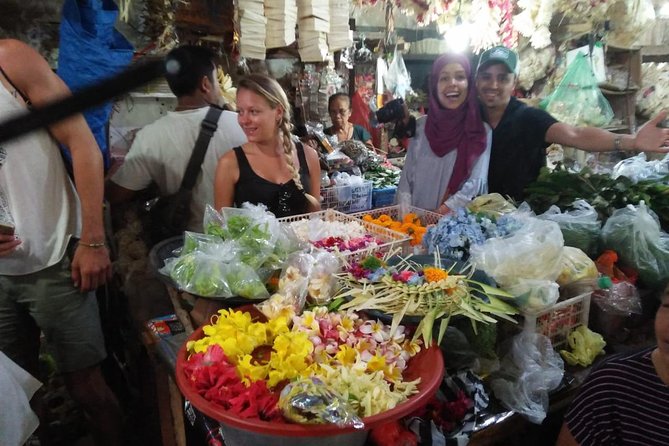
Logistics are mostly handled for you. An air-conditioned vehicle is included, and bottled water is provided. You’ll also get a mobile ticket.
Pickup works like this:
- Free hotel pickup is available only for the Ubud area
- If you’re staying outside that zone, you’ll need to contact the provider for pickup details
- You’ll be asked to share your hotel/room number and the right pickup spot, plus a contact number that’s easy to reach
What I strongly recommend bringing (the tour explicitly asks for these):
- camera
- sun cream
- a small backpack
- some cash
- shoes
The cash part matters because you might want personal items during the day, and you don’t want to discover that the only place accepting card is across town.
Also, you’ll be walking at market/rice-field spots. Wear shoes you don’t mind getting dusty. It’s Bali—things are humid and slippery in places, so comfort beats style.
Traditional market stop: where your ingredients start making sense
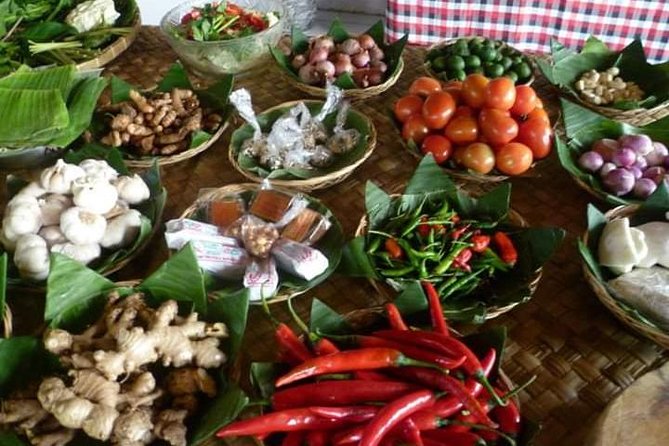
The first real “aha” moment comes at the traditional market. This isn’t just a quick photo stop. The goal is to show how Balinese daily life connects to ingredients.
You’ll get explanations around daily activity and what people look for in the market. The practical value is simple: when you later cook, you’ll understand what you chose and why it matters—spices, herbs, and produce don’t just appear magically in your kitchen.
Photography tip: markets are busy with color and motion, but your best photos usually come from slowing down for 30 seconds to watch how vendors handle ingredients. If you carry your camera, keep it accessible, but don’t block people’s paths while you shoot.
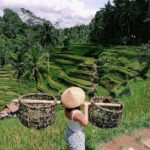
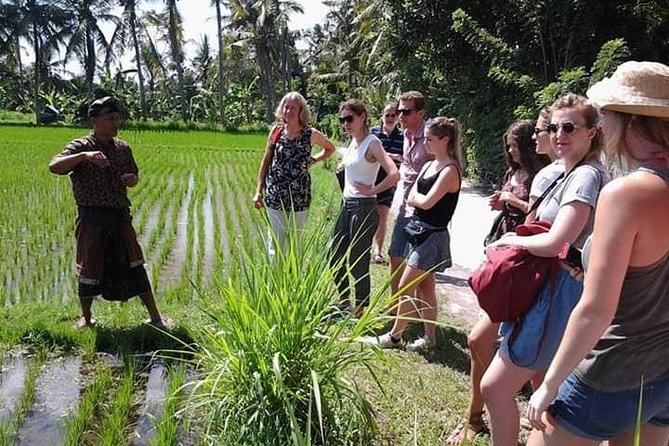
Rice fields: learning how the food starts growing
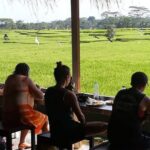
After the market, you’ll head to the rice fields for an explanation about growing rice. This is one of those stops that could feel “scenic” on paper, but the useful part is the context. Rice isn’t just a side dish in Balinese cooking—it’s part of how the culture eats and organizes daily life.
If you care about food, this is where the story clicks. You start connecting why certain ingredients show up together, and why the flavors are built for balance rather than heat alone.
Also, rice-field time is a reminder to pace yourself in Bali’s sun and humidity. Put on sun cream before you step out, and keep water handy even though bottled water is provided.
Inside the Balinese home: welcome moments and the offering basket
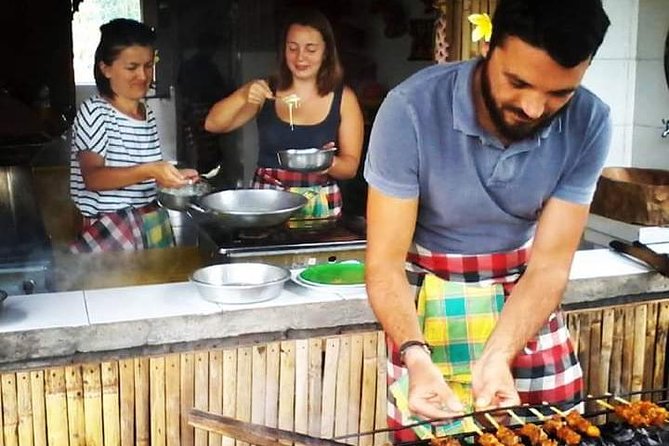
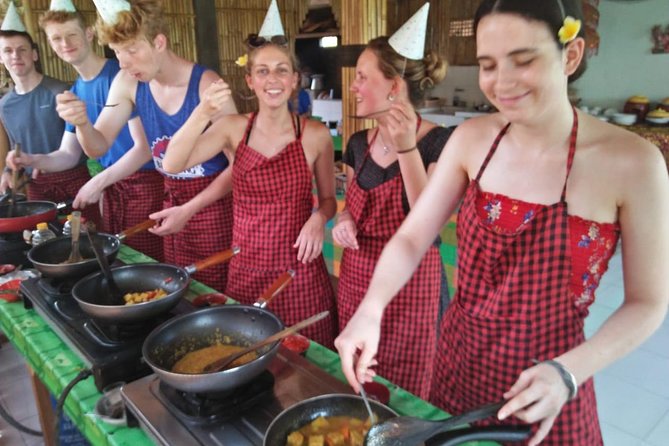
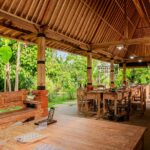
The class itself takes place in a Balinese home, which changes the feel immediately. This is where you stop being a spectator and start being part of the workflow.
Before cooking, you’ll experience a welcome with small local touches. In the experiences I’m drawing from, people mention a welcome drink and homemade cake at the home, which makes the start feel like you’re being hosted rather than processed.
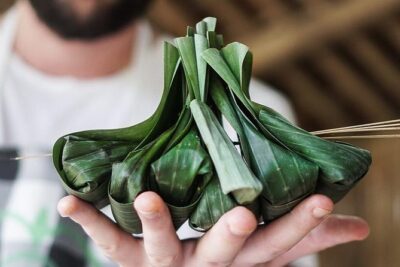
One distinctive element: you’ll make a traditional basket to offer to the gods. That step gives the class more meaning than a standard cooking demo. Even if you’re not religious, it helps you understand how food, ritual, and family routine can overlap in daily Balinese life.
You may also meet instructors and hosts by name during the day. People have mentioned hosts like Ibu Dewi and Nyoman, and the overall tone described is friendly and organized—like a family team trying to keep you on track.
You can also read our reviews of more tours and experiences in Ubud

The cooking lesson: hands-on, paced, and recipe-friendly
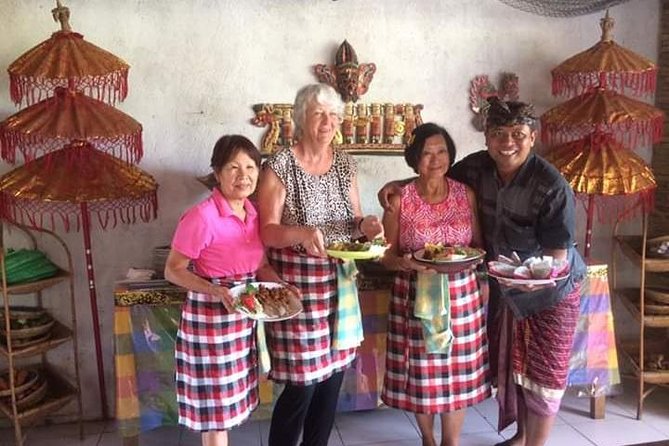
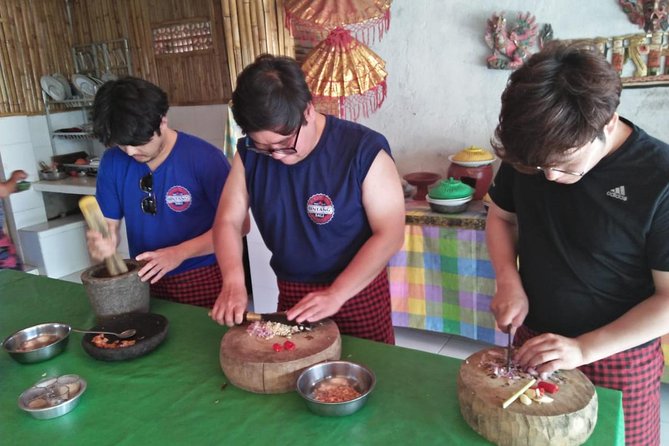
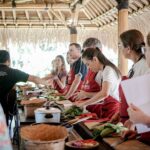
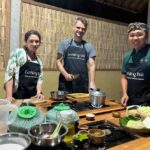
Once the cooking starts, the class becomes about doing. You’ll learn Balinese techniques and then eat the foods you create after the class.
A few practical points to set expectations:
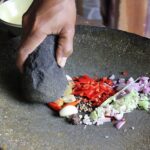
- You’ll use traditional cooking tools (not a fancy studio setup)
- Instruction mixes demonstration with hands-on time
- The pace aims to keep everyone moving so the group doesn’t get stuck waiting
What you might cook can vary, but the most common themes are consistent across experiences: you learn a spread of Balinese dishes, often around 10–11 items including at least one dessert. People specifically mention favorites like banana dumplings.
Even better: you get recipes at the end, so it’s not a one-day magic trick. If you’re the type who forgets exact ratios and spice blends, recipe handoff is a big deal.
Balanced expectation: cooking classes can’t all be perfect in every dish. One experience described some dishes as more ordinary than expected, including a fried rice dish. Still, the overall pattern is that you’ll leave with both techniques and enough guidance to cook again at home without guessing.
What you eat afterward: lunch or dinner you actually helped make
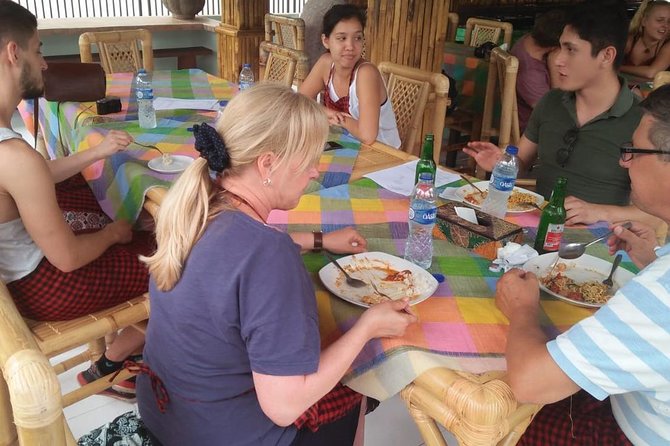
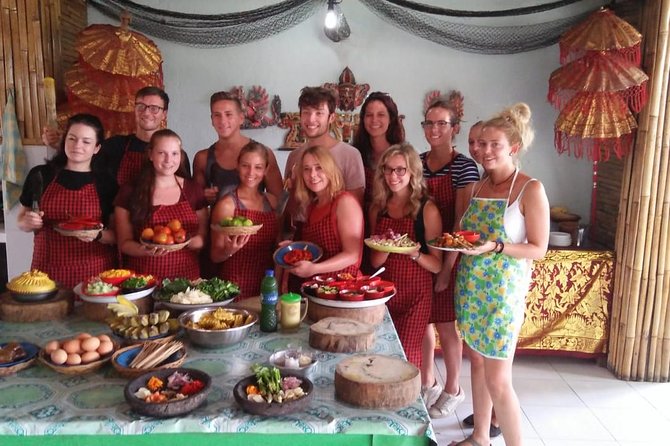
The end of the class isn’t just a snack. You finish by cooking and then eating together in a Balinese style. Lunch (or dinner, depending on your trip time) is included.
Food value here is more than taste. Eating what you made is what turns instruction into memory. You’ll notice how spice combinations, texture choices, and cooking times affect the final dish, and that’s the learning moment that makes at-home cooking more likely to succeed.
And yes, portions are typically generous. Several experiences note that you don’t leave hungry, which is exactly what you want from a class that runs long enough to work up an appetite.
Alcoholic beverages aren’t included, so if that matters to you, plan to purchase separately.
Price and value: $34 for more than just a cooking show
At $34.00 per person, this class can feel like a bargain in Bali terms—especially because it stacks multiple experiences into one ticket.
Here’s what you’re paying for, in practical value:
- cooking equipment and facilities
- a lunch or dinner included
- bottled water
- all fees and taxes
- an air-conditioned vehicle
- free hotel pickup in the Ubud area
Compare that to the cost of doing a market visit, a separate rice-field tour, and then a cooking class. You’d likely pay more once you start adding transport and meal costs.
Two more value notes:
- Group size capped at 25 people: that usually helps keep the day from turning into a conveyor belt.
- Recipes provided: you get a tangible output you can use again.
So, if you want the Bali food experience without spending the entire day bouncing between different vendors and transport stops, the price-to-time ratio is strong.
Room for improvement: the two things to watch for
Let’s be real. This class seems highly loved overall, but no tour is perfect. Based on different experiences, the two main considerations are:
1) Market stop quality can vary.
One account described a market as underwhelming, with very few stalls. That doesn’t mean the class is bad—it means your market snapshot depends on what’s active that day.
2) Dish quality can vary by menu and teach style.
A couple of experiences mention some dishes feeling more basic or not the best fried rice they’d tried. The upside is you still get hands-on practice and recipes, but don’t assume every single dish will hit the exact wow factor for you.
If you’re the type who wants a guaranteed wow on every course, I’d set your expectations around learning and experience first, perfection second.
Who should book this Ubud cooking class?
This is a great fit if you:
- want a hands-on Bali cooking day rather than a watching-only activity
- like food that comes with context (market ingredients and rice-field explanations)
- prefer a smaller group feel
- want take-home recipes so your cooking doesn’t fade overnight
It’s also a good match for couples and solo travelers who want a guided day without needing advanced planning. If you’re short on time in Ubud, the fact that it combines sightseeing with cooking is a smart way to pack more value.
If you hate early starts, choose the afternoon option. If you’re planning a full Ubud itinerary, build some buffer around the pickup time so you don’t feel rushed.
Should you book Bali Amazing Cooking Class?
Yes, if you want an authentic-feeling day that connects Balinese ingredients to real cooking, this is one of the more practical choices. The hands-on teaching, the market and rice-field setup, and the fact that you leave with recipes make it a class that pays off beyond the meal.
Book it if:
- you’re curious about Balinese food beyond what you order at restaurants
- you want the meal to feel earned
- you’d enjoy learning in a family home setting
Think twice if:
- you want a guaranteed large, lively market scene (that can vary)
- you’re only interested in perfect restaurant-level dishes and not technique
- you dislike being outdoors in the sun (bring sun cream and wear real shoes)
If weather is poor, the experience may be changed or refunded based on how it’s handled locally—so plan your Ubud days with a bit of flexibility.
FAQ
FAQ
What time is pickup for the morning and afternoon trips?
Morning pickup is between 8:00–8:30am. Afternoon pickup is between 3:00–3:30pm.
Is hotel pickup included?
Free hotel pickup is included for the Ubud area. If you’re outside Ubud, you’ll need to contact the provider for other pickup options.
What’s included in the cooking class fee?
The fee includes cooking equipment and facilities, bottled water, all fees and taxes, an air-conditioned vehicle, and lunch or dinner. Alcoholic beverages are not included.
How long does the experience last?
It runs about 5 hours.
Do I get recipes to take home?
Yes. The class includes getting recipes at the end so you can recreate Balinese dishes later.
How many people are in the group?
The maximum group size is 25 people.
What should I bring with me?
Bring a camera, sun cream, some cash, a small backpack, and shoes.