REVIEW · HIKING & TREKKING
Sidemen Trekking: A Walk from a Different Perspective
Book on Viator →Operated by Sidemen Trekking · Bookable on Viator
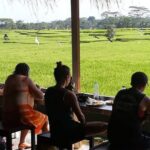
First steps, best views. A Sidemen trekking walk gives you rural Bali from the ground up—rice terraces up close, plus Mount Agung hanging over the valley. I also like that the guides (often people like Adidas, Darya, Adi, or Wayan) keep the walk practical: how rice farming works, why irrigation matters, and what daily village life looks like beyond the photo stops.
One thing to plan for: this is an easy walk pace, but you still need good balance. Some paths near irrigation and terrace edges can be narrow and slippery, especially if the ground is damp.
In This Review
- Sidemen Trekking At A Local Pace: What You’re Really Signing Up For
- The Walk Route: From Pasar Sidemen to Warung Ume Anyar
- Start at Pasar Sidemen (the Upa Boga shop)
- Trek upward toward rice paddies and Mount Agung
- Follow irrigation: the working backbone of the fields
- Cross a hanging wooden bridge
- Village and a temple stop
- Up and down village streets, then back into the fields
- Finish at Warung Ume Anyar (Ogang Village)
- What I Like Most: The Top Reasons This Walk Gets 5-Star Ratings
- Close-up rice terrace views (not just distant photos)
- Mount Agung in the frame
- Guides who make the route make sense
- Easy timing and small groups
- Practical, gentle “adventure”
- The Main Considerations: Footing, Fitness, and Shoe Choice
- The walk is “easy” but not “effortless”
- Mud and dirt are part of the deal
- Moderate fitness is enough, but balance matters
- Weather matters
- Price and Value: Is $13.75 Worth It?
- Getting There Without Stress: Meeting Point and Transport Reality
- Where you start
- From your hotel
- After the trek: plan your pickup
- Optional: walk back if you want
- What to Bring (This Tour Will Judge Your Shoes)
- Who This Sidemen Trek Is Best For
- Should You Book It? My Honest Recommendation
- FAQ
- Where does the Sidemen trekking tour start?
- How long is the trek?
- Is hotel pickup included?
- What’s included in the price?
- Is this walk hard?
- What should I bring?
- What happens if the weather is bad?
Sidemen Trekking At A Local Pace: What You’re Really Signing Up For
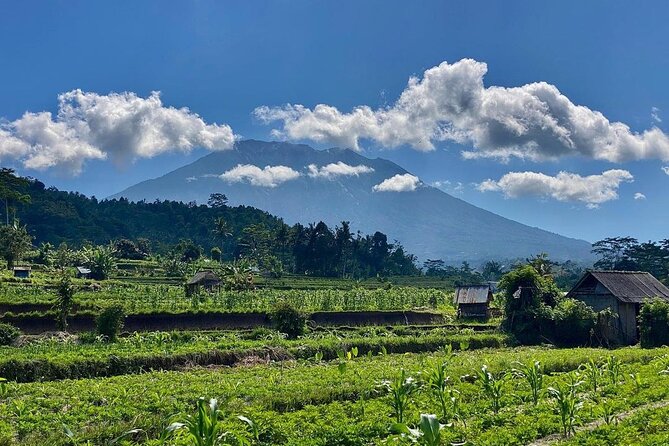
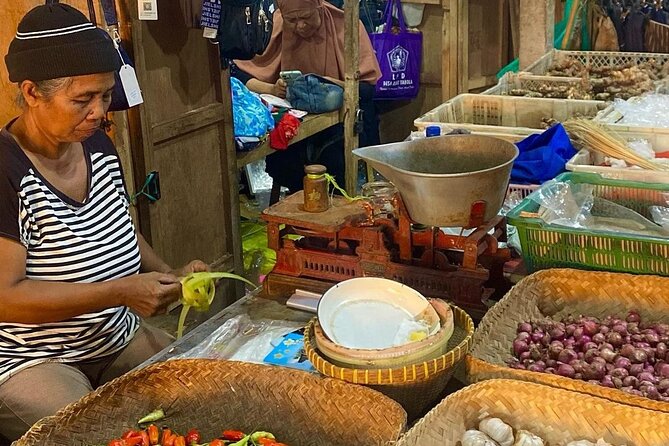
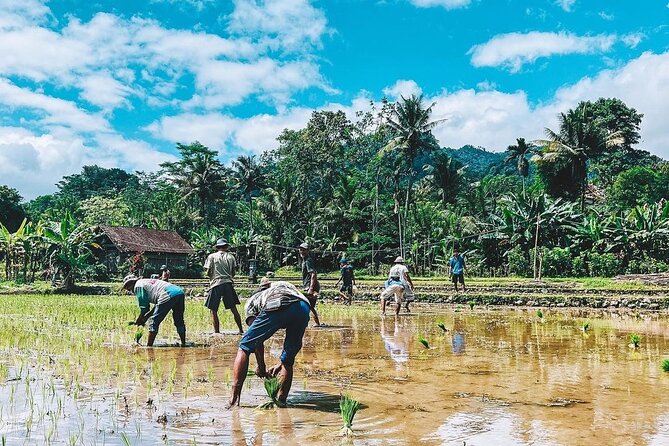
This is not the sort of “hard hike” where you grind uphill for hours. The Sidemen trekking experience is closer to a guided walk through active farming and village lanes, timed to the rhythms of the landscape. You’ll see rice fields and small bridges you’d miss if you only followed obvious viewpoints.
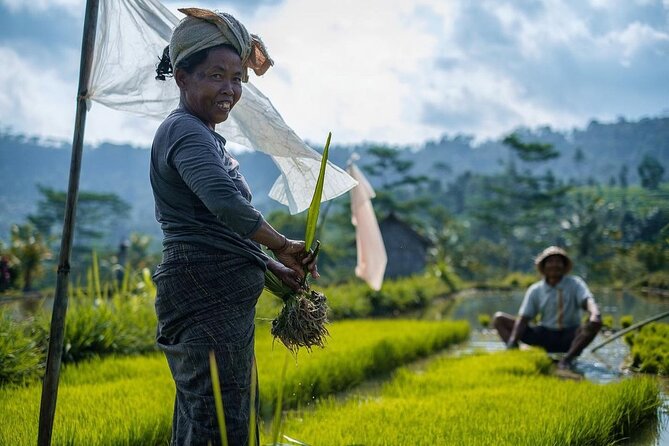
What makes it feel special is the route. You’re not just looking at terraces from a distance; you’re moving along the same kinds of paths farmers use. That changes everything. The rice terraces stop being scenery and start becoming a working system—water, footpaths, irrigation channels, and the daily routines that keep it all going.
And because the trek is only about 2 hours (often stretching to around 2–2.5 hours with relaxed stops), it’s a great “half-day” activity when you still want to enjoy the rest of your Bali time without feeling wrecked.
The Walk Route: From Pasar Sidemen to Warung Ume Anyar
You can also read our reviews of more walking tours in Ubud
Start at Pasar Sidemen (the Upa Boga shop)
You meet at Pasar Sidemen, the traditional market, at the shop with the sign Upa Boga. If you’re staying in Sidemen, plan your arrival so you’re at the market on time—this isn’t a tour where you can easily wander in later and catch up.
If you want a head start, the market is open from about 5:00 AM to 10:00 AM. That’s useful if you like to see the village wake up before the walk begins. If you’re not doing the market first, still expect the area around the market to feel lived-in and busy in the normal way.
Trek upward toward rice paddies and Mount Agung
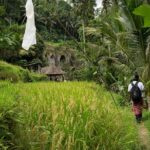
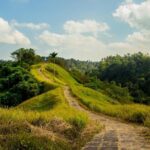
From the market, you head toward the rice paddy areas. Expect paths with little or no clear stepping—sometimes the “trail” is basically a farmer’s route across uneven ground. Many parts are scenic and satisfying, but you do need to watch your feet.
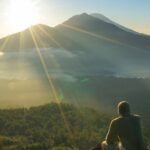
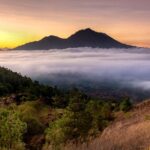
As you move, the direction stays oriented toward Mount Agung. The volcano becomes a visual anchor for the whole experience, not just a distant background photo. You get moments where the viewpoint lines open up and then you’re right back into village lanes and farming edges.
Follow irrigation: the working backbone of the fields
A big part of why this trek is worth doing is the emphasis on irrigation. You’ll follow the paths connected to the water that feeds the fields—so instead of just seeing rice, you understand how water is guided, distributed, and used.
This is also where the walk can feel slightly “technical,” even though the pace is relaxed. Narrower sections hug terrace edges and channels. If it’s been raining or the ground is damp, it can feel slick underfoot.
Cross a hanging wooden bridge
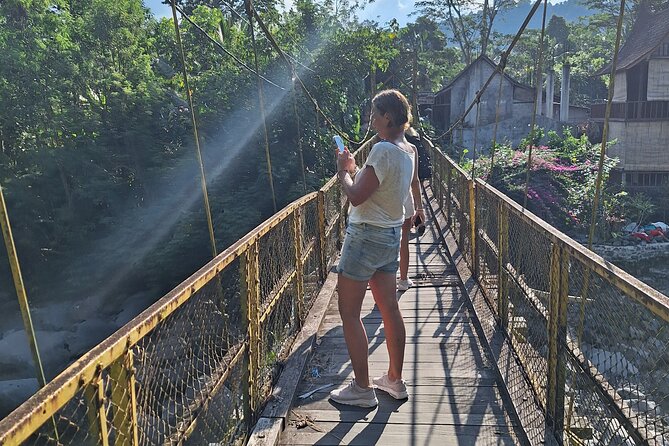
At some point, you’ll pass through a hanging wooden bridge that’s designed to handle both motorbikes and people. That’s a detail I love for two reasons: it proves how practical the bridge is for locals, and it adds a real sense of place to the route. You’re not crossing a tourist prop—you’re crossing an everyday connection.
You can also read our reviews of more hiking tours in Ubud



Village and a temple stop
Along the way, you pass through village areas and a local temple used for praying by villagers. This gives the walk more meaning than “pretty farmland.” Bali Hindu life is part of daily routine, and you can feel that through the small pauses and explanations from your guide.
Up and down village streets, then back into the fields
The trek alternates between walking up and down streets in the village and returning to the rice fields following irrigation. That mix keeps the route from becoming monotonous, and it helps you understand how farming and community are interwoven.
Finish at Warung Ume Anyar (Ogang Village)
The trek ends at Warung Ume Anyar Restaurant in Ogang Village. This is a good place to cool down, grab a drink, and figure out your next move without having to rush. The tour includes bottled water, but you’ll likely want something more substantial after the walk—especially if you go in the morning.
What I Like Most: The Top Reasons This Walk Gets 5-Star Ratings
This trek has a consistent pattern in what people rave about: you get real rural Bali plus a guide who turns the walk into a learning experience without making it feel like a lecture.
Close-up rice terrace views (not just distant photos)
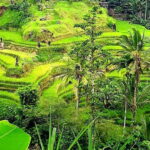
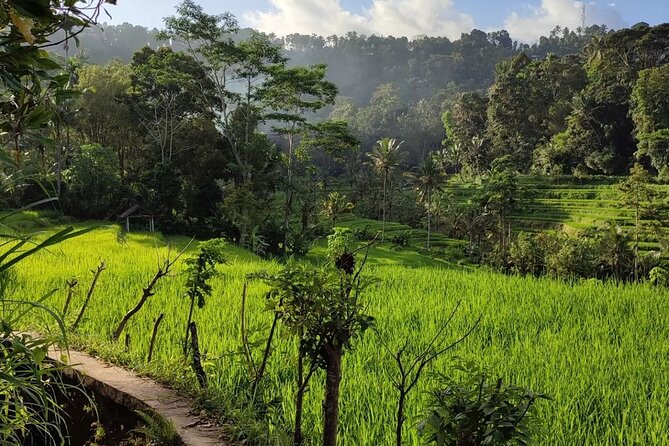
The rice field parts are often the highlight. People like that you walk on the working paths, then hit viewpoints where the terraces open up dramatically. You’re seeing layered fields and water systems at angles you can’t easily get from a roadside look.
Mount Agung in the frame
Mount Agung isn’t just a background detail. It shows up as a constant point of reference while you walk, and that makes the scenery feel anchored rather than random.
Guides who make the route make sense
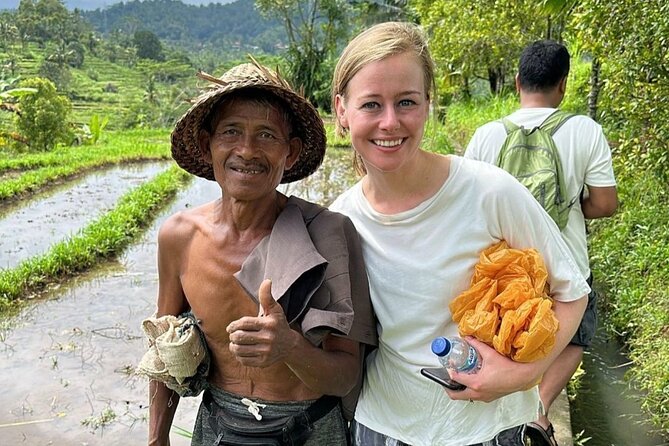
You’ll hear stories about rice farming and village life—often in a lively, friendly way. Names that show up again and again include Adidas, Darya, Adi, and Wayan. The common thread: guides explain what you’re seeing and keep the pacing human.
One nice bonus from the experience style is that they don’t just point and move. You get time for questions, and the guide often knows locals along the way, which makes the trek feel more connected to the actual community.
Easy timing and small groups
The group size is capped at 10 travelers. That matters because it helps you move at a comfortable pace. You’re not stuck waiting for a long line of people to catch up when the path narrows.
Practical, gentle “adventure”
Even when people describe it as easy, they also call out that you need to watch your step. That balance is good. It’s not an intense hike that drains you, but it’s not a casual stroll with zero attention. You’ll leave feeling like you did something real.
The Main Considerations: Footing, Fitness, and Shoe Choice
This is where you should be honest with yourself before booking.
The walk is “easy” but not “effortless”
The duration is around 2 hours, and the overall pace is relaxed. Still, expect narrow sections, uneven ground, and balance-required footing along terrace edges and irrigation routes. If you struggle with uneven terrain, bring the right shoes and take your time.
Mud and dirt are part of the deal
One of the most repeated pieces of advice is simple: wear shoes you don’t mind getting dirty. You’ll be walking through paths that aren’t designed to stay spotless.
Moderate fitness is enough, but balance matters
The experience notes say moderate physical fitness is required. A common caution from people who walked it is that elderly visitors may find some terrace and waterway paths challenging—not necessarily because of steepness, but because the footing is narrow.
Weather matters
The experience requires good weather. If weather turns, you can be offered another date or a refund. In practice, that means you should check forecast timing and be ready for rescheduling if conditions aren’t suitable.
Price and Value: Is $13.75 Worth It?
At about $13.75 per person, this trek is priced like a budget-friendly, high-value village experience. And the value isn’t only the price—it’s what you get for it:
- A guided route that takes you off obvious paths and into the working farming layout.
- Included bottled water, plus frequent short stops for explanations and viewpoints.
- Small group size (max 10), which keeps the experience personal enough to ask questions.
- A finish point at a restaurant (Warung Ume Anyar), so your day doesn’t end in transit stress.
The main costs to account for are tips (not included) and your transport to/from the meeting point. There’s no hotel pickup or drop-off, so you’ll either arrange your own local ride or plan to use local transport solutions that work with Sidemen access rules.
Getting There Without Stress: Meeting Point and Transport Reality
Where you start
Your meeting point is Pasar Sidemen, at the Upa Boga shop. This matters because “meeting at the market” can mean different things in practice, and you don’t want to waste energy hunting.
From your hotel
If you’re staying in Sidemen, plan your transport through your hotel. Grab can be limited in the area, and some hotels don’t allow Grab pickups at the hotel (drop-off only). That’s why arranging a driver ahead of time can save time and avoid last-minute confusion.
After the trek: plan your pickup
The trek ends around 2–2.5 hours after it starts, so schedule your ride with that in mind. Grab may be available, but there aren’t many drivers nearby, and some may request extra payment. If you care about a smooth finish, arrange a driver ahead of time so you’re not waiting by the road.
Optional: walk back if you want
If you need it, you can walk back to the start point. It’s about 3 km and takes around 30–40 minutes along the main road. This is only for when you feel good after the trek and want to keep travel costs down.
What to Bring (This Tour Will Judge Your Shoes)

The experience asks you to bring a few mandatory items, and I’m with them:
- Sun hat
- Hiking boots/shoes
- Suncream
- Sunglasses
Beyond that, I’d add one practical mindset: treat this like you’re walking into a working rural area, not a landscaped park. Your shoes should be grippy and comfortable, because the ground can be uneven and sometimes slippery.
Also consider light layers. Mornings in Bali can feel cooler near the valley, and sun can get strong once you’re out in the open.
Who This Sidemen Trek Is Best For
This is a great choice if you want:
- A rural Bali experience away from the busiest beach-zone routines
- Rice terrace views with an actual local route
- A guide who explains farming and everyday village life
- A half-day activity that isn’t punishing
It may be less ideal if you:
- Have mobility issues that make narrow, uneven paths hard
- Hate the idea of muddy shoes
- Want a fully marked, stroller-friendly trail
If you’re the type who enjoys markets, small bridges, temples used by locals, and learning how something works (like irrigation and rice growing), you’ll probably find this very satisfying.
Should You Book It? My Honest Recommendation
I’d book the Sidemen Trekking walk if you want authenticity more than spectacle. The route connects village life, farming, and the Mount Agung backdrop in a way that feels real, not staged.
But book with the right expectations. It’s not a rugged mountain trek. It’s a guided rural walk where you’ll spend most of the time watching your footing and enjoying the views through active rice-farming country. If that sounds like your kind of Bali day, you’re going to love it.
If your biggest priority is comfort-first walking on wide, easy paths, then you might be happier with a different kind of sightseeing.
FAQ
Where does the Sidemen trekking tour start?
It starts at Pasar Sidemen (Sidemen Traditional Market), specifically at the shop with the sign Upa Boga.
How long is the trek?
Plan for about 2 hours (approximately), with some tours running around 2 to 2.5 hours including the pace and stops.
Is hotel pickup included?
No. Hotel pick-up and drop-off are not included, so you’ll need to arrange your own transport to the meeting point and from the finish.
What’s included in the price?
Bottled water is included. Tips are not included.
Is this walk hard?
It’s described as requiring moderate physical fitness. The pace is generally not taxing, but you do need good balance because some paths in the rice fields can be narrow and may be slippery.
What should I bring?
You should bring a sun hat, hiking boots or shoes, suncream, and sunglasses.
What happens if the weather is bad?
The experience requires good weather. If it’s canceled due to poor weather, you’ll be offered another date or a full refund.