REVIEW · TOUR REVIEWS
Transforming Plastic Waste A Hands On Recycling Experience
Book on Viator →Operated by r•Plastic · Bookable on Viator
Plastic turns into stuff you can hold. In Ubud at r•Plastic, you’ll get a hands-on look at how local plastic waste becomes new materials. I love how practical it is (you’re doing real sorting and making), and I love the moment the CNC machine turns plastic into usable products.
You’ll also get an honest rundown of Bali’s plastic problem—why recycling is tricky, and why small, local systems matter. One drawback to consider: there’s no food on-site, so plan your meal timing before or after.
In This Review
- Key Highlights You’ll Care About
- Why This Ubud Recycling Studio Beats a Typical One-Off Workshop
- The 90-Minute Plan: What You’ll Actually Do
- Welcome + Bali’s Plastic Problem (and Why Recycling Is Hard)
- Plastics + Recycling Basics (Types, Sorting, and Limits)
- Studio Tour + Machine Demos (How a Small Setup Works)
- Sorting Bottle Caps by Color and Type
- Making Your Own Recycled Artwork
- CNC Machine Demo (Plastic Becoming Products)
- Q&A + Souvenir: The Keychain You Take Home
- Sorting Bottle Caps: The Tiny Step That Explains the Whole System
- Creating Artwork From Recycled Plastic (Yes, You Make Something)
- The CNC Demo: When Recycling Becomes Real Manufacturing
- Price and Value: Why $15.06 Can Feel Like a Lot (in a Good Way)
- What’s Included (and What You Need to Plan For)
- Getting There: Meeting Point in Kemenuh (Not Deep in Central Ubud)
- Who Should Book This (and Who Might Not)
- Should You Book This Hands-On Plastic Recycling Experience in Ubud?
- FAQ
- FAQ
- How long is the r•Plastic recycling experience?
- How much does it cost?
- Where do I meet for the experience?
- Is lunch included?
- Is bottled water included?
- What’s included besides the activities?
- What will I do during the workshop?
- Do I take home a souvenir?
- How big are the groups?
- What’s the cancellation policy if the weather is bad?
Key Highlights You’ll Care About
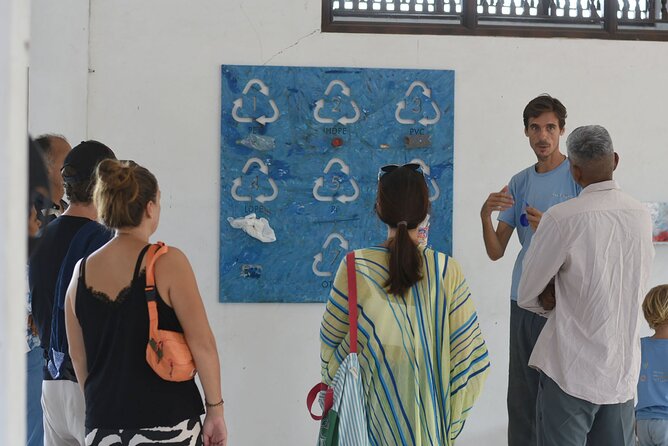
- Sort bottle caps by color and type so you learn why plastics aren’t all the same
- Make your own recycled artwork using the materials from the studio
- Watch the CNC machine in action, turning plastic into items like surfboard racks and furniture
- Learn Bali’s waste challenges with clear explanations led by Martijn Huizing and the team
- Take home a handmade keychain made from Bali’s recycled plastic
Why This Ubud Recycling Studio Beats a Typical One-Off Workshop
Ubud is full of crafts. Most of them are lovely, but they don’t always connect to a real-world problem. This one does.
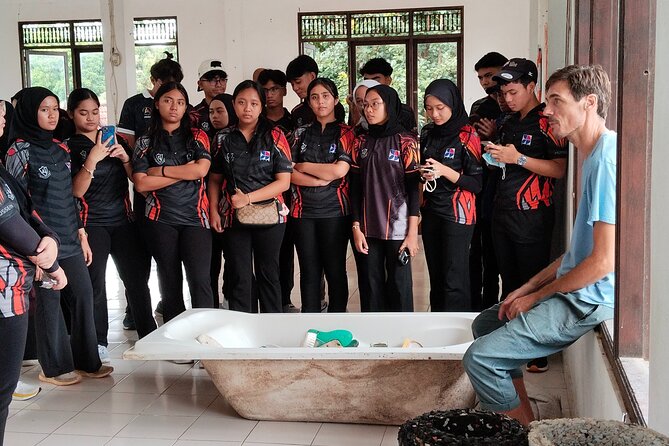
At r•Plastic, the point isn’t just to watch. It’s to see plastic waste get processed in a working studio, then to take part in the process. You’ll sort plastic caps, make something artistic from recycled pieces, and watch machines do the heavy lifting. It’s part classroom, part maker-space, and part “wait, that’s actually what happens” reality check.
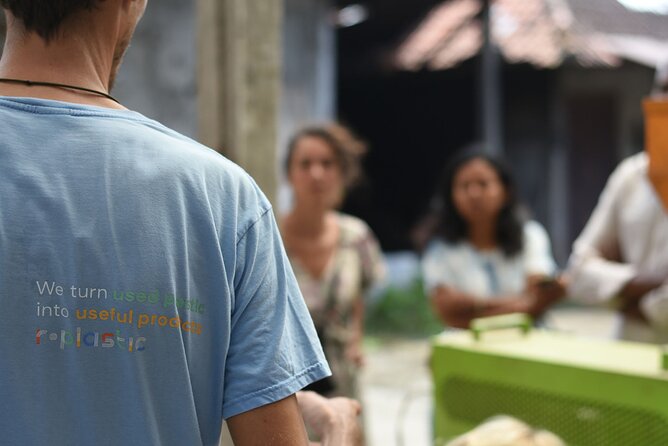
I also like the energy here. The reviews point to Martijn Huizing and the team explaining the whole chain with real enthusiasm. That matters, because recycling isn’t a magic trick. You get a sense of the tradeoffs—what can be sorted, what can be processed, and how creative reuse fits into the bigger waste picture.
You can also read our reviews of more tours and experiences in Ubud.



The 90-Minute Plan: What You’ll Actually Do
This experience is about 1 hour 30 minutes. It moves at a workshop pace: enough time to learn, enough time to make, and enough time to see the machines without dragging on.
Here’s how your time typically flows:
Welcome + Bali’s Plastic Problem (and Why Recycling Is Hard)
You start with a welcome and intro that frames the bigger issue: Bali’s plastic challenge and why recycling matters. You’ll also hear about the studio’s approach—how product design and sustainability connect, not just as a feel-good slogan.
Practical note: if you like questions, this is when you’ll want to ask. The team encourages Q&A later too.
Plastics + Recycling Basics (Types, Sorting, and Limits)
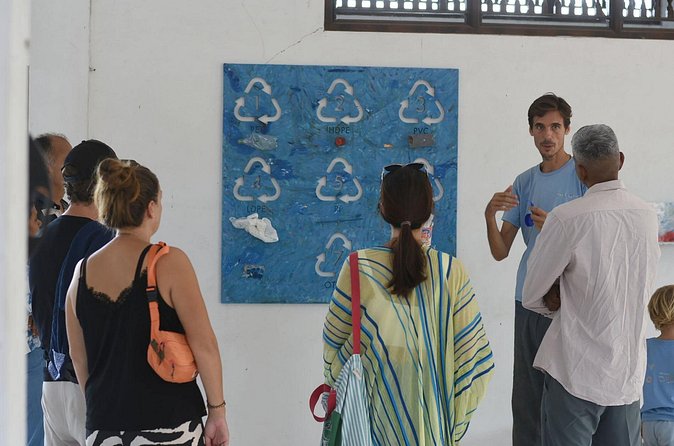
Next comes a plastics and recycling section focused on types of plastic and the waste challenges specific to Bali. One review mentioned learning the seven different types of plastic in their program, and that fits with the core message: sorting is everything.
If you’ve ever wondered why recycling rules feel inconsistent, this part helps. You’ll see that the “recycling bin” idea is too simple for how materials actually behave once they’re processed.
Studio Tour + Machine Demos (How a Small Setup Works)
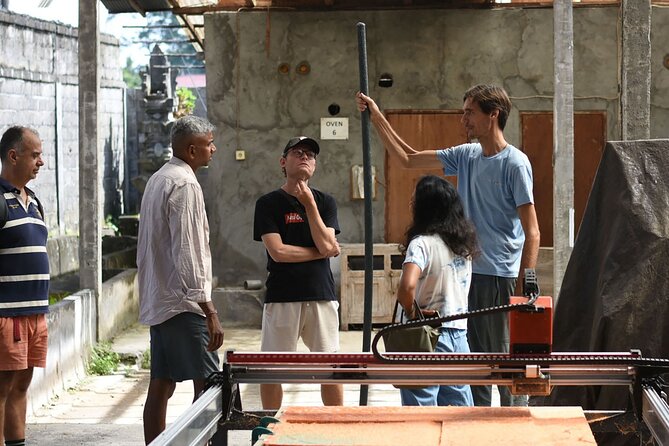
Then you get a studio tour. This is where the visit turns from theory into reality. You’ll see the self-built machines used to process plastic waste—equipment that’s part science, part engineering, and part “we figured this out ourselves” determination.
From there, you shift into hands-on tasks.




Sorting Bottle Caps by Color and Type
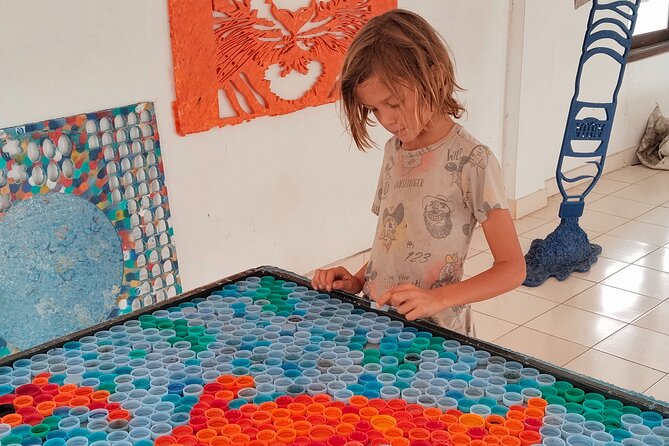
This is one of the most teachable parts. You’ll sort bottle caps by color and type. It doesn’t sound glamorous, but it’s smart, because it trains your eyes to see categories that machines also need.
This is also where the tour becomes more social. You’re doing the same small steps as the people around you, so the workshop feels cooperative rather than like a lecture.
Making Your Own Recycled Artwork
After sorting, you move into creativity. You’ll create your own artwork from recycled plastic. It’s not about being an artist. It’s about understanding materials and seeing what becomes possible once waste is treated like raw input.
CNC Machine Demo (Plastic Becoming Products)
One of the headline moments: a CNC machine demo. You’ll watch plastic being cut into products, including examples like surfboard racks and furniture.
This part is worth showing up for even if you’re not a “maker.” Seeing plastic become structured, functional items gives you a clearer picture of what recycling can realistically produce—beyond “someone else will figure it out.”
Q&A + Souvenir: The Keychain You Take Home
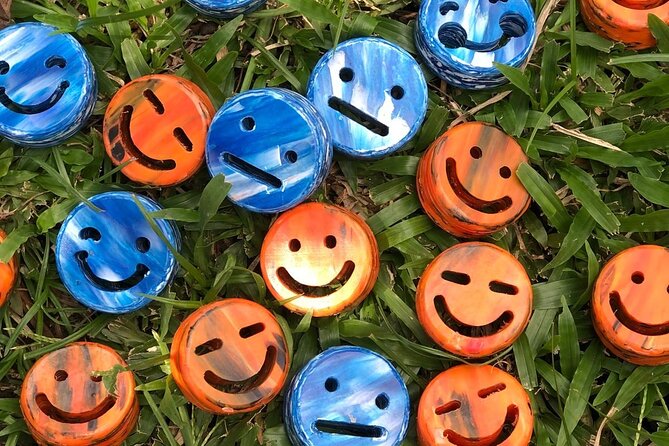
You wrap up with Q&A and a souvenir. You’ll take home a handmade keychain crafted from Bali’s recycled plastic—small, yes, but it’s a physical reminder that waste can get a second life.
Sorting Bottle Caps: The Tiny Step That Explains the Whole System
The cap-sorting activity is one of those things that feels small until you realize what it teaches. Plastics are not interchangeable. Different types behave differently, and recycling only works when the input is separated in the right way.
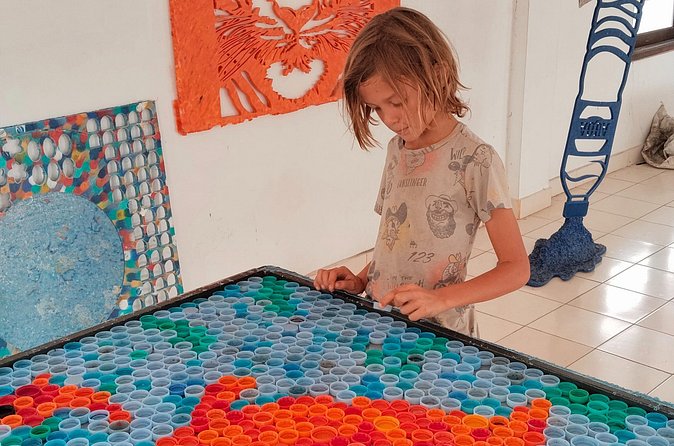
By sorting bottle caps by color and type, you practice the exact skill that recycling depends on: classification. It’s also a fast way to make the lesson stick. You’re not just hearing about sorting—you’re doing it with your hands.
And because the caps are easy to handle, this activity works well across ages. Multiple school-trip reviews described kids getting into it quickly, which is a good sign for families.
Creating Artwork From Recycled Plastic (Yes, You Make Something)
Some tours show recycling. This one has you make. The artwork part gives you a practical understanding of how recycled material can be shaped into something meaningful.
I like this section because it avoids the trap of treating recycling like only a solemn duty. You still take the environmental problem seriously—but you also see that creativity can change how people value materials.
If you’re traveling with someone who gets bored by lectures, this is often the sweet spot. Sorting can feel like a task; art makes it feel like participation.
The CNC Demo: When Recycling Becomes Real Manufacturing
The CNC machine demo is the most “how does this scale?” moment in the experience.
You’re shown plastic being cut into products like surfboard racks and furniture. That matters because it connects recycling to tangible outcomes: storage, function, everyday objects. It also helps you understand why decentralized recycling can matter. When local systems can turn waste into usable items, the story becomes less about exporting the problem and more about keeping value in the community.
If you like engineering, this part will hold your attention. If you don’t, it still gives you a satisfying visual: plastic doesn’t just get melted and hoped for. It gets processed with intention.
Price and Value: Why $15.06 Can Feel Like a Lot (in a Good Way)
At $15.06 per person for about 1 hour 30 minutes, you’re not paying for a bus tour or a scenic viewpoint. You’re paying for a workshop-style experience where you learn, do hands-on work, watch equipment run, and take home a handmade souvenir.
That mix is the value:
- You get a structured learning session about plastics and Bali’s waste challenges
- You do hands-on tasks (sorting and making artwork)
- You see machine demos, including the CNC cutting process
- You take home a recycled keychain
Also, the group size max is 20, which helps keep it from feeling like a conveyor belt. Another practical detail: this is booked about 23 days in advance on average, so if you’re going during a busy stretch, it’s smart to lock in your slot earlier rather than waiting.
What’s Included (and What You Need to Plan For)
Here’s what you get:
- Bottled water for topping up your own bottle (they don’t provide water bottles)
- Parking space available
What’s not included:
- Lunch (no food or drinks are available beyond the water topping up)
So yes, plan your day. If you’re doing this in the middle of your Ubud schedule, eat before you go or plan a meal after. Bring a refillable water bottle if you can.
Because it’s a studio setting with plastic sorting and making, you might want to wear comfortable clothes and shoes that handle a workshop environment. No specific dress code is stated, so keep it practical.
Getting There: Meeting Point in Kemenuh (Not Deep in Central Ubud)
The meeting point is listed as F73J+CFR on Jl. Ir. Sutami in Kemenuh, Sukawati, Kabupaten Gianyar, Bali. The experience ends back at the meeting point.
In real terms, that means you should budget travel time from wherever you’re staying in Ubud. If you’re basing yourself in the most central parts, you’ll likely treat this as a half-day-style stop even though it’s only 90 minutes long.
Who Should Book This (and Who Might Not)
This experience is a strong fit if you:
- want something more meaningful than sightseeing
- like hands-on activities (sorting and making)
- care about sustainability but want practical, not preachy, explanations
- want a family-friendly workshop—school groups and kids-focused visits seem to be a big part of what they do
You might consider skipping or rethinking it if you:
- need food included (there’s no lunch or on-site meals)
- don’t want to be in a working studio environment
- are sensitive to situations where weather could affect operations (they note the experience requires good weather)
Should You Book This Hands-On Plastic Recycling Experience in Ubud?
I’d book it if you want a rare Ubud stop with real purpose. The combination of sorting, making, and watching the CNC machine is what makes it work. You leave with both understanding and a tangible souvenir.
If you’re expecting a passive show, it won’t match. But if you’re willing to roll up your sleeves for a short workshop, this is one of the better-value “learn and do” activities around. Bring your questions, eat beforehand, and you’ll get a much clearer picture of what recycling looks like when it’s happening in Bali.
FAQ
FAQ
How long is the r•Plastic recycling experience?
It’s approximately 1 hour 30 minutes.
How much does it cost?
The price is $15.06 per person.
Where do I meet for the experience?
The meeting point is F73J+CFR, Jl. Ir. Sutami, Kemenuh, Kec. Sukawati, Kabupaten Gianyar, Bali 80582, Indonesia.
Is lunch included?
No. Lunch is not included, and no food or drinks are available. You can top up your water bottle.
Is bottled water included?
Yes. Bottled water is available to top up your own water bottle for free. Water bottles are not provided, since they don’t like single-use plastic.
What’s included besides the activities?
Bottled water (for topping up) and parking space are included.
What will I do during the workshop?
You’ll learn about plastic types and Bali’s waste challenges, tour the studio and see machine demos, sort plastic bottle caps by color and type, create your own recycled artwork, and watch a CNC machine demo. You’ll also have time for Q&A.
Do I take home a souvenir?
Yes. You’ll take home a handmade keychain made from Bali’s recycled plastic.
How big are the groups?
There’s a maximum of 20 travelers.
What’s the cancellation policy if the weather is bad?
Cancellation is free. You can cancel up to 24 hours in advance for a full refund. If it’s canceled due to poor weather, you’ll be offered a different date or a full refund.