REVIEW · BALINESE COOKING CLASSES
Balinese Cooking class with traditional morning market visit
Book on Viator →Operated by Bali Ubud Tour · Bookable on Viator
Breakfast markets and cooking lessons, no fuss. In Ubud, you start with a traditional morning market where a local chef helps you pick ingredients and encourages tasting. I love the canang offering lesson before you cook, and I love the small-group feel that keeps the class interactive. The one possible drawback is the time commitment, roughly 6 hours, so you’ll want a lighter afternoon afterward.
Hotel pickup gets you moving in air-conditioned comfort to the market and workshop area, then you head to Laplapan village for a warm welcome. The whole setup is paced so you cook alongside the chefs (not just watch), with a maximum of 8 people in the group. You finish by sitting down to eat what you made.
In This Review
- Key things you’ll notice right away
- Ubud morning logistics: pickup, timing, and what to expect
- The traditional morning market: choosing ingredients the local way
- Laplapan village welcome: the meaning and process of Balinese offerings
- Inside the workshop: how the class flows step by step
- The meal you make: more than a final plate
- Price and value: is $35 really a fair deal in Ubud
- Who should book this class, and who might not love it
- Should you book this Balinese cooking class with market visit?
- FAQ
- How long is the Balinese cooking class with a morning market visit?
- Is hotel pickup included?
- How big is the group?
- What happens during the traditional market visit?
- Is Balinese offering-making included?
- What is the cancellation policy?
Key things you’ll notice right away
- A true morning market: you shop the herbs, vegetables, meat, and spices you’ll actually cook with
- Offering-making included: you learn the process of making canang and related items before the stove
- Small group, hands-on pace: maximum 8 people means more time answering questions
- Chef-led instruction with flexibility: guidance is provided throughout, and vegetarian/dietary needs can be accommodated
- You eat your own work: starters, mains, and dessert, served as a sit-down meal
Ubud morning logistics: pickup, timing, and what to expect
This is built for the kind of morning that wakes up your appetite. You’ll get hotel pickup and travel in an air-conditioned vehicle to both the market stop and the cooking workshop. The total time is about 6 hours, which is long enough to learn a lot, not so long that you lose your whole day.
Because it’s a cooking class, you should expect hands-on time where you’ll be working with ingredients and tools. Wear something comfortable you don’t mind getting a little spice-scented. If you’re the sort who loves a clean start, bring a small towel or extra wipes for the end of the class.
The workshop is described as being in the Ubud jungle surroundings, which matters more than you’d think. A scenic setting helps the day feel like an experience, not a task. Still, the key point is practical: the class is set up so you can focus on cooking, not logistics.
You can also read our reviews of more shopping tours in Ubud
The traditional morning market: choosing ingredients the local way
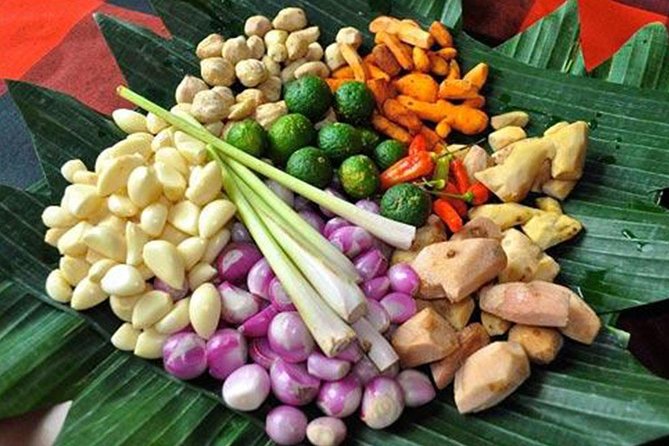
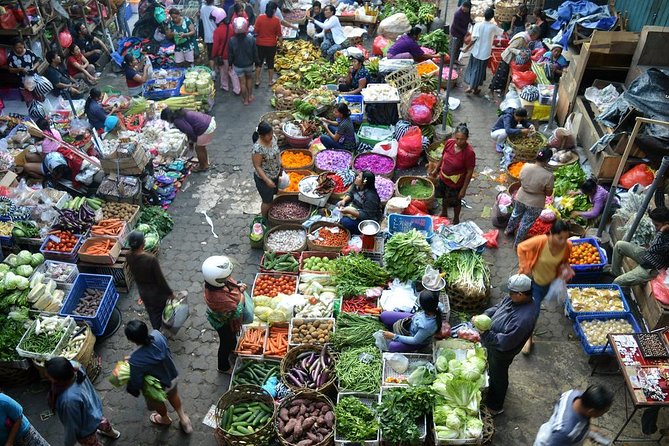
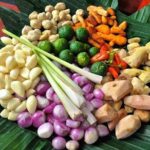
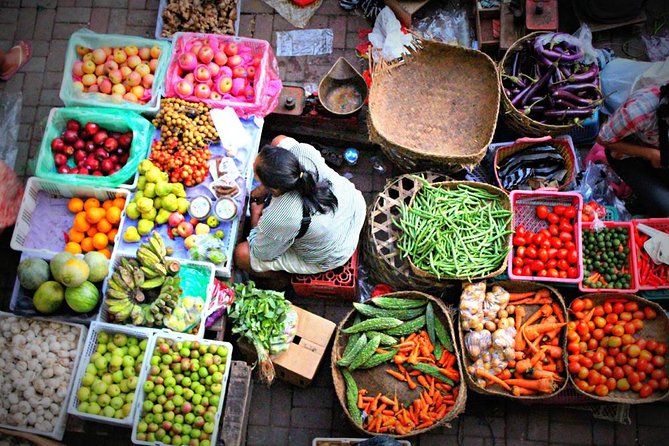
The market visit is where the experience starts to feel real. Instead of showing you a list of ingredients, you’re selecting from what’s on display—vegetables, herbs, meat, spices—right there. This is also where you can get quick orientation. A chef helps translate what things are used for, and you can taste items you’d likely skip if you were just walking through on your own.
This stop has a big upside for food lovers: you learn flavor logic, not just recipe steps. You’ll start understanding how certain ingredients show up across multiple dishes. And when you later cook, you’re not guessing. You chose it, you tasted it, and you know what it’s meant to do.
One small consideration: markets can move fast and smell strong (in a good way). If you’re sensitive to strong aromas, pace yourself during tasting. And if you want to remember what you picked, take a couple of mental notes while you’re selecting. The goal isn’t to memorize every label; it’s to build a sense of which ingredient goes where.
Laplapan village welcome: the meaning and process of Balinese offerings
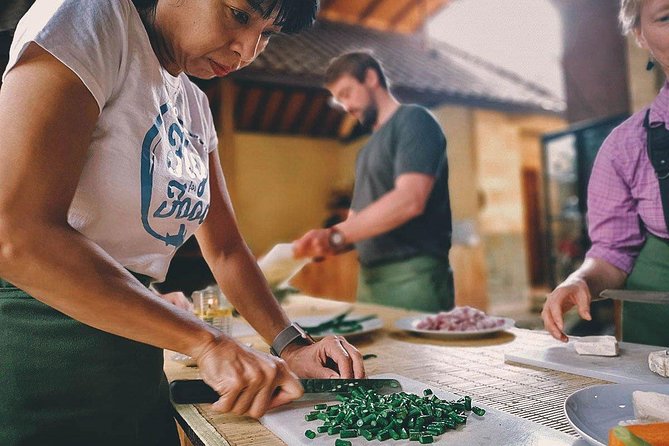
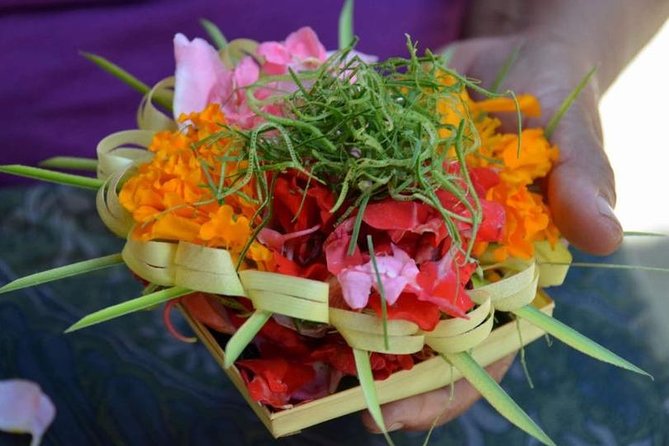
Before the cooking really ramps up, you’ll learn how to make Balinese offerings—especially canang—and the related equipment. This isn’t a quick “here’s a pretty thing” moment. The process is taught before the class begins, so you understand what you’re making and why it fits into daily life.
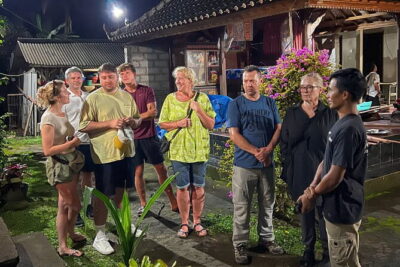
The Laplapan village welcome adds a human layer. You’re not just studying food in a classroom. You’re meeting locals in a traditional village setting, and that warmth shows up in the way the day unfolds. Multiple classes are described as being led with kindness and humor, which makes a cultural task like this feel approachable.
Why this matters for your cooking: Balinese food culture is tied to ritual and daily practice. When you learn the offering process first, the meal afterward feels less random. You’re seeing food as part of a living system, not just something you eat.
If you’re expecting a pure cooking class with zero cultural detours, this offering segment may take your brain a few minutes to switch gears. But that’s also why it’s memorable.
Inside the workshop: how the class flows step by step
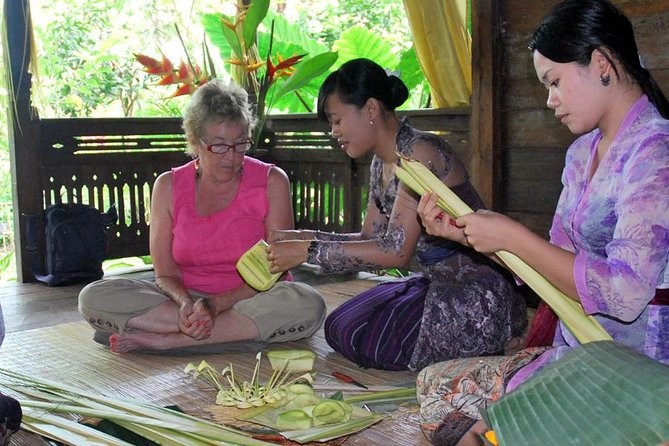
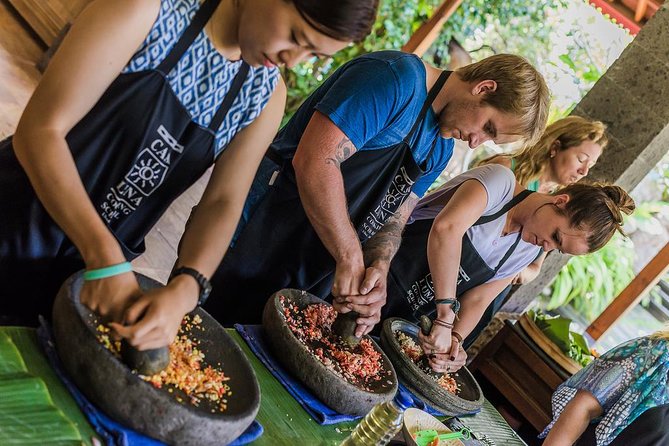
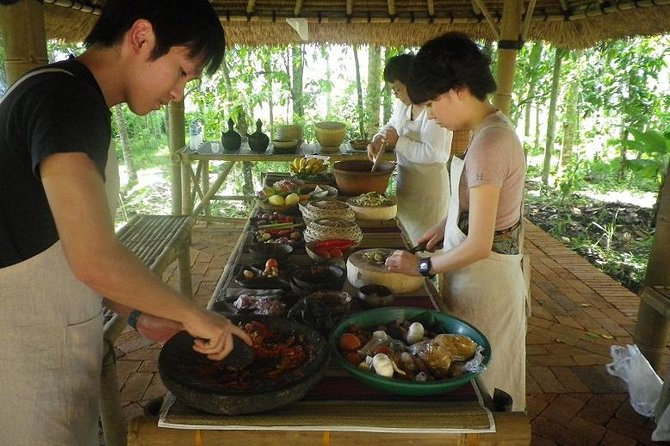
The cooking class itself is guided by expert chefs who provide assistance as you work. Instruction is hands-on and interactive, and the pacing is described as efficient rather than rushed. One reason this class gets high marks is that you end up cooking multiple dishes rather than doing one small task for the group.
Most classes include guidance from a host-chef team. In past experiences, chefs and hosts named Wayan and Dewa have led the cooking, and guides like Putu or Puthu have appeared at the market and throughout the day. Names can vary by date, but the consistent theme is clear: you’re working with people who know the food and want to teach it in a friendly way.
You’ll prepare starters, main courses, and an authentic dessert. Expect teamwork: you’ll do your part, then rotate attention between chopping, mixing, and cooking steps. Many participants also describe some prep being done in advance, which helps the class move at a good pace without feeling chaotic.
A practical tip: if you have dietary requirements, speak up early. Past experiences mention that vegetarian options can be offered and that dietary needs are sometimes adapted. The sooner the kitchen knows, the easier it is to adjust during cooking rather than at the end.
The meal you make: more than a final plate
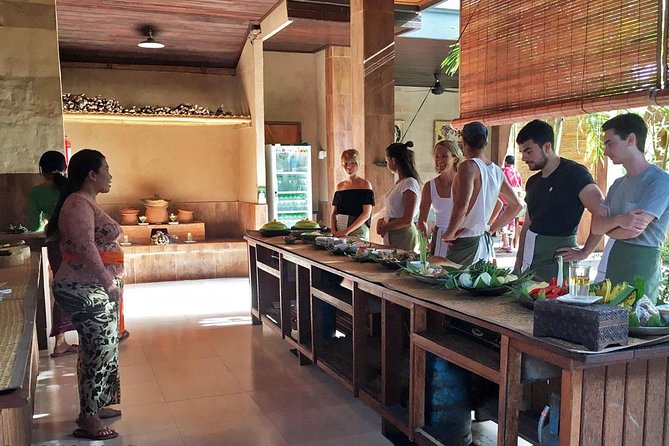
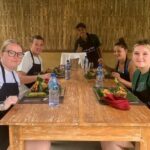
This isn’t one dish and a side. The finish is a sit-down meal where you savor the food you made. Depending on the group and pace, many people report cooking around nine dishes and then eating them as a complete spread. Others describe a multi-course flow such as a 5-course set.
Either way, the structure matters. You’re not only learning how to cook; you’re learning how the dishes fit together as a meal. That’s a big advantage if you plan to cook at home later. You’ll remember the sequence and the reason each part exists.
And the food isn’t just good; it’s often described as beautiful. That matters because presentation changes how you perceive flavor. If you can recreate something that looks like what you ate, you’re more likely to cook again after your trip.
You’ll also have chances to ask questions during the cooking. One of the most praised elements is how instructors explain what you’re doing and why. That’s helpful if you’re a first-timer or if you’ve cooked before but want to learn the Balinese approach.
You can also read our reviews of more tours and experiences in Ubud



Price and value: is $35 really a fair deal in Ubud
At $35 per person for about 6 hours, this class is priced like a value experience rather than a luxury “watch someone cook” show. You’re paying for much more than ingredients. The price includes cooking equipment, cooking class fees, taxes, and air-conditioned transport from your hotel to the market and workshop.
That package is the core of the value. If you tried to copy this trip on your own, you’d spend real money on a driver, market time with no interpretation, and a workshop setting with tools. Here, you’re also getting guided selection at the market, an offering-making lesson, and instruction for multiple dishes.
You also benefit from the small-group limit (maximum 8 people). When the group is small, the teaching quality tends to stay focused. You can ask what you need, not what the group already knows.
If you’re traveling in a group of friends, ask about group discounts. That can bring the per-person value even closer to an easy “yes” decision.
Who should book this class, and who might not love it
This is a great fit for you if you want a hands-on Balinese food experience in Ubud. You’ll like it if you enjoy markets, tasting unfamiliar items, and learning the cultural piece behind food. It’s also ideal if you like doing multiple things in one morning: shopping, offering-making, cooking, and then sitting down to eat your results.
It may be less ideal if your schedule is tight. Because it runs about 6 hours, you’ll want time afterward to digest your meal and clean off any lingering spice smells. It’s also less suitable if you dislike early starts, since this centers around a traditional morning market.
If you’re coming solo, that’s workable too. Past experiences describe solo participants meeting others during the class, with a friendly atmosphere and personal attention. If you’re traveling as a family, the format can work well as long as kids can handle the early outing and the hands-on cooking.
For food travelers who want a shortcut to understanding Balinese flavor logic, this class hits the sweet spot. You’re learning how to choose ingredients and how to turn them into a full meal.
Should you book this Balinese cooking class with market visit?
Book it if you want an authentic-feeling morning where cooking starts at the market, not after you’ve forgotten what you bought. The standout value is the combination: market ingredient selection, canang offering-making, and hands-on cooking with a sit-down meal afterward. With a small group limit and chef-led instruction, you’re likely to get real teaching and not just a checklist.
Skip it only if you’re looking for a quick, no-culture cooking hit. This experience includes a meaningful offering lesson and a village welcome, and that takes time. But if you’re the kind of person who enjoys learning why food matters, this is a strong use of your Ubud morning.
FAQ
How long is the Balinese cooking class with a morning market visit?
The experience runs for about 6 hours.
Is hotel pickup included?
Yes. Pickup is offered from your hotel, and air-conditioned transport is included for the market and workshop.
How big is the group?
The group size is capped at a maximum of 8 travelers.
What happens during the traditional market visit?
You visit a local fresh food market, select ingredients such as vegetables, herbs, meat, and spices, and you can taste items while learning what to use.
Is Balinese offering-making included?
Yes. Before the cooking class, you learn the process of making canang and other offering equipment.
What is the cancellation policy?
You can cancel for free up to 24 hours in advance for a full refund. If you cancel less than 24 hours before the start time, the amount paid is not refunded.