REVIEW · BALINESE COOKING CLASSES
Balinese Cooking Class with Traditional Market Tour
Book on Viator →Operated by Bali SUN Tours · Bookable on Viator
Balinese food starts with breakfast-time shopping. This small-group Ubud experience pairs a traditional market visit with hands-on cooking using a stone mortar, then ends with you eating what you made in a traditional open kitchen. I love how the morning market sets the cultural scene before the class even starts, and I love that you learn paste-making the real way instead of just copying a recipe. One thing to consider: the start time is early, and the cooking is hands-on and full-on—so plan to show up well rested and get ready to work.
What makes it practical is the door-to-door flow: you get picked up from your accommodation, you get guided through the market and ingredients, and you return after lunch. In a group of four to 12 (and up to 6 per booking), you’re close enough for real attention, not lost in a crowd.
Key Points at a Glance
- Market first, recipes second so you understand what you’re buying and why
- Stone mortar vs chopping block for spice paste and sauce texture
- Organic garden herb time with a coffee-and-cake-style welcome snack
- 5-course lunch + dessert made by you, not just included
- Door-to-door pickup that keeps the morning simple
- Small-group pace (up to 12 travelers total) for hands-on learning
In This Review
- Balinese market first: the 7:30am rhythm that actually helps you cook
- Organic herb garden + coffee snack: why the pause before cooking is smart
- Stone mortar spice paste: the hands-on skill you’ll remember
- Traditional compound open kitchen: learning in the setting, not a staged classroom
- The 5-course lunch + dessert: come hungry, leave satisfied
- Price and logistics: what $58.16 buys you in the real world
- Who should book this Ubud class—and who might skip it
- Should you book this Balinese Cooking Class with Market Tour?
- FAQ
- What time does this experience start in Ubud?
- How long is the cooking class and market tour?
- Do you get hotel pickup and drop-off?
- What food will I get to eat during the class?
- Is the experience hands-on?
- How large is the group?
- Do I receive a certificate?
- Can I get a full refund if I cancel?
Balinese market first: the 7:30am rhythm that actually helps you cook
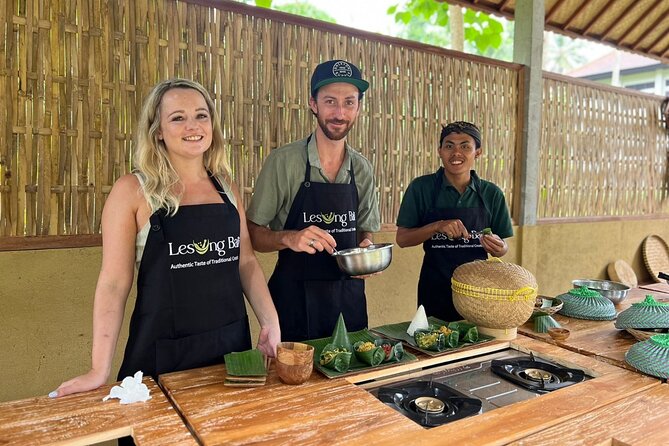
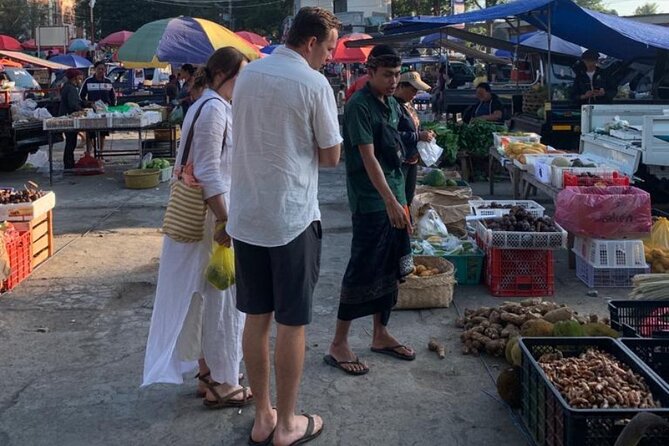
The day begins early, with the traditional market visit starting around 7:30am–8:00am. That timing isn’t random. In Ubud, mornings are cooler, and you’ll feel it as you walk through stalls and see produce and ingredients at their best. It also changes the tone of the whole class: you’re not just learning cooking steps in a classroom; you’re learning how Balinese meals connect to everyday shopping and daily life.
This part matters because Balinese cooking is driven by ingredients—especially herbs, aromatics, and how they’re processed. When you watch items move from stall to basket, you start to understand why certain flavors show up again and again later in the dishes.
You’ll have a guide who walks you around the market and talks through what you’re seeing. In past sessions, Ron has explained different vegetables and fruit and shared Balinese traditions in a way that makes the market feel like a living place, not a photo stop. Another guide you may meet is Nyoman, who escorts you through the market so you don’t just follow blindly—you learn what you’re looking at.
Possible drawback: if you’re not a morning person, the early start can feel like a jolt. The trade-off is that you’ll likely enjoy the rest of the day more because the heat and crowds usually haven’t fully ramped up yet.
Practical tip: wear shoes you can handle on uneven ground, and bring a light layer. Market mornings can be comfortable, then warm quickly as the day goes on.
Organic herb garden + coffee snack: why the pause before cooking is smart
After the market, you shift gears to an organic garden setup where your host introduces herbs and spices. This is one of those “quietly valuable” steps. You’ll taste and learn in the order you’ll later use those ingredients—so when you move into cooking, the flavors are already in your head, not just on paper.
The experience includes a welcome drink and snack, and the overview mentions coffee and cake as part of that break. That little reset helps because the cooking phase gets physical. You’re going to chop, grind, mix, and work with traditional tools rather than just watch.
This is also where you get a small cultural bonus: you’re being taught what to look for in ingredients, and how herbs/spices fit into everyday cooking logic. It’s not just flavor knowledge; it’s process knowledge. That’s what helps you repeat the results later at home.
You can also read our reviews of more shopping tours in Ubud

Stone mortar spice paste: the hands-on skill you’ll remember
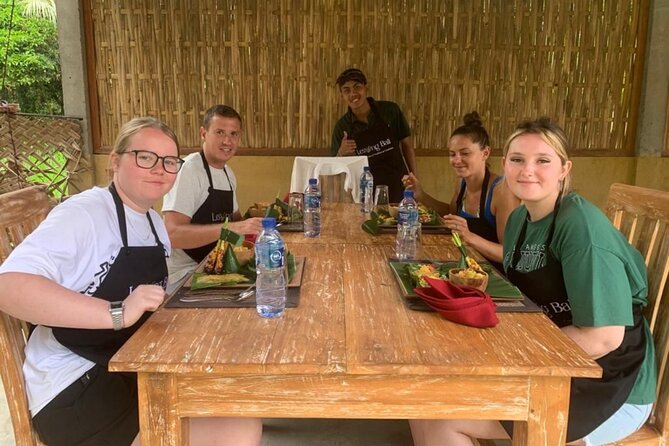
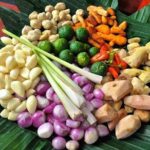
Here’s the heart of the class: learning Balinese cooking techniques using traditional tools and methods. The experience focuses heavily on paste and sauce work, and this is where you’ll feel the difference between “making food” and “learning a cuisine.”
You’ll process food fully hands-on. In particular, you’ll get practice with spice preparation in two different ways:
- Chopped on a wooden chopping block
- Ground in a stone mortar
That difference matters. Chopping tends to keep texture and bite in the mix. Mortar grinding changes the paste’s smoothness and how flavors release when heated. Even if you don’t go home recreating every dish exactly, you’ll pick up a core technique: how preparation method affects sauce feel.
The class also uses a traditional approach for cooking steps. You’re not just adding ingredients in sequence; you’re learning how Balinese dishes come together through layered pastes and cooking variety. You’ll likely recognize that once you’ve worked the paste yourself, the later steps make more sense.
One consideration: hands-on classes can be tiring. If you arrive hoping for a mostly observational experience, this may feel like too much. But if you like learning by doing, this is the part that earns the price.
Traditional compound open kitchen: learning in the setting, not a staged classroom
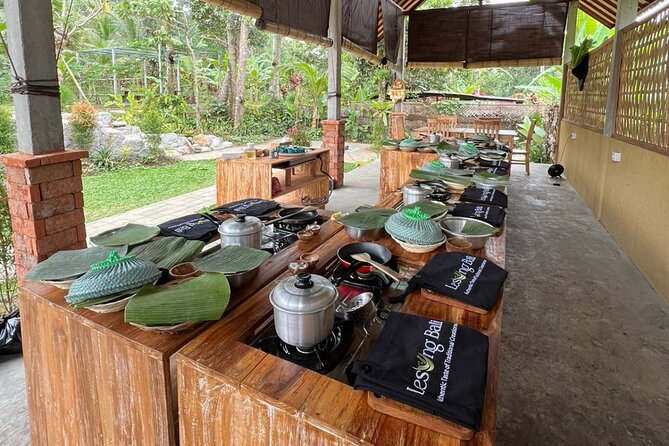
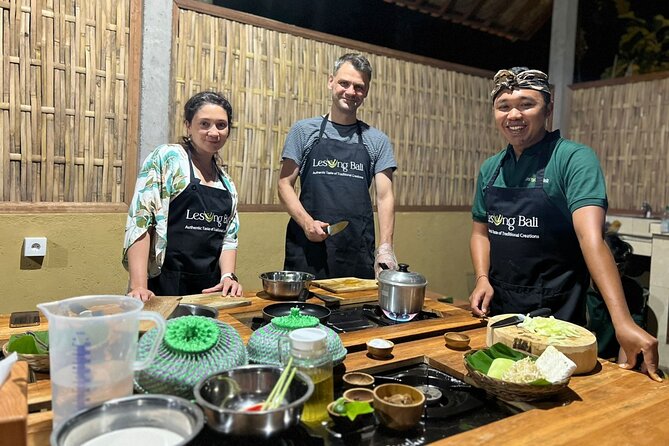
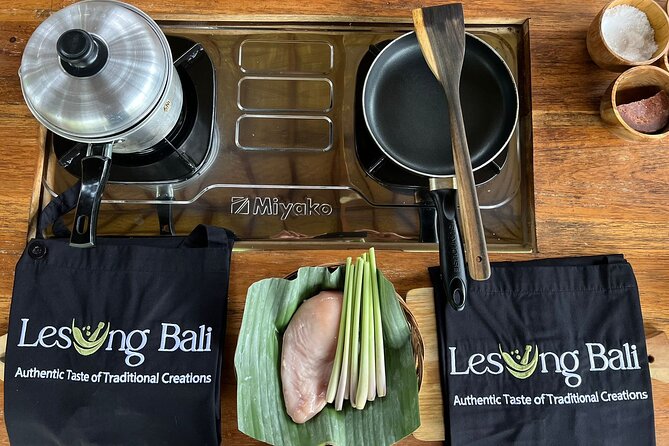
After ingredient prep, you move into the Balinese kitchen setup—described as a traditional open kitchen within a typical compound home. This setting is more than decoration. Cooking in an open space with natural flow changes how the day feels: you’re part of the household rhythm rather than stuck in an enclosed studio.
Because the class is structured for a small group (often four to 12 people), you should have time to ask questions and get feedback. Past participants noted that the driver picked them up on time and spoke good English (Yoga was mentioned by name), and guides like Ron and Nyoman helped make the market part easy to follow with clear explanation. That kind of communication matters in cooking classes because the goal isn’t just eating—it’s understanding.
What you’ll do here is follow Balinese methods while you actively cook. You’ll prepare multiple dishes, not just one signature item. And because you’re using traditional utensils and techniques, you get a more authentic feel than a class that only teaches Western-style steps.
Practical tip: expect some mess. Even if you wipe down quickly, cooking with pastes and grinding can be a bit chaotic. Bring a small towel if you like, and wear something you don’t mind getting splashed.
The 5-course lunch + dessert: come hungry, leave satisfied
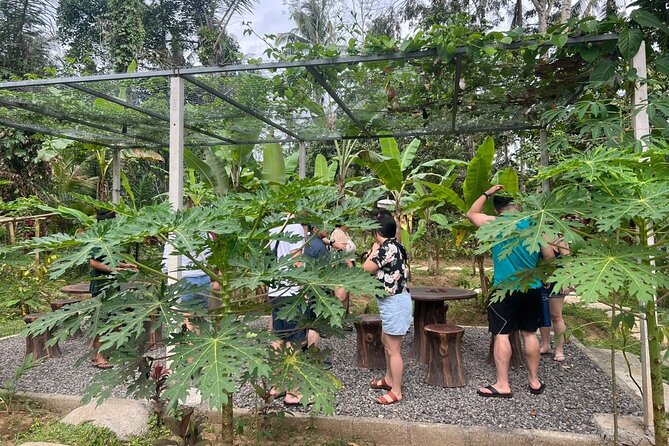
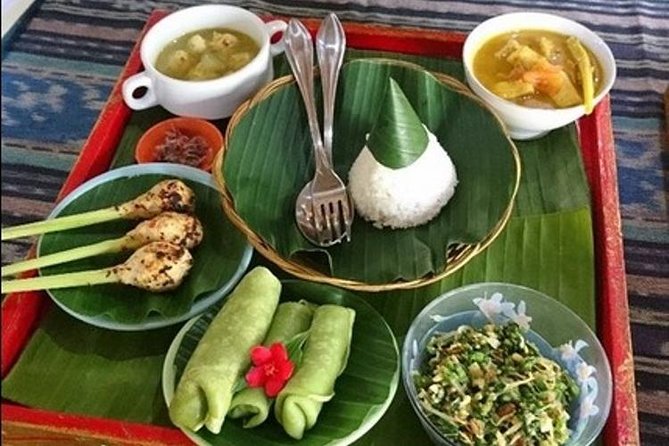
Your reward is a meal built from your work: a 5-course lunch plus 1 dessert. The listing describes it as lunch of all the dishes you made, including bottled water. The overview frames it as a delicious lunch you prepare and eat yourself.
Based on the way the class is taught, this lunch isn’t a light tasting. It’s presented as a full meal with multiple courses. One review specifically advised to come hungry because it can be hard to finish. That tracks with what you’d expect from a class that covers hands-on cooking and multiple dishes.
So think of the lunch as more than an add-on. This is part of the value. You’re paying for a guided shopping-to-cooking-to-eating experience, and you get a substantial sit-down meal out of it.
If you have food preferences, be ready to adapt rather than expect a full custom menu. The data doesn’t mention substitutions, so it’s best to come with flexibility.
Price and logistics: what $58.16 buys you in the real world
At $58.16 per person, the best way to judge value is by what’s included. You’re not just paying for a cooking instructor. You’re also getting:
- Hotel pickup and drop-off (door-to-door transfers)
- Traditional market visit
- Welcome drink and snack
- Instructor-led teaching with hands-on prep
- Lunch of 5 dishes + 1 dessert
- Bottled water
- A certificate of cooking class
For Ubud, that combination is the key: transportation plus market guidance plus a full meal is a lot to stitch together on your own—especially if you’re trying to do it early in the morning. The market step alone would be hard to replicate without a guide who can point out what matters and explain how ingredients connect to dishes.
The other logistics detail I like: the class runs about 2 hours 30 minutes of cooking instruction, but the whole day is roughly 6 hours from pickup to drop-off. That’s a realistic half-day block, not a quick two-hour experience. If your schedule is tight, you’ll want to keep your afternoon clear so you’re not sprinting afterward.
One last value note: group size helps. With up to 12 travelers total and a smaller maximum per booking, you’re more likely to get attention while you’re grinding paste, chopping, and cooking.
You can also read our reviews of more tours and experiences in Ubud




Who should book this Ubud class—and who might skip it
This is a strong fit if you want:
- A Balinese cooking class in Ubud that starts with real ingredients and not just a kitchen demo
- A hands-on experience where you learn spice paste methods like stone mortar grinding
- A guided way to understand the traditional market and Balinese daily shopping routines
- A full meal at the end (5 dishes and dessert) that’s actually part of the learning
You might consider skipping if:
- You’re traveling with very limited morning energy and hate early starts
- You prefer cooking classes where you watch most of the time
- You’re sensitive to physical, hands-on prep like chopping and grinding
Should you book this Balinese Cooking Class with Market Tour?
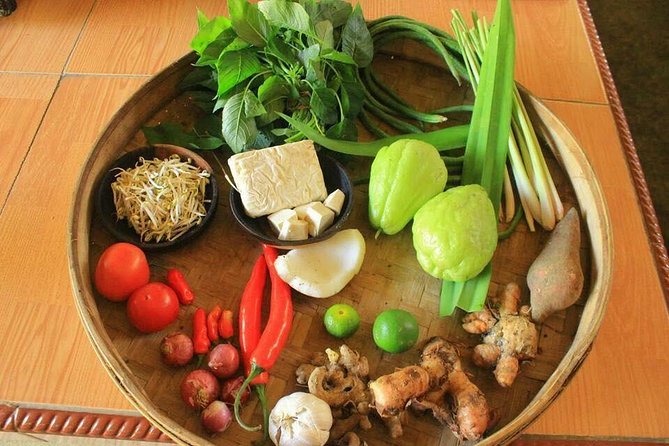
If you want an authentic morning that connects food to daily Balinese life, I’d book it. The market visit gives context, the organic herb time builds ingredient understanding, and the cooking instruction focuses on technique—especially spice paste prep in both wood chopping and stone mortar styles. You also don’t leave hungry: the 5-course lunch plus dessert is included and designed to come from your own cooking.
Book it if you’re the kind of traveler who likes to learn a few real skills you can repeat later at home, not just collect photos. Skip it if you want a relaxed sightseeing day with minimal kitchen work—this one asks you to cook.
If you do book, go in with one mindset: come prepared to work, then enjoy the meal you made.
FAQ
What time does this experience start in Ubud?
The start time is 7:30am. The traditional market visit is scheduled for about 7:30am–8:00am.
How long is the cooking class and market tour?
The cooking and class portion is about 2 hours 30 minutes. The overall experience runs about 6 hours from pickup to drop-off.
Do you get hotel pickup and drop-off?
Yes. Hotel pickup and drop-off is included, with door-to-door round-trip transfers.
What food will I get to eat during the class?
You’ll enjoy a lunch made from the dishes you prepare, plus 5 dishes and 1 dessert. Bottled water is also included.
Is the experience hands-on?
Yes. All prep work and cooking are described as hands-on, done entirely by you, including spice paste and sauce preparation using traditional tools.
How large is the group?
It’s a small-group format. Highlights mention 4 to 12 people, and the activity has a maximum of 12 travelers. The booking limit is up to 6 people per booking, with capacity up to 12 participants.
Do I receive a certificate?
Yes. A certificate of cooking class is included.
Can I get a full refund if I cancel?
Yes, free cancellation is offered. You can cancel up to 24 hours in advance for a full refund, based on local time. If you cancel less than 24 hours before the start time, the amount paid is not refunded.