REVIEW · BALINESE COOKING CLASSES
From Ubud: Authentic Cooking Class Visit Traditional Market
Book on Viator →Operated by Smile Bali Tours · Bookable on Viator
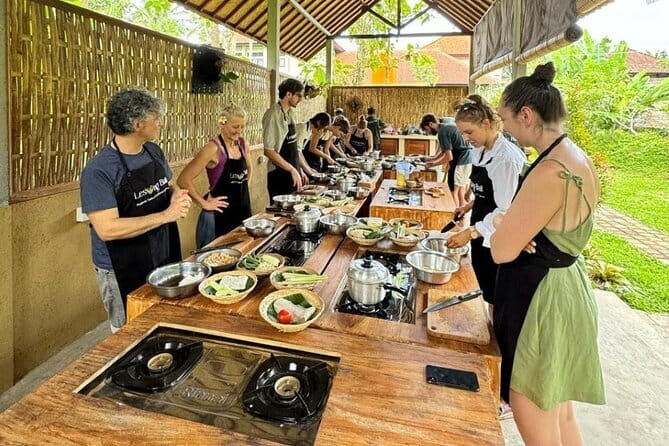
Market first, skillet later in Ubud. This class turns Balinese cooking into a real morning-to-lunch (plus extra) rhythm: you shop a traditional market, learn sauces and pastes, then eat what you make. I also love that you get structured results, not just tips—5 dishes and 1 dessert, plus a recipe booklet and PDF so you can repeat it at home. One drawback to think about: part of the time is spent on ingredient picking and craft stops, so if you want nonstop cooking, you may feel the schedule is a bit mixed.
You’ll be picked up from your hotel area in an air-conditioned car with an English-speaking driver, and the whole experience is set up for a private group (just you and yours). The price is $45 per person for a roughly 3-hour experience, with cooking time listed at about 3.5 hours—good value for what’s included, especially the ingredients and transport.
Dietary needs are handled too. The organizers say you can request vegan, diet, and allergy accommodations after you book or before you go, which is a big deal when you’re cooking with spices, pastes, and shared ingredients. Just keep in mind the market portion means you’ll see a wide range of meats, fish, and tropical produce—so come with the expectation that it’s a hands-on, real-world food trip.
In This Review
- Key points that make this class worth your time
- Market morning in Ubud: picking ingredients like you mean it
- From pastes to sauces: what 3.5 hours of cooking really involves
- What’s on your plate: the meal isn’t an afterthought
- Celuk Village and the art village: why craft time isn’t wasted time
- Farm tour time: a helpful bridge between market and meal
- Pickup, transport, and the private-group setup
- Price and value: is $45 a good deal here?
- Who should book this Ubud cooking class?
- When you might skip it (or adjust expectations)
- Should you book this from Ubud?
- FAQ
- How long is the cooking class?
- What’s included in the price?
- Do you get hotel pickup in Ubud?
- Can the class accommodate vegans or allergies?
- Is the experience private?
- Do you eat what you cook?
Key points that make this class worth your time
- Traditional market ingredient picking: you choose what goes into your dishes, from meats and fish to spices and tropical fruit
- Hands-on cooking with sauces and pastes: not just chopping—this is the Balinese flavor engine
- Your meal is part of the lesson: you eat what you cook, plus a total of 5 dishes and 1 dessert
- Recipe support to take home: a free printed recipe booklet and PDF version
- Craft stops in and around Celuk: you’ll see traditional handicrafts like batik, wood carving, and gold/silver work
- Hotel pickup with AC transport: it’s built for convenience, especially if you’re staying outside Ubud center
Market morning in Ubud: picking ingredients like you mean it
This experience starts at the morning market, and that’s the secret sauce. Before any stove gets hot, you get a chance to understand what Balinese cooks actually start with: ingredients you can smell, compare, and choose yourself.
You’ll browse options that go well beyond “standard pantry items.” Expect to see meats, fish, poultry, exotic spices, and tropical fruits. The benefit for you is simple: when you later learn pastes and sauces, you’re not guessing what went into them. You’ll remember the look and character of the ingredients, and that makes the instructions easier to follow later.
There’s also a practical comfort layer. You receive mineral water, plus welcome drink and snacks along the way, so you’re not running on vibes and heat alone. And because the driver handles transport, you spend your energy learning rather than navigating.
If you’re the type who loves markets for the story and the shopping, you’ll likely enjoy this part most. If you prefer cooking to browsing, treat this as a flavor lesson. Even if you don’t buy much beyond what the class uses, you’ll still learn how the market thinks.
You can also read our reviews of more shopping tours in Ubud

From pastes to sauces: what 3.5 hours of cooking really involves
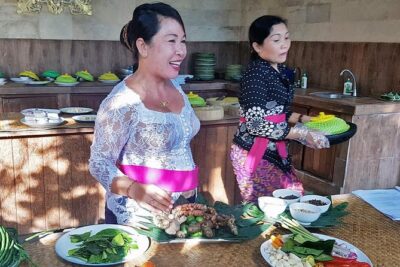
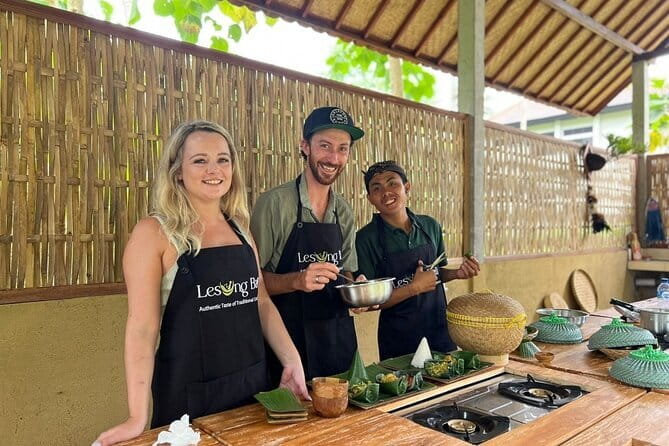
Once your ingredients are picked, the class shifts into the real work: the kitchen. The focus isn’t only on chopping and assembling. You’ll learn how to make sauces and pastes, which are the heart of Balinese flavor.
The way it’s set up, you’ll also cover both sides and mains—so you get range. That matters because Balinese meals tend to balance taste, texture, and spice in layers. If you only learn one dish style, it’s hard to recreate it later. Here, the structure gives you a fuller set of tools.
You’ll cook a total of 5 dishes and 1 dessert, and then you eat them. That’s a very tangible payoff. A lot of cooking classes teach you steps but skip the moment where you actually taste the result together. This one includes the meal as part of the lesson flow.
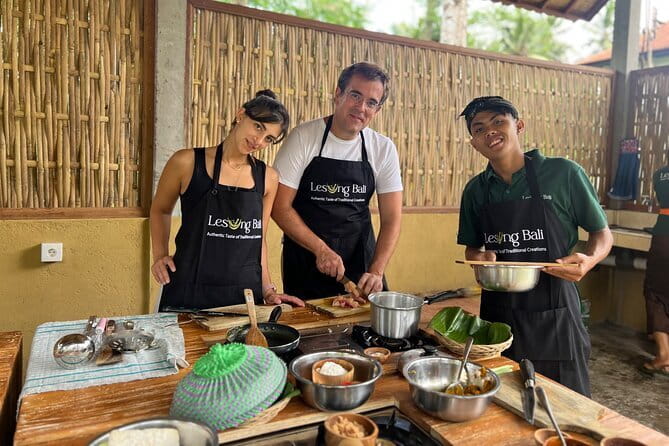
A personal note based on what the class highlights: Chef Ron is mentioned as informative and funny in feedback I received. That kind of teaching style matters more than people expect. When someone can explain the why behind the flavor—then keep things light—you get less stress and more confidence at the stove. You’ll still want to watch your hands, pace yourself, and ask questions, but the vibe is supposed to make it easier.
One consideration: because the experience is time-boxed, you’re not doing a slow, restaurant-style cooking apprenticeship. You’re learning a lot in a limited window. If you’re the kind of slow-and-steady cook, you may need to focus on learning the core technique first rather than perfecting every detail.
What’s on your plate: the meal isn’t an afterthought
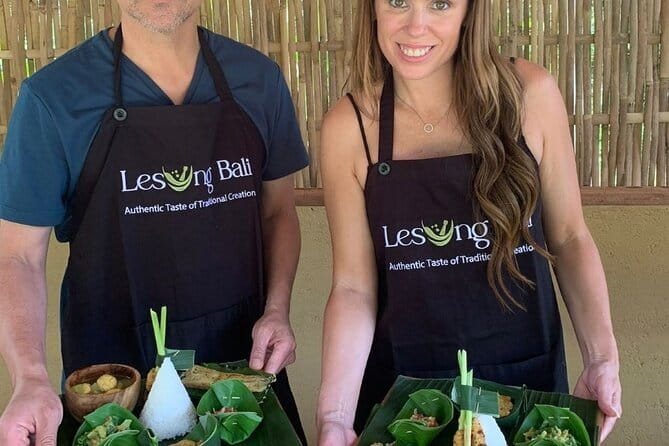
This class is built around results. You’re not waiting until the end to get fed in a separate setting—you’re cooking and eating as part of the same flow.
You can expect a full set: 5 dishes and 1 dessert. Those numbers matter for value. It’s not one “signature plate” and a sip of tea. It’s a complete set that gives you enough variety to remember the flavors, plus enough food to feel like you actually had lunch (or a hearty meal).
There’s also a small comfort detail that helps the whole day work: mineral water is included. That keeps you from having to hunt for bottles during the market and meal stages.
If you have dietary needs, this is one of the better moments to bring them up early. The provider says you can request vegan options, dieting adjustments, and allergies either after booking or before you go. That means the kitchen can plan rather than improvise at the last second—especially important when you’re dealing with pastes and sauces.
Celuk Village and the art village: why craft time isn’t wasted time
After the cooking, you visit Celuk Village, and then you continue to an art village where you can see traditional handicrafts. The crafts listed include batik, wooden carving, and gold and silver smithing.
Why do you want this added to a cooking class? Because it gives you context. Food is one side of culture; crafts are the other. Seeing artisans at work helps the flavors feel less like a tourist product and more like part of the same creative island identity.
This portion also breaks up the day. Cooking is hands-on and warm. Craft viewing is slower, mostly visual, and gives you time to reset. You can ask questions, watch techniques, and understand what locals make and why.
The drawback is mostly about time. Craft stops can feel like they run on “check the box” mode if you don’t like shopping or demonstrations. If you’re there mainly for cooking, keep your expectations clear: think of this as cultural context plus a stretch break, not a separate art museum level experience.
Farm tour time: a helpful bridge between market and meal
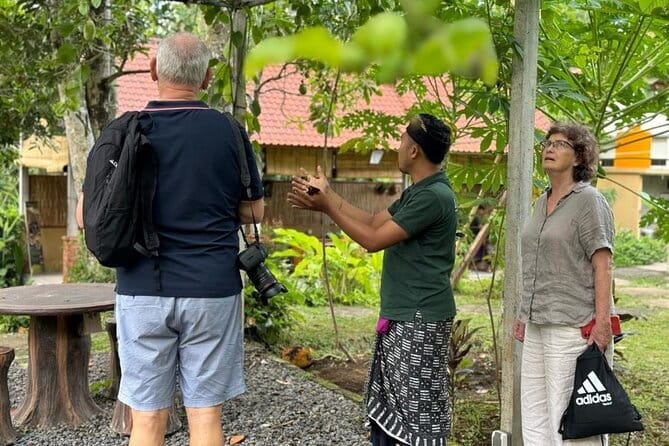
You also get a farm tour included. The data doesn’t spell out exactly which farm features are emphasized, but it’s easy to see why it’s placed in the overall flow.
You start with ingredients at the market, then cook with them, and then you get a look at the “where it comes from” step. Even a short farm tour can help you connect spices and produce to the kind of growing and sourcing that feeds local kitchens.
For you, this is best viewed as a perspective builder. If you like understanding supply chains—how food moves from land to plate—this added stop helps. If you’d rather spend every minute in the kitchen, the farm portion might feel like extra. But because it’s included and slotted into a day that already has market and art time, it functions like a bridge rather than a detour.
You can also read our reviews of more tours and experiences in Ubud



Pickup, transport, and the private-group setup
Let’s talk logistics, because this is one of those classes that can either be smooth or stressful depending on transport. Here, the plan is simple: you get private transport with comfortable air conditioning and an English-speaking driver.
Pickup is offered from a wide set of areas: Ubud, Kuta, Seminyak, Canggu, Legian, Jimbaran, Nusa Dua, and Sanur. That coverage matters. It means you won’t need to coordinate taxis across town, and you’ll arrive less flustered—especially important for a market start.
The experience is described as private, meaning only your group participates. That’s a quality-of-life win. In a private group, you can ask more direct questions without feeling like you’re waiting for a turn behind strangers.
There’s also mention of group discounts and a mobile ticket. Those are practical, but what really matters is the combination of pickup + AC transport + private group. You get more time focused on learning and less time spent on getting there.
Price and value: is $45 a good deal here?
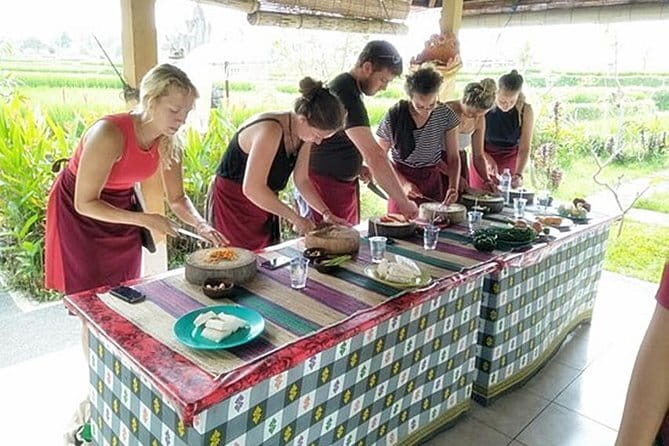
At $45 per person, this class is positioned as a value-friendly way to get hands-on cooking in Ubud. Here’s why that price can work, based on what’s included:
- Hotel-area pickup and private AC transport
- Traditional market visit
- A cooking class with the ingredients used in your dishes
- 5 dishes and 1 dessert that you eat
- Farm tour
- Art village / craft viewing
- Mineral water, welcome drink, and snacks
- A free recipe booklet and PDF
Many cooking experiences charge less on paper but then add costs for transport, ingredients, or separate meal arrangements. In this case, the listed inclusions make the price feel more “all-in.”
One more signal: it’s commonly booked about 20 days in advance on average. That suggests demand is strong, likely because it’s convenient and feels like more than a basic cooking demonstration.
If you want to get the most value, treat the market and cooking portions seriously. Ask questions. Taste as you go. Take the recipe booklet seriously after you return home. That’s where the money starts turning into real skills.
Who should book this Ubud cooking class?
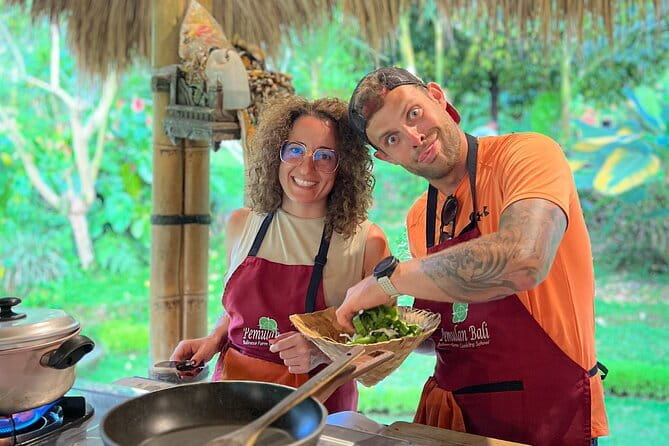
This is a good fit if you want a cultural food experience rather than just a recipe lesson.
I’d especially recommend it if:
- You’re traveling as a couple or family and want structured activities, not a free-for-all day
- You like markets and want to learn by choosing ingredients, not just watching
- You want to cook authentic Balinese food and bring it home later
- You have dietary needs and want a provider that explicitly says it can cater to vegans and allergies
It also sounds suited for small groups who want private attention. And there’s a note in the overview about afternoon cooking lessons for dinner for honeymoon plans in Bali. If you’re timing a romantic meal, this kind of class can feel like an event, not just an activity.
When you might skip it (or adjust expectations)
This tour may not match your style if:
- You want pure cooking time with zero extra stops. The market + craft segments are part of the design.
- You dislike markets. The class begins there, and you’ll see meats, fish, and a wide range of spices.
- You want a slow, detailed apprenticeship feel. The session is about learning a lot in a limited window.
If any of those are you, don’t panic—just set your expectation that this is a “whole experience” format. You’re buying flavor context plus skills, not only stove time.
Should you book this from Ubud?
I think this class is a solid yes for most people who want authentic Balinese cooking with real structure. The combination of market ingredient picking, learning sauces and pastes, cooking 5 dishes and 1 dessert, and then getting recipe tools to repeat it later makes the day feel complete. Add in hotel pickup from many areas and a private group setup, and it stops being a hassle-fest.
Book it if you’re the type who likes to learn food by touching it at the source—spices, produce, and the choices behind the flavor. If you’re mainly looking for a quick demo and lots of free time afterward, you might feel the schedule is a bit full.
FAQ
How long is the cooking class?
The cooking class is listed as about 3.5 hours, and the experience duration is approximately 3 hours.
What’s included in the price?
Included are the traditional market visit, cooking class, farm tour, art village/Celuk visit, pickup service, mineral water, welcome drink and snacks, English-speaking driver, private AC transport, all ingredients and the food you cook, and a free recipe booklet plus PDF.
Do you get hotel pickup in Ubud?
Yes. Pickup is offered from Ubud and many surrounding areas including Kuta, Seminyak, Canggu, Legian, Jimbaran, Nusa Dua, and Sanur.
Can the class accommodate vegans or allergies?
Yes. The provider says you can request diet preferences, vegans, and allergies either after booking or before the experience.
Is the experience private?
Yes. It’s described as a private tour/activity, with only your group participating.
Do you eat what you cook?
Yes. The class includes a meal of what you cook, totaling 5 dishes and 1 dessert.