REVIEW · TOUR REVIEWS
Traditional Balinese Meal in Ubud in Dewa’s Family Village Home
Book on Viator →Operated by Traveling Spoon · Bookable on Viator
A Balinese dinner at a real home.
This private Ubud food experience sends you from your hotel to Dewa and Jero’s traditional compound, then into a home-style meal built around local ingredients and everyday family life. I especially like the spice-and-fruit learning before dinner and the fact that the hosts keep it personal, not staged.
One thing to plan for: the family doesn’t eat the meal with you at the dining table, since their tradition is to eat separately and use meditation to stay in the right state of mind.
In This Review
- Quick hits before you go
- Entering a Balinese family compound just north of Ubud
- Pickup and timing: how the 2 hours usually work
- The first stop: fruits, herbs, and the “why” behind the flavors
- A walk through the compound: where daily life happens
- The dinner spread: what you’ll likely taste in a Balinese home meal
- A real cultural detail: eating separately at the table
- “Farm-to-table” isn’t a buzzword here
- Price and value: is $56 worth it for a private meal?
- Who this fits best in your Bali plan
- Small practical notes to make your evening smoother
- Should you book this Balinese home meal in Ubud?
- FAQ
- FAQ
- Is this a private tour or a group tour?
- How long does the experience last?
- Do you pick me up from my hotel in Ubud?
- If I’m not staying in Ubud, where do I meet the host?
- What dishes will I eat during the meal?
- Is there a vegetarian option?
- Are beverages included?
- Can I cancel and get a full refund?
- Is gratuity included?
Quick hits before you go
- Pickup in Ubud and return drop-off make it easy to fit into your day.
- A look inside a Balinese walled compound with open pavilions and a central courtyard.
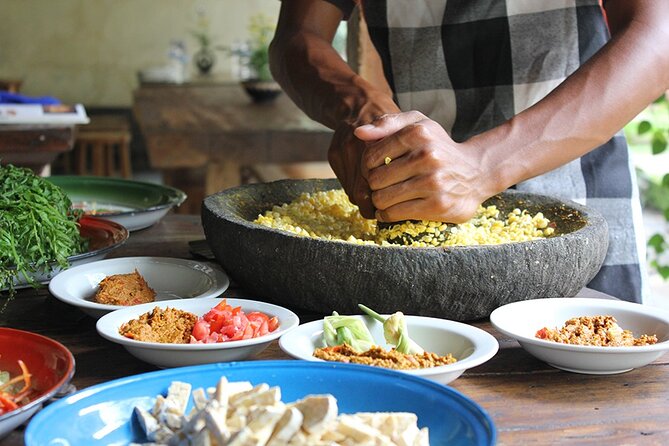
- Spices with medicinal stories, including galangal, cloves, cacao, and nutmeg.
- Classic home dishes like pepes ikan and bumbu kuning, plus sides such as bregedel and jukut urab.
- Private group experience means your timing and questions feel relaxed.
Entering a Balinese family compound just north of Ubud
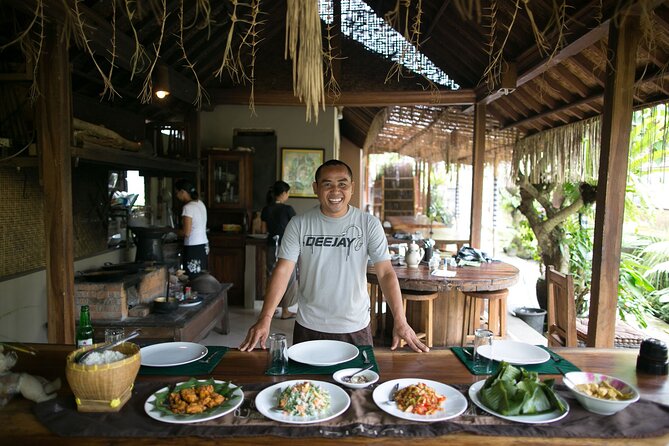
This experience is all about seeing Bali from inside the walls, not just outside in a temple photo stop. You’ll head to Dewa and Jero’s family home in a traditional Balinese compound in the terraced foothills north of Ubud, where the layout is built for daily life around a central courtyard and several open pavilions.
What makes it feel special is the mix of practical and spiritual. You get the normal rhythm of a household, but you also get hints of the Balinese way of doing things—how food, prayer, and personal mindset are connected.
The compound setting also matters for food. You’re not just eating a plate; you’re learning how the flavors are chosen and where the ingredients come from, down to herbs and spices the family uses regularly.
You can also read our reviews of more tours and experiences in Ubud.



Pickup and timing: how the 2 hours usually work
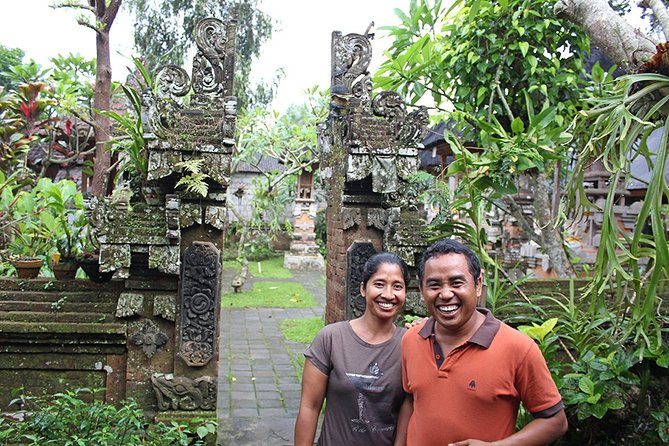
The whole experience runs about 2 hours. That’s a nice length if you want something meaningful without stealing a half-day from your plans.
In Ubud, hotel pickup and drop-off are included, so you avoid the hassle of figuring out transport. If your hotel isn’t in the Ubud pickup area, you’ll meet your host at Alam Sari Resort, Jl. Raya Keliki, Keliki, instead.
Bring the mindset of a short visit, not a long cooking school day. You’ll tour, learn, and eat, but it’s still a home meal experience first. If you’re the type who gets antsy with transitions, just know there’s a natural flow: you’ll start with a pickup, then move to the compound, then into dinner.
The first stop: fruits, herbs, and the “why” behind the flavors
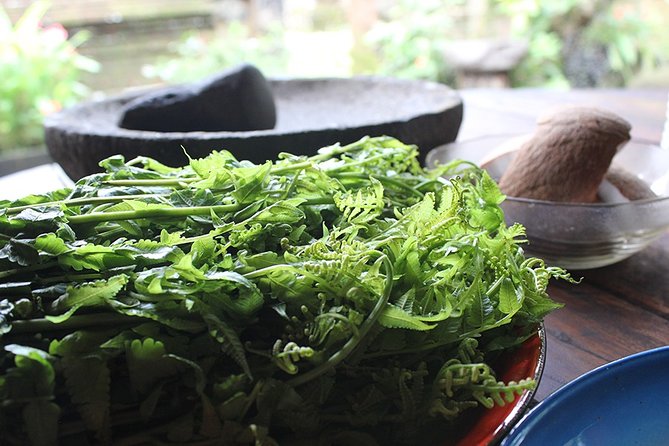
Before you reach the home meal, there’s a chance to connect the food to ingredients you can picture. Near the family area, you’ll discover exotic Balinese fruits, herbs, and spices like galangal, cloves, cacao, and nutmeg, and learn about their medicinal properties.
This is where the experience becomes more than eating. When you understand what families look for in turmeric, coconut, or aromatic spices, later restaurant versions make more sense—and you’ll taste the difference when you’re back in Bali.
It’s also a good moment to ask questions. The hosts explain in a way that matches everyday life, not a lecture. If you’re curious about how different spices are used, this is the part you’ll remember.
A walk through the compound: where daily life happens
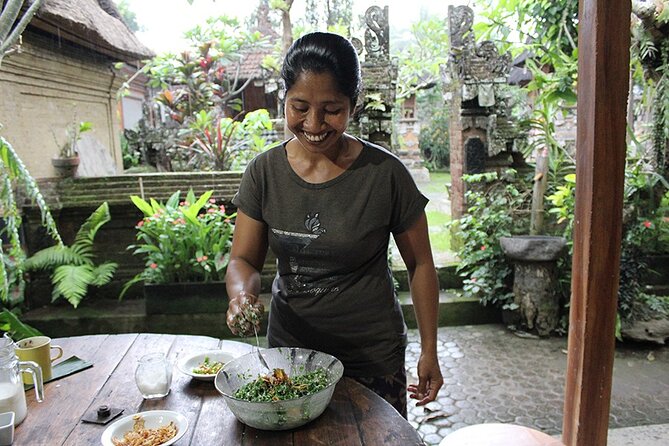
After the ingredient talk, you’ll tour the family compound. The walking segment is short (about 10 minutes), and you’ll move through the lush, lived-in green of the property.
The compound layout is one of the highlights: multiple open pavilions around a central courtyard. That’s the “home architecture” you usually only glimpse from the road in Bali. Here, you get to see how spaces support routines, family gatherings, and work tied to food.
If you like authentic travel that doesn’t feel like a museum, this part delivers. It’s not a showroom. It’s where people actually live.
The dinner spread: what you’ll likely taste in a Balinese home meal
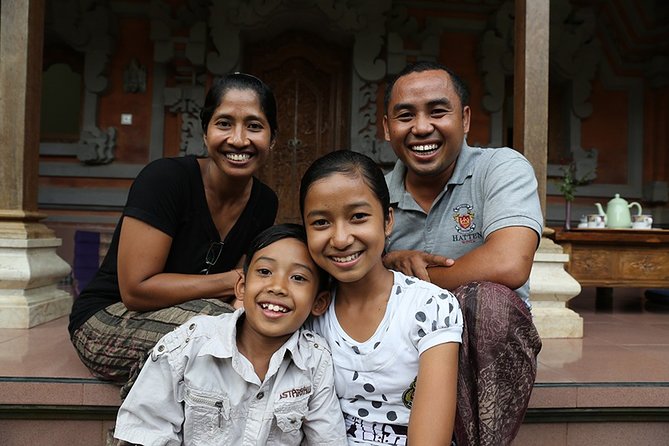
The meal is homecooked and centered on traditional Balinese dishes. You may enjoy combinations such as:
- Pepes ikan: grilled tuna in banana leaves. Expect fragrance from the leaf and a delicate, satisfying bite.
- Bumbu kuning: chicken in a turmeric and coconut milk sauce. The flavor is usually warm, creamy, and deeply comforting.
- Bregedel: corn fritters. These add crunch and a gentle sweetness.
- Jukut urab: seasonal vegetables with grated coconut and fried shallots. This is the kind of side that tastes simple but isn’t.
You’ll also have beverages included with the meal. The exact choices can vary, but the style stays true: classic Balinese flavors cooked for family, not for a menu.
One smart tip: eat slowly if you can. Home-style Balinese dishes often come in a rhythm, and the flavors layer in a way that’s easier to catch when you’re not rushing.




A real cultural detail: eating separately at the table
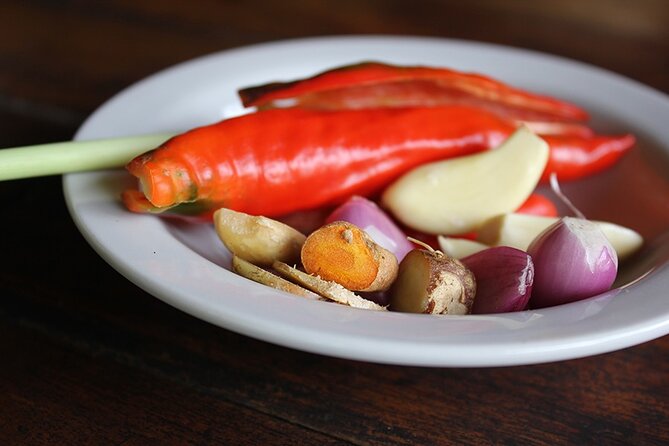
Here’s a key point that shapes the vibe: in line with their Balinese family tradition and sense of spirituality, the hosts won’t share the meal with you at the dining table. Their preferred approach is to eat on their own and focus on personal meditation to achieve a positive state of mind.
That can feel unusual if you’re expecting a chat-over-every-bite dinner. But it’s part of what makes the night feel honest. You’re visiting, observing, and eating in a way that respects the household rhythm.
Instead of trying to force a join-at-the-table family moment, aim for a calm, appreciative tone. Ask questions when offered, but let the space be what it is. If you’re flexible, you’ll get more out of the experience.
“Farm-to-table” isn’t a buzzword here
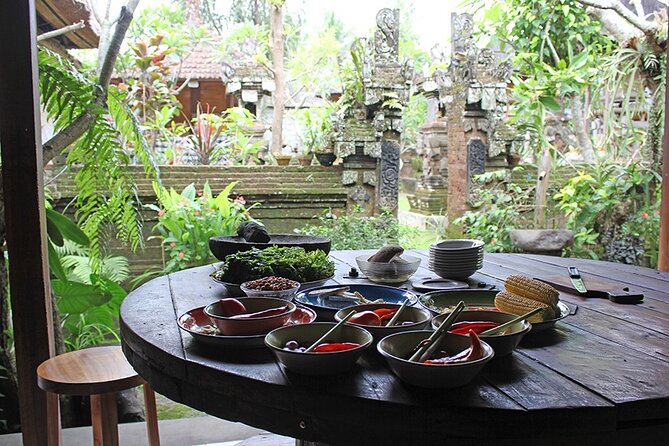
The experience is built around local ingredients and home cooking, and you’ll feel it in the taste. Many people value that the meal is grounded in what the family grows and uses, including fresh herbs and spices from their environment.
A couple of practical takeaways you can carry home:
- When you taste something like bumbu kuning, focus on the turmeric-coconut balance. That’s the anchor flavor.
- When you eat pepes ikan, notice the banana-leaf aroma—it’s not just packaging.
- For jukut urab, look for the fried shallot top note and the coconut depth.
This is also why you’ll leave with something practical: family recipes. That’s more useful than a souvenir spoon. If you want to recreate Bali in your own kitchen, those recipes can actually help.
Price and value: is $56 worth it for a private meal?
At $56 per person, this isn’t the cheapest dinner you’ll find in Bali. But it’s also not a generic ticketed “cooking experience.”
Here’s where the value comes from:
- It’s a private experience, so you’re not squeezed into a large group schedule.
- You get hotel pickup and drop-off within Ubud, plus beverages.
- The meal is in-home, not in a restaurant with an “authenticity” theme.
- You receive family recipes and a real look at the compound and ingredient stories.
If you’re traveling with a friend or family member and you care about eating where people actually live, the price starts to make sense. If you’re on a strict budget and just want food without context, you might find cheaper meals in Ubud—but you’ll be trading away the behind-the-walls perspective.
Who this fits best in your Bali plan
This is a strong match if you:
- Want a Ubud cultural meal that doesn’t feel like a performance
- Like food that comes with context—spices, ingredients, and how they’re used
- Prefer small-group or private experiences over big tourist setups
- Appreciate traditions even when they’re different from what you’re used to
It’s also a good choice if you’re traveling solo but still want something intimate. Since it’s private, the host can work at a pace that suits your questions and comfort level.
Small practical notes to make your evening smoother
A few details to help you plan without stress:
- Vegetarian option is available. Let the operator know when booking so they can adjust the menu.
- This is a mobile-ticket experience, and you’ll get confirmation within 48 hours of booking (subject to availability).
- It’s listed as suitable for most travelers, and service animals are allowed.
- It’s near public transportation, but since pickup is included in Ubud, most people won’t need to worry about it.
Also, keep your expectations aligned with “home dinner” energy. You’re not signing up for a full cooking curriculum unless your host chooses to teach in that deeper way.
Should you book this Balinese home meal in Ubud?
I’d book it if you want a meal with actual grounding: spices with meaning, a compound tour that feels lived-in, and classic Balinese food cooked in a family setting. The combination of private access, in-home dinner, and family recipes makes it more than just eating.
Skip it if you need a high-energy group activity or you want a meal where everyone sits together chatting at the table. The eating-with-you-at-the-table part isn’t the model here—meditation and tradition come first.
FAQ
FAQ
Is this a private tour or a group tour?
This is a private tour/activity, so only your group participates.
How long does the experience last?
The experience lasts about 2 hours (approx.).
Do you pick me up from my hotel in Ubud?
Yes. Hotel pickup and drop-off from Ubud hotels only is included.
If I’m not staying in Ubud, where do I meet the host?
If you’re not staying in Ubud, you should meet Dewa at Alam Sari Resort, Jl. Raya Keliki, Keliki.
What dishes will I eat during the meal?
The meal may include pep es ikan (grilled tuna in banana leaves), bumbu kuning (chicken in turmeric and coconut milk sauce), bregedel (corn fritters), and jukut urab (seasonal vegetables with coconut and fried shallots).
Is there a vegetarian option?
Yes. A vegetarian option is available—advise at booking if you need it.
Are beverages included?
Yes. Beverages are included with the meal.
Can I cancel and get a full refund?
Yes. You can cancel for a full refund up to 24 hours in advance of the experience start time.
Is gratuity included?
Yes. Gratuities are included.