REVIEW · BALINESE DANCE SHOWS
Legong Dance Show at Ubud Palace Bali
Book on Viator →Operated by GlobalTix Pte Ltd · Bookable on Viator
Legong at Ubud Palace feels like stepping into court. I love the precision of Legong Kraton—three dancers, tightly choreographed gestures, and that fast, demanding style you see up close. I also like how the gamelan orchestra drives the whole show, so it feels less like entertainment and more like a living royal performance.
One thing to plan for: limited seating and heavy crowds can affect your view, especially if you show up late. The show runs about 90 minutes, and if you end up standing, it can get uncomfortable—so I strongly suggest aiming for earlier than the crowd.
In This Review
- Key Things to Know Before You Go
- Legong Kraton at Ubud Palace: What You’re Actually Seeing
- Your 7:30 PM Timing Plan: Seats, Crowds, and Comfort
- Inside the Palace Setting: Court Energy and Real Atmosphere
- The Story Onstage: Rangkesari, the Stone House, and the Death Omen
- Costumes, Flexibility, and the Gamelan Rhythm
- Tickets, Mobile Entry, and Getting the Official Pass Right
- Price and Value: Is $7.25 a Good Deal?
- Who This Legong Show Suits Best (And Who Might Skip It)
- Final Decision: Should You Book Legong Dance at Ubud Palace?
- FAQ
- What time does the Legong Dance show start at Ubud Palace?
- How long is the Legong Dance performance?
- How much are tickets?
- Do I need to bring anything?
- Is the official ticket sent immediately after booking?
- Where should I go since there is no hotel pickup?
- Is the ticket refundable if plans change?
Key Things to Know Before You Go
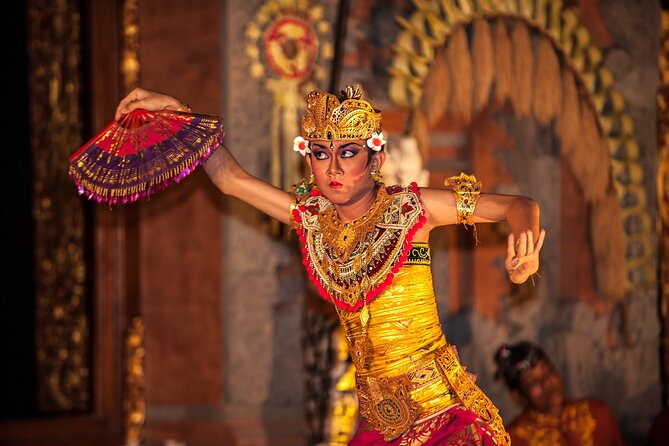
- Legong Kraton format: three dancers (a court attendant and two legongs) performing a royal-court routine.
- Gamelan-led atmosphere: the orchestra sets the pace and mood throughout the story moments.
- Arrive early for your view: plan on getting there about 45 minutes before the 7:30 PM start.
- Mobile ticket entry: you’ll get an official ticket after booking confirmation, valid only on the selected date.
- No hotel pickup: the venue is near public transportation, so plan your own ride or walking route.
- Bring essentials for the evening: comfortable clothing, a camera, and cash.
Legong Kraton at Ubud Palace: What You’re Actually Seeing
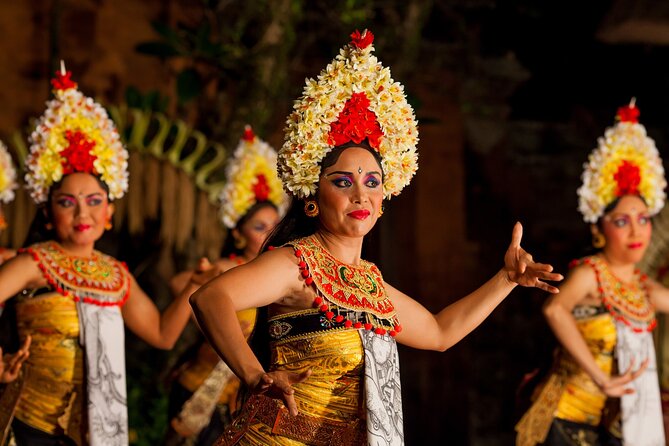
The Legong Dance at Ubud Palace is built around the Legong Kraton style, a classical royal-court performance known for controlled, angular handwork and faces that seem to tell the story even when the dancers move fast. This is not casual folk dancing. It’s precise and stylized, with movements that require serious flexibility from the performers.
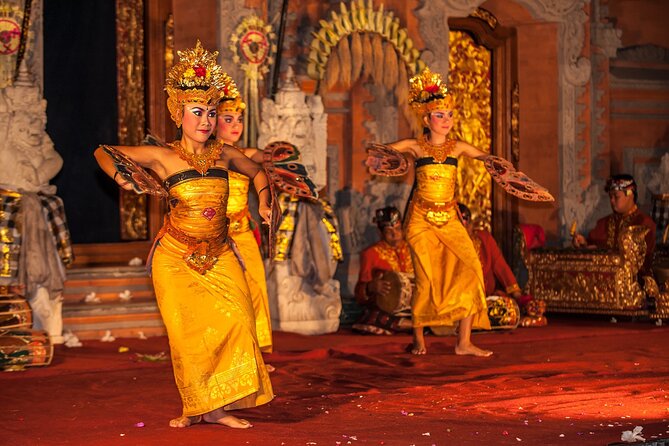
Onstage you’ll see a small cast: three dancers total—one court attendant and two legongs who portray royal characters. The pacing matters here. The choreography is tightly organized, and the gamelan orchestra does more than provide background music; it’s part of the rhythm and timing that shapes the performance.
If you like cultural shows that feel structured and intentional, this is a good one. If you want something with lots of modern mixing or constantly changing scenes, you might find the 90 minutes to feel repetitive after a while. In other words: this show is about disciplined tradition, not nonstop variety.
You can also read our reviews of more tours and experiences in Ubud

Your 7:30 PM Timing Plan: Seats, Crowds, and Comfort
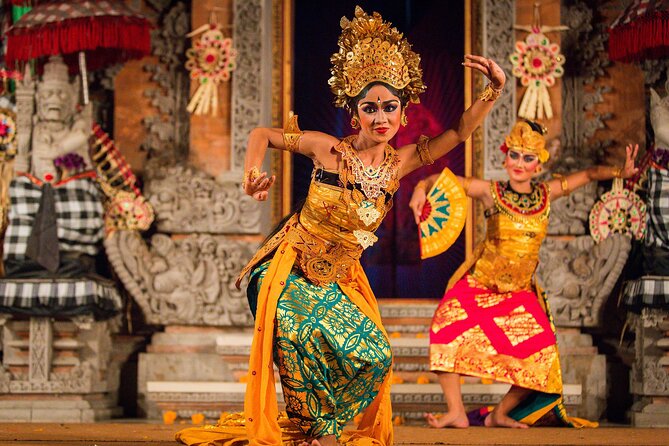
The show time is 7:30 PM, with a duration of about 90 minutes. That’s a perfect length for many people, but it’s long enough that comfort becomes real. Bring comfortable clothing, and give yourself time to settle in.
Here’s the practical move: arrive 45 minutes early. Ubud Palace seating is limited, and the courtyard setup can become crowded. Even with a ticket, your sightline can depend on when you arrive and where staff can place you. Some people end up standing or with restricted views if the area fills faster than expected.
If you’re sensitive to discomfort, plan smart:
- Wear comfortable shoes you don’t mind standing in for a while.
- Bring a camera, but expect you might not get perfect angles from every seat area.
- If you want the best view, aim earlier rather than later, even if you feel like it’s too early.
The good news: the whole atmosphere improves when you get a stable view. Once the dancing starts and the orchestra locks in, it’s easier to stay focused.
Inside the Palace Setting: Court Energy and Real Atmosphere
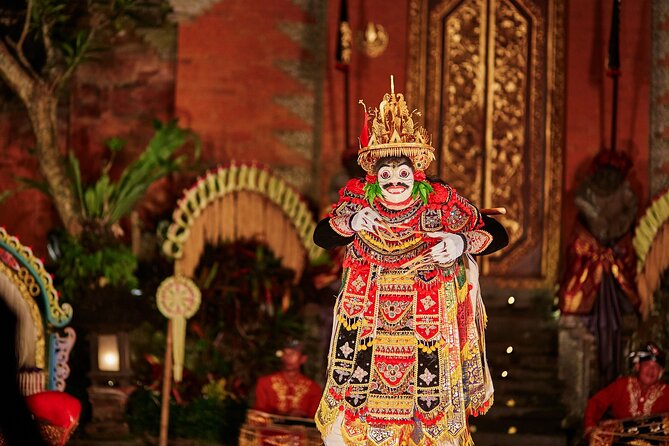
Ubud Palace gives the performance its stage personality. You’re not watching Legong in a generic theater hall. You’re in a historical setting where the dance feels closer to its original context as a royal court entertainment.
The costumes are a major part of why the show works. Even when you focus on the story, your eyes keep catching costume detail—color, movement, and the way the dancers’ upper-body control stays sharp even during faster sections. Combine that with gamelan musicians (seated and active), and you get a performance rhythm that feels cohesive.
That said, the courtyard layout is part of the tradeoff. The experience can be crowded, and if the seating isn’t organized in a way that supports easy sightlines, you may spend part of the show working around other people’s standing positions. The show can still be worth it, but it helps to set expectations: this is a popular evening event with limited room to spread out.
The Story Onstage: Rangkesari, the Stone House, and the Death Omen
One of the most useful things about coming prepared is understanding what the dance is trying to tell you. The Legong Kraton story is inspired by 12th–13th century East Java. The central plot centers on a king who locks Rangkesari in a stone house.
Her brother, the Prince of Daha, threatens war unless she is freed. Rangkesari pleads for her release to avoid conflict, but the king chooses battle. On his way to war, he encounters a bird that predicts his death. That bird prediction is one of the more dramatic moments in the dance, and it’s the kind of scene you’ll notice because the performance shifts into something more ominous and clear.
Even if you don’t catch every narrative beat at first, you can follow the emotional logic: fear, refusal, the push toward conflict, and then the omen moment. The court attendant role and the two legongs help keep the story readable through movement and expression.
If you arrive early, you often have time to read the guidance material provided on entry. That small step can turn the show from a series of pretty dances into a story you can track in real time.
Costumes, Flexibility, and the Gamelan Rhythm
The Legong style is famous for its demanding physical requirements, especially for dancers who are typically young and must maintain a high level of control through repeated, intricate sequences. That’s why the movement looks so sharp: it’s trained and repeatable under performance pressure.
What surprised me just from watching these kinds of court performances in general is how the faces contribute to the pacing. It’s not just arms and legs. The expressions help you anticipate the dramatic turns even when you can’t fully translate the language of the story.
The gamelan orchestra is the steady engine. When the rhythm changes, it cues a different energy from the dancers. It’s not a soundtrack; it’s a live component that shapes what happens next. If you like live music, you’ll appreciate the way the musicians remain part of the visual scene.





Tickets, Mobile Entry, and Getting the Official Pass Right
Tickets are handled through a mobile system, and this is where a little planning prevents stress.
- You book your entry for a specific date.
- Confirmation will be received at booking time, but that confirmation is not the official ticket.
- The official ticket is sent to you within 24 hours.
- The ticket is valid for all passport holders, but only for the selected date.
- Children are charged the same rate as adults.
- The show runs at 7:30 PM and lasts about 90 minutes.
If you don’t have your official ticket within a day, you’ll want to resolve it early. For redemption or ticket issues, the provided support contact is GlobalTix Customer Support via WhatsApp: +65 9765 3804.
One more practical note: because your ticket is tied to a specific date, double-check your date before you leave your room that evening. It sounds obvious, but it’s the kind of simple mistake that ruins a calm experience.
Also, there’s no hotel pickup. The venue is near public transportation, so plan your own route into Ubud. If you’re staying outside the densest area, build in extra time so you’re not sprinting right before the gates fill.
Price and Value: Is $7.25 a Good Deal?
At $7.25 per person, this show is priced in the “easy add-on” range for Ubud. You’re paying for access to a classical Legong performance in a palace setting, with live gamelan accompaniment and a story you can follow with minimal effort.
Is it a bargain? For many people, yes. The reason is simple: you’re not just buying a seat for generic entertainment. You’re buying a high-skill, tradition-focused dance presentation, staged in a famous location with a 90-minute runtime.
But value depends on your priorities:
- If you care about seeing the craft up close and can handle a crowd, the price feels fair.
- If you hate crowded seating setups or need a perfect unobstructed view, you might end up wishing you had chosen a different evening option.
Think of it like this: the experience is affordable, but it’s not guaranteed to be comfortable for everyone. The best approach is arriving early so you can convert the low price into a better view.
Who This Legong Show Suits Best (And Who Might Skip It)
This is a strong pick if you:
- Want a classic Bali performance tied to royal court tradition.
- Like live music, especially gamelan, and enjoy watching dancers respond to rhythm.
- Are comfortable arriving early and making your own way to the venue (since there’s no hotel pickup).
It might be less ideal if you:
- Want a guaranteed roomy, uncrowded sightline.
- Dislike sitting or standing through a full 90 minutes.
- Prefer shows that constantly change scenes rather than polished repetition of a traditional structure.
If you’re in Ubud for a few days, I’d treat this as a core evening cultural stop. Pair it with a relaxed dinner nearby afterward—because once you’ve spent time in the courtyard, you’ll likely want a calm wind-down.
Final Decision: Should You Book Legong Dance at Ubud Palace?
If your idea of a great Bali night includes classical dance, live gamelan, and a palace setting that gives the performance weight, then yes, book it. The $7.25 price makes it easy to try, and the story elements (Rangkesari, the stone house, the Prince of Daha, and the ominous bird omen) give you something real to follow beyond movement.
But do it smart. Arrive early for the best chance at a clear view, wear something comfortable for an evening sit-or-stand situation, and make sure you have the official mobile ticket for the selected date before you head in.
If you absolutely can’t handle crowds or your patience for crowded seating is limited, you might consider a different performance style. If you can, this one is worth the effort.
FAQ
What time does the Legong Dance show start at Ubud Palace?
The show starts at 7:30 PM.
How long is the Legong Dance performance?
It lasts about 90 minutes (about 1 hour 30 minutes).
How much are tickets?
Tickets are $7.25 per person.
Do I need to bring anything?
You should bring comfortable clothing, a camera, and cash.
Is the official ticket sent immediately after booking?
You’ll receive confirmation at booking time, but the confirmation is not the official ticket. The official ticket is sent to you within 24 hours.
Where should I go since there is no hotel pickup?
The venue is near public transportation, and there is no hotel pick-up or drop-off included, so plan your own trip to the palace area.
Is the ticket refundable if plans change?
No. This experience is non-refundable and cannot be changed for any reason.