REVIEW · TOUR REVIEWS
Day with a Balinese Family in a Village
Book on Viator →Operated by MyTravel Indonesia · Bookable on Viator
Rice fields teach patience fast. This village visit near Ubud puts you in the rhythm of everyday Balinese life, with hands-on stops like rice farming, coconut oil, and morning-prayer offerings. It is built around meeting a family in their own setting, not just passing by it.
I especially like the mix of practical work and meaning: you see how rice is grown, and you also learn why offerings matter in daily faith. I also like the food part, because a local lunch in a family home is usually where you get the most real conversation, not just a meal.
One thing to consider: this is a 6-hour experience with a walking component through farmland and homes, so it is not the best fit if you want a mostly seated, clockwork sightseeing day. Also, tips are not included, so plan to add a little extra if you feel it was worth it.
In This Review
- Quick hits before you go
- A small-group village day starting from central Ubud
- Rice cultivation: seeing how the day is built around farming
- Coconut oil work: practical craft with real uses
- Lunch in a family home: where the culture becomes real conversation
- Offerings-making: weaving leaves and fiber with meaning
- Coffee and questions: learning the why, not just the what
- Price and value: why $72.08 can make sense
- Logistics that affect your day (and how to plan)
- Who this is best for (and who might prefer something else)
- Should you book this Balinese family day?
- FAQ
- How long is the experience?
- Where does it start and what time?
- What is included in the price?
- Is pickup available?
- What language options do you get with the guide?
- How many people are in the group?
- Do I need to pay a tip?
- FAQ
- What is the cancellation policy?
Quick hits before you go
- Small group (max 5 travelers), so questions and hands-on moments actually happen
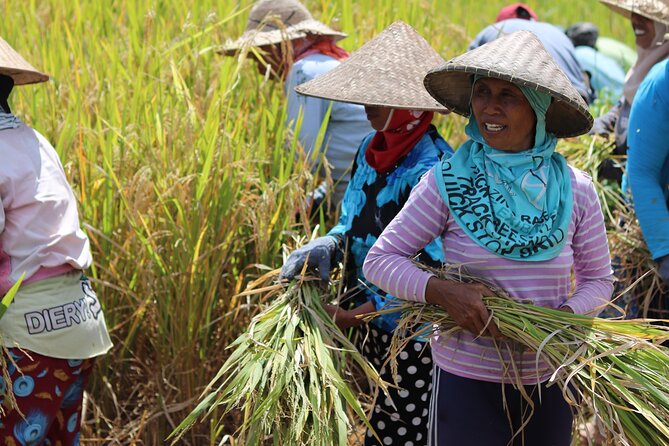
- Rice fields walk focused on daily farming methods and how work fits together
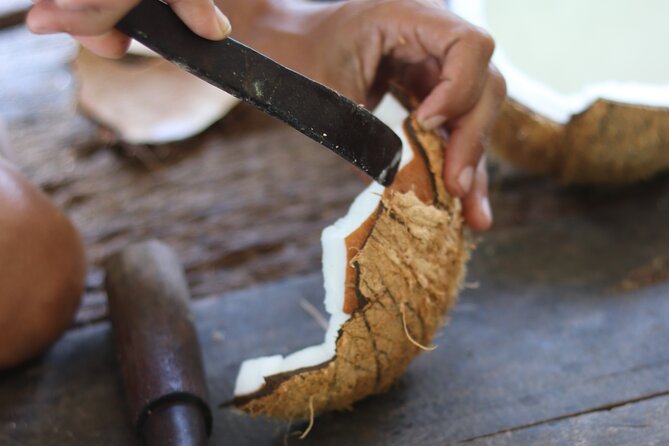
- Coconut oil production you can see step-by-step, with uses for cooking and massages
- Wood-fire lunch in the family home, plus coffee or tea
- Offerings-making with an explanation of what different leaf and fiber pieces represent
A small-group village day starting from central Ubud
This is the kind of day that feels simple on paper and special in real life. You meet in Ubud (at Coco Supermarket), starting around 8:30 am, then you head out by an air-conditioned vehicle with a guide who speaks French or English. The group size is capped at 5 travelers, which matters more than you might think. With fewer people, your host can actually slow down and answer the questions that come up naturally.
The vibe is relaxed, but not vague. You are not just watching. You are walking between working areas, then joining the family for tasks that are part of their normal day—rice work, coconut preparation, and the making of offerings that show up again and again in Balinese life.
If you have the chance, this is also one of those tours where booking a little earlier pays off. It is commonly reserved about a month in advance, which suggests the family immersion style is in demand.
You can also read our reviews of more tours and experiences in Ubud.



Rice cultivation: seeing how the day is built around farming
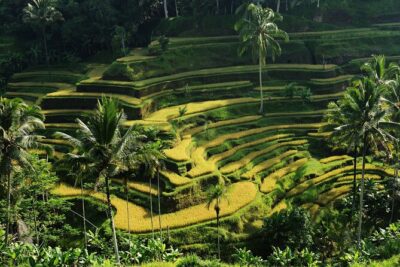
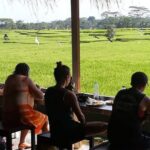
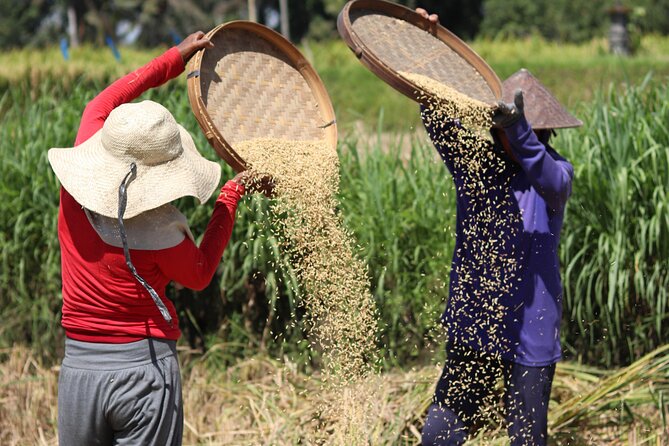
The first major experience is a walk through rice fields where you observe daily village life and different methods of rice cultivation. Even if you know little about farming, the layout and pacing help you understand what keeps the system running: rice is not a one-time planting event. It is a cycle of careful timing and ongoing work, and the village approach is shaped by that reality.
Here is what tends to click for most people on this kind of visit: you start connecting the land to the household. When farming work is close to home, everything else follows—time, schedules, even how people organize their mornings and afternoons.
Also, the walk is part observation and part education. You will have the guide to translate what you see into plain terms: what is going on in the fields, and how farming fits into everyday routines.
Coconut oil work: practical craft with real uses
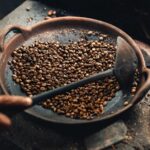
After the fields, you shift from watching agriculture to understanding a traditional, useful product: coconut oil. The experience includes artisanal production, and the big takeaway is how practical this is. Coconut oil is not treated as a novelty. It is used for cooking and also for massages, which gives the day a functional side beyond culture for culture’s sake.
This is one of the most memorable segments because it is tactile. Even when you are not doing every step with your hands, you are close enough to see the process, ask questions, and learn how everyday ingredients become household staples. In a place like Bali, that matters. You stop seeing food and fragrance as just things on a shelf and start understanding them as knowledge passed down through routine.
In the experience descriptions and guide responses, you can also see that this segment is a highlight for the team. Names like Gaia and Ganyar show up in people’s accounts as the hosts who explain the process with warmth and humor. That kind of attitude makes a craft lesson feel like a conversation, not a lecture.
Lunch in a family home: where the culture becomes real conversation
You do not just eat lunch on the way. You go to an inhabitant’s house for local lunch, served in a setting that feels lived-in. That changes everything. In a restaurant, you can enjoy food and move on. In a family home, the meal becomes a snapshot of how the household lives—what they cook, how they share, and how they talk while they eat.
The tour also includes coffee or tea, which gives you a natural pause to ask follow-up questions while the pace stays gentle. If you want a day that feels balanced, this stop is the glue. It slows the schedule down just enough for real exchange, especially if your guide is helping you connect the dots between what you see in the field and what you taste later.
Offerings-making: weaving leaves and fiber with meaning
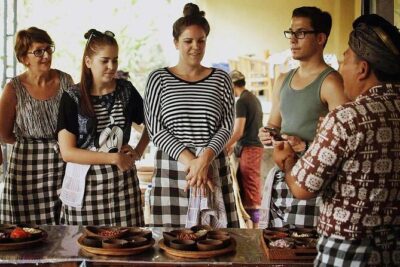
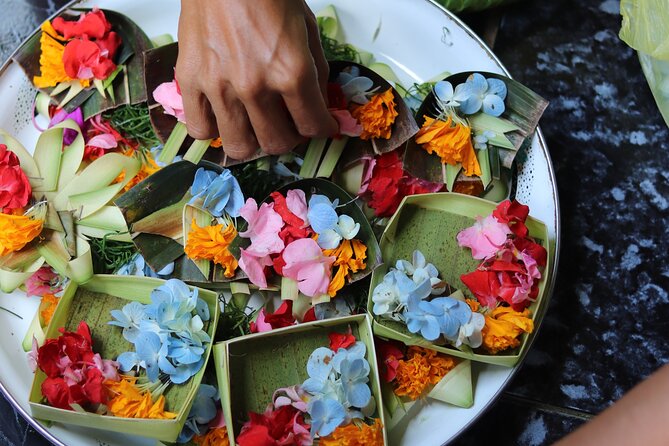
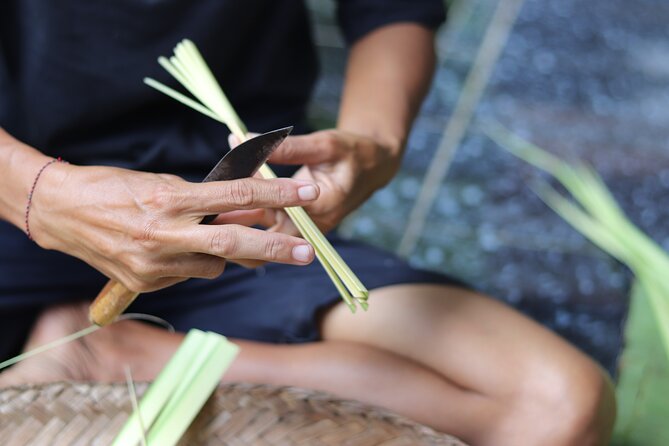
Then comes one of the most distinctive parts of Balinese daily life: making offerings. You get hands-on guidance to intertwine leaves and plant fibers to create different forms of colorful offerings, plus an explanation of what the offerings mean.
Even if you do not grow up with this tradition, you will likely understand the structure quickly. Offerings are not random decoration. They are part of a routine—done with care, with symbolism, and with a sense that daily life and spirituality are intertwined.
What makes this stop work well is that it is both visual and practical. You see the shapes, you learn the purpose behind them, and you feel the patience required to make them correctly. If you have ever wondered why something looks complex but is actually repeated daily, this kind of workshop answers that question in a way that a lecture never could.



Coffee and questions: learning the why, not just the what
You end up with that rare combo: you learn practical techniques, and you learn the context behind them. Along the day, you are invited to discover the meanings behind offerings and to connect the dots between farming, household products, and faith practices.
People often mention that the guide experience matters a lot here. In accounts tied to the experience, Gaia is described as passionate, intelligent, and funny, with French explanations that helped visitors ask plenty of questions. Even if you do not speak much, you will get enough space to participate and enough translation to feel included.
If you are traveling with kids or going as a couple, this kind of question-and-answer setup is usually a win. You can keep it simple: What is this? Why do they do it? How does it fit into the day?
Price and value: why $72.08 can make sense
At $72.08 per person for about 6 hours, you are paying for more than transportation. The included items add up in a way that feels reasonable for a family-based cultural day:
- Lunch
- Coffee and/or Tea
- Air-conditioned vehicle
- All fees and taxes
- Donation
- French or English speaking guide
- And the event ticket itself is free
The best part of the pricing logic here is that you are supporting the family side directly through the structure of the visit. You are also not scrambling to arrange your own guide for multiple stops. The guide role matters because it translates what you see into something you actually understand.
If you compare it to a half-day in Ubud that is mostly viewpoints and time sitting in traffic, this often feels more “worth it” because you get participation: farming observations, coconut oil work, offerings-making, and a meal where conversation is natural.
Logistics that affect your day (and how to plan)
This experience runs around 8:30 am and lasts about 6 hours. That timing is good for two reasons. First, you get the morning energy when working life is still active. Second, you avoid burning the entire day on transit.
The tour also ends back at the meeting point, which keeps planning simple. Pickup is offered, and the end point is the same as the start location. You do not have to figure out how to get back to central Ubud.
A few practical notes that come directly from the provided details:
- Mobile ticket is used
- Service animals are allowed
- Most travelers can participate
- Maximum group size is 5 travelers
The only item clearly not included is tip, so bring a little cash or whatever your plan is for tipping locally.
Who this is best for (and who might prefer something else)
This is a strong match if you want a day that feels grounded in real daily life. It suits:
- Couples who enjoy slower cultural days with conversation
- Solo travelers who like small groups and guided explanations
- Families, including kids, since the rhythm of walking plus hands-on making tends to hold attention
- Anyone who wants a more personal experience than a standard museum or temple circuit
It might be less ideal if you:
- Want mostly seated stops and a minimal walking component
- Prefer a big-group party vibe (the limit of 5 means it stays intimate)
- Need a very fast, high-volume checklist of sights
But if your goal is to understand how people actually live—how they grow food, make household products, and create offerings—this day is built for that.
Should you book this Balinese family day?
Yes, if you want more than photos. This is the kind of tour where the value is in participation: rice field observations, coconut oil production, a home-style lunch, and offerings-making with meaning explained in French or English by your guide. The small group size keeps it personal, and the family-host element is the heart of it.
Book it sooner rather than later, since it is typically reserved about 36 days in advance. And if you are planning your Ubud week, pair it with lighter activities the day before or after. A visit like this can be mentally engaging—by the end, you feel like you learned something you can actually repeat, like the steps of coconut oil work or how offering-making is done with care.
If you do book: bring comfortable shoes for walking, show up curious, and plan on tipping your guide and host if you felt genuinely welcomed.
FAQ
How long is the experience?
It runs for about 6 hours.
Where does it start and what time?
The meeting point is Coco Supermarket in Ubud, and the start time is 8:30 am.
What is included in the price?
It includes lunch, coffee and/or tea, air-conditioned vehicle, all fees and taxes, a donation, and a French or English speaking guide.
Is pickup available?
Yes. Pickup is offered, and the activity ends back at the meeting point.
What language options do you get with the guide?
Your guide is French or English speaking.
How many people are in the group?
There is a maximum of 5 travelers.
Do I need to pay a tip?
Tip is not included, so you should budget for tipping if you want to.
FAQ
What is the cancellation policy?
Cancellation is free if you cancel at least 24 hours before the experience’s start time.