REVIEW · BEST OF UBUD TOURS
Best Of Ubud Half Day Private Guided Tour
Book on Viator →Operated by Seminyak Tour Driver Bali · Bookable on Viator
Ubud hits a different when your day is built around photos. This private guide-led route threads together UNESCO rice terraces and the famous giant swing views, plus temple stops and waterfall time, so you’re not just rushing between sights. You’ll get a real sense of northern and central Bali in one efficient loop.
I especially love that the pacing is flexible for pictures, not a checklist. And I’ve seen guides like Ketut and Adi handle the day with calm confidence, adjusting to what you want and even slowing down when needed, instead of bulldozing through. The private setup also means you’re not stuck waiting for a crowd.
One thing to think about: parts of the route involve walking on uneven ground, and there can be narrow or steeper sections. If you have mobility limits, plan on wearing supportive shoes and take your time.
In This Review
- Key things I’d plan for
- Why a private Ubud photo day beats a rushed half-tour
- Tegalalang rice terraces and the giant swing viewpoint
- Tirta Empul: temple calm, holy water, and respectful participation
- Tampaksiring gardens and a tea/coffee pause
- Tegenungan waterfall: best photos with good timing
- Beyond the main stops: culture moments like barong and kris
- Guide quality is the real differentiator (and you can feel it)
- Price and value: what $23.08 really covers
- Timing, pacing, and what to bring for better photos
- Who should book this Ubud half-day private tour?
- Should you book it?
- FAQ
- FAQ
- How long is the Best Of Ubud half day private guided tour?
- Is pickup and drop-off included, and where does it cover?
- Are entrance tickets included?
- What does the tour include besides the guide and transport?
- Can I request a vegetarian option?
- What is the dress code?
Key things I’d plan for
- Private guide + AC car: just your group, with pickup and drop-off across Bali areas
- Photo-first stops: Tegalalang rice terraces, Tegenungan waterfall, and the swing viewpoints
- Temple experiences: Tirta Empul includes a holy water cleansing ritual (respectful participation)
- Culture moments: barong and kris dance performance is part of the overall experience
- Guide names I’d remember: Adi, Ketut, Dee, Putu, Dewa, Nyoman, and Moyo came up in people’s experiences
- Walking comfort matters: expect some uneven paths and occasional steeper bits
Why a private Ubud photo day beats a rushed half-tour
For $23.08 per person, what you’re really buying is time and attention. You get pickup and drop-off across South, North, East, West, and Middle Bali areas, plus a private AC vehicle and a professional driver/guide. That means less energy spent on logistics and more on enjoying each place.
The other big value is that this isn’t strictly a fixed script. Even with a planned route, guides on this kind of tour tend to match the pace to your group. I like that because Ubud photography is not a one-minute job. You’ll want a moment for wide shots, then a moment for smaller details—water, temple textures, farmers at work, and the layered terraces.
Also, the tour is marketed as a private experience: only your group participates. That matters at popular photo locations, where you can otherwise lose patience to crowds. With your own guide, you can plan around the time of day the light hits best and adjust when someone in your group needs a rest.
You can also read our reviews of more guided tours in Ubud
Tegalalang rice terraces and the giant swing viewpoint
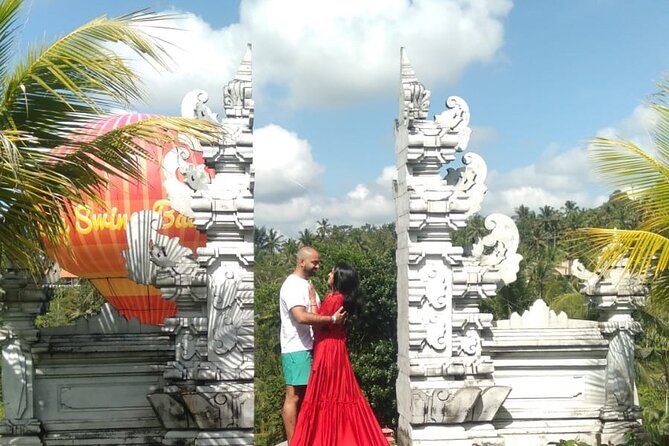
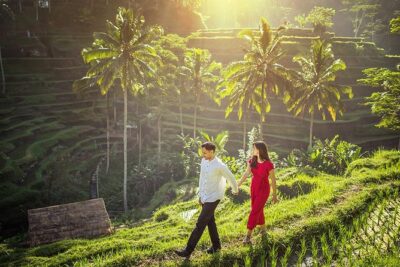
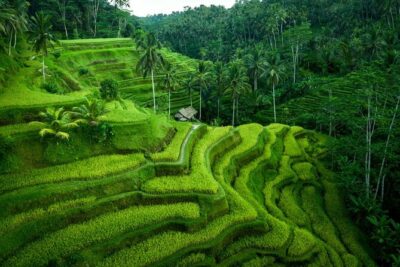
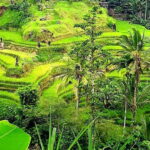
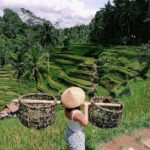
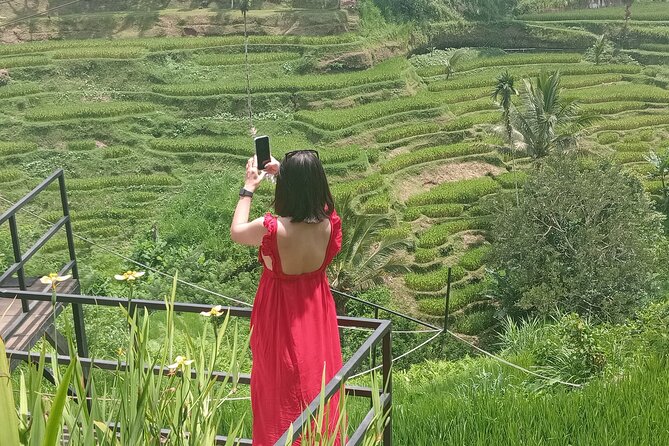
Your day often starts with the star photo stop: Tegalalang Rice Terrace. This area is famous for dramatic, stepped fields that cascade across the hills. In plain terms, it’s the kind of place where you keep raising your camera because every angle looks good.
What I like here is the combination of viewpoint + structure. Rice terraces create natural leading lines, and the valley views help you photograph depth. You’ll typically have about an hour here, which is long enough to get both overview shots and some tighter frames of the terrace edges.
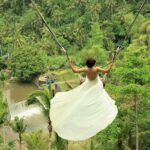
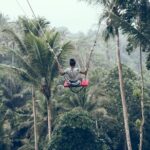
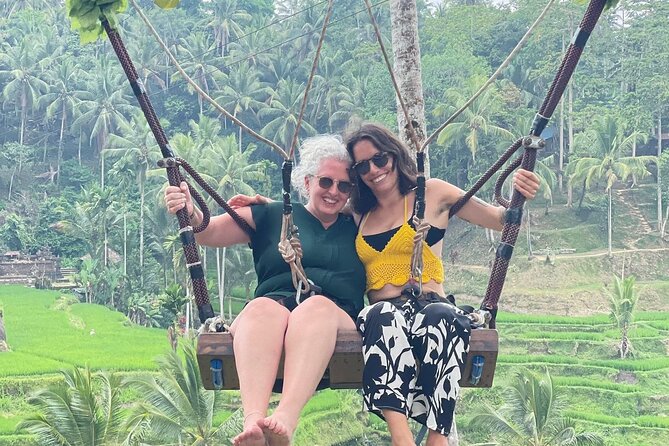
And yes, the giant swing is part of the selling point. The whole idea is to get you a higher perspective over Bali’s countryside so your photos have that wow factor. If you’re into photography, the swing viewpoint can also help you frame the terraces in a way flat ground won’t.
A possible drawback: the photo spots around terraces often involve uneven paths and some stairs. So wear shoes with grip and keep an eye on footing, especially if the ground is wet.
Tirta Empul: temple calm, holy water, and respectful participation
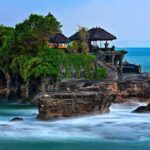
Next is Tirta Empul Temple, a place tied to a Hindu water cleansing ritual. The setup is simple: you visit the holy water area and can take part in the cleansing ritual in the temple’s holy water.
Even if you’re not religious, this stop can be meaningful because it shows Bali’s living spirituality. It’s also very photo-friendly, but you’ll want to stay respectful. Watch where people are standing, follow your guide’s cues, and avoid treating the space like a theme park. Your best photos usually come from patience—wait for the right moment when the scene isn’t crowded and you’re not blocking anyone.
The good part: you’ll typically have about an hour here. That gives you time to understand what you’re seeing, not just snap a few images and rush away.
Consideration: temple areas can involve rules around clothing and behavior. The tour lists a smart casual dress code, which is a good baseline for avoiding awkward moments.
Tampaksiring gardens and a tea/coffee pause
After the temple stop, the route often shifts to Tampaksiring, where you’ll visit local residents’ gardens known for colorful plants, including seasonal varieties. This is a breather from heavy crowds and stone-and-steps sightseeing.
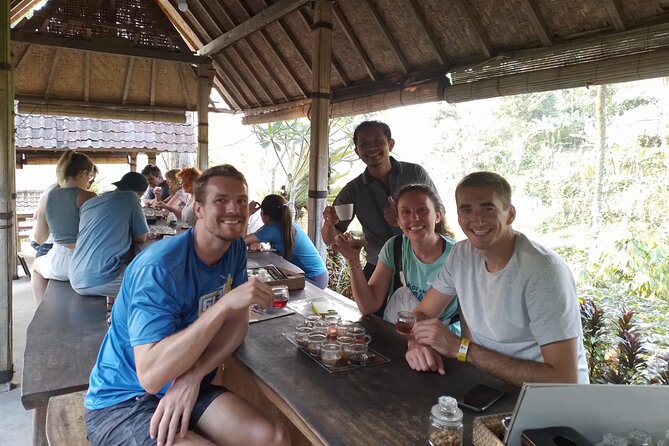
I like this part because it gives you a calmer pace and a chance to reset. It’s also practical: you get a drink break. The tour notes that tea and coffee are served while you sit relaxed on the garden terrace.
This is also where you can get more variety in your photos. Instead of temples and terraces, you’re working with textures: leaves, garden paths, and softer light filtering through plants.
One small drawback: garden walks still mean you’ll move your legs. If you’re someone who tires fast, keep that energy for the photo moments you really care about most.
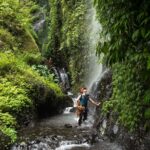
Tegenungan waterfall: best photos with good timing
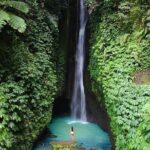
Then you move to Tegenungan Waterfall, one of the more memorable waterfall stops around Ubud. The goal here is straightforward: enjoy the views and get the best pictures, with your guide helping you find the angles that work.
What I like about a waterfall stop is the contrast it brings to the day. If you’ve spent the morning on terraces and temple stone, waterfall scenery gives you motion and a different kind of photo texture—mist, rocks, and long sightlines down the falls.
The guide factor matters here too. Waterfalls can be tricky for framing because viewpoints can change depending on where people are standing. A good guide helps you photograph without creating friction for others.
Practical consideration: water areas can be slippery. Stick to stable footing, and plan for the fact that one hour can feel short if you want more than a few hero shots.
You can also read our reviews of more private tours in Ubud


Beyond the main stops: culture moments like barong and kris
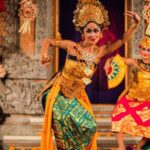
The route is built around more than landscapes. The overall experience includes cultural elements like a barong and kris dance performance, plus key temple and nature photo spots around Ubud such as Gunung Kawi Sebatu temple and Ubud Monkey Forest.
I like these additions because they make the day feel more like Bali, not just a photo circuit. Ubud is known for arts and rituals, and dance performances like barong and kris can add meaning to the pictures you’re taking. You’ll also get contrast: bright temple and dance scenes next to quiet water-temple routines and countryside views.
In people’s experiences, guides have also sometimes woven in extra cultural and local flavor stops. I’ve seen mentions of bali art like batik-making, plus coffee plantation visits with tastings, and other local shopping or refreshment breaks when time and your interests align. That adaptability is a big reason this style of private tour can feel better than a strictly timed bus day.
Guide quality is the real differentiator (and you can feel it)
At this price point, the logistics are solid, but what makes the day feel great is the human side. People repeatedly mentioned guides and drivers by name—Adi, Ketut, Dee, Dewa, Putu, Nyoman, and Moyo—and the patterns are consistent: they’re friendly, adjust the plan to your group, and keep the car ride smooth and comfortable.
One practical win: guides can slow the itinerary when someone needs extra time. I’ve read accounts of tours being adjusted for physical limitations, and that’s exactly what you want on a day with terraces, temple steps, and waterfall paths. You don’t want a guide who treats discomfort as an inconvenience.
Another detail I value: some guides make the day feel personal, like helping with extra needs on the way back. Even small things—finding a supermarket stop or answering questions without rushing—can turn a standard tour into one you remember.
Price and value: what $23.08 really covers
Let’s talk value honestly. $23.08 per person sounds almost too good for a private guided day, but the reason it can work is that the core inclusions are clearly listed:
- Pickup and drop-off across many Bali areas
- Private AC transportation
- Entrance tickets described as included under premium all-inclusive wording
- Bottled water, plus tea and coffee time
- Insurance
- Mobile ticket
So you’re not paying extra for basic logistics like transport and guidance, and you’re not stuck doing math at every gate.
That said, there’s a caution line in the details: if you go to additional private-guided attractions beyond the core set, there may be special entrance ticket fees (the estimate listed is around $10 per person). I’d treat this as a flexible add-on situation, not a surprise tax. When you book, ask your guide what is fully included for your exact route.
Also, the tour is listed as about 6 hours. In practice, I’d plan for the day to run long enough to feel like a full outing. Some accounts point to nearly 9 hours depending on how the route unfolds and how much time gets spent at photo stops.
If you go in with that mindset, the value gets even better: you’re essentially getting a private photo-and-culture day with multiple named stops.
Timing, pacing, and what to bring for better photos
This tour works best if you travel prepared to slow down. Ubud photography rewards patience. Even if the itinerary says one hour per stop, your best shots usually take longer than you think—especially at Tegalalang and near the waterfall viewpoints.
Here’s what I’d bring:
- Comfortable, grippy shoes for uneven paths
- A light layer if you’re out early or in shaded temple areas
- Refillable water even though water is provided (heat can sneak up)
- Cash or card for any extra entrance fees if you choose additional attractions
- A phone or camera strap for terrace and waterfall moments (you’ll move more than you expect)
Also, the tour notes that it requires good weather. If rain hits hard, plans can change. On a day like this, that can matter a lot for river access points and waterfall conditions.
Who should book this Ubud half-day private tour?
This is a great fit if:
- You want UNESCO rice terraces, a major waterfall, and temple moments all in one guided route
- You care about photos and want time to frame shots instead of rushing
- You like cultural experiences like barong and kris dance
- You’d rather have a guide like Ketut, Adi, Dee, Putu, Dewa, Nyoman, or Moyo guiding the day than following an audio app
I’d think twice if:
- You need minimal walking and zero uneven surfaces. The route can include steeper/narrower areas.
- You expect a strict, predictable “half-day” with no extra time. Even though it’s listed around 6 hours, real-world pacing can stretch.
Should you book it?
Yes, if you want a private, photo-first Ubud day that mixes countryside views with temple and cultural moments. The value is strongest when you care about the experience beyond ticking boxes—time for photography, a guide who can adjust, and comfort with AC transport and included basics.
If you’re sensitive to walking on uneven ground, plan carefully with shoes and expect to take breaks. And if you’re the type who wants every minute tightly scheduled, ask your guide to keep the pacing strict from the start.
FAQ
FAQ
How long is the Best Of Ubud half day private guided tour?
The duration is listed as about 6 hours.
Is pickup and drop-off included, and where does it cover?
Pickup and drop-off are included across South Bali, North Bali, East Bali, West Bali, and Middle of Bali.
Are entrance tickets included?
Entrance tickets are listed as included under premium all-inclusive wording. There is also a note that special private guided only pay entrance tickets if you visit all attraction, with an estimate around $10 per person.
What does the tour include besides the guide and transport?
It includes a professional driver/guide, private AC transportation, bottled water, and a tea and coffee time, plus insurance. A mobile ticket is also provided.
Can I request a vegetarian option?
Yes. A vegetarian option is available if you advise at the time of booking.
What is the dress code?
The dress code is smart casual.