Tukad Cepung feels like a secret movie set. This one-day Bali waterfall loop from Ubud pairs morning timing at the canyon waterfall with an intimate small-group pace (up to 10 people). You’ll hit the big-photo stops and also quieter falls, so your day feels full but not rushed.
I especially like how the schedule is built around light and crowd control, so you spend less time dodging other cameras and more time watching water do its thing. I also like that you’re not stuck handling logistics because the day includes direct hotel transfers and an air-conditioned ride.
One consideration: entrance fees and meals are not included, so you’ll want to budget a bit extra once you’re on-site.
In This Review
- Key things to know before you go
- Why this Ubud waterfall circuit makes sense
- Tukad Cepung Waterfall: the canyon light show at 7:00 am
- Tembuku Waterfall: a quieter village stop with free entry
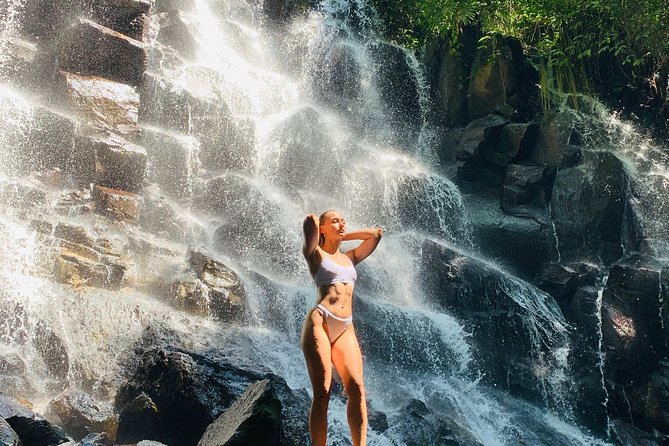
- Kanto Lampo Waterfall: side-cascade rocks and big-photo potential
- Jehem Waterfall: peaceful water, a natural pool, and time to breathe
- Price and value: $44 for transfers, guide, and the right timing
- Guides and the small details that matter
- What to bring (and what to plan around)
- Who this tour fits best in your Bali plan
- Should you book Bali Waterfalls in One Day?
- FAQ
- What time does the tour start?
- How long is the experience?
- Is hotel pickup included?
- Are entrance fees included for all waterfalls?
- Is the group small?
- Are meals included?
- Can I swim at Jehem?
Key things to know before you go
- 7:00 am start for better light: Tukad Cepung is timed early so you can catch the effect inside the canyon.
- Up to 10 people keeps it manageable: the group size is small, which helps you move as a group without feeling herded.
- Two slower, lower-crowd stops: Tembuku and Jehem are planned to be calmer than the most crowded photo spots.
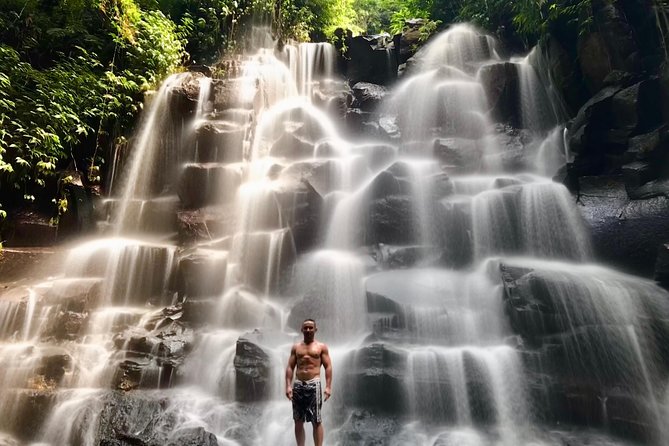
- Kanto Lampo is the rock-and-water photo wall: it’s built for side-view shots with dramatic rock formations.
- Jehem includes a natural pool: you’ll have time to swim if conditions and your comfort level allow.
- Mobile ticket, but you still pay entrances: the tour provides a mobile ticket, while waterfall entrance fees are on your own.
Why this Ubud waterfall circuit makes sense
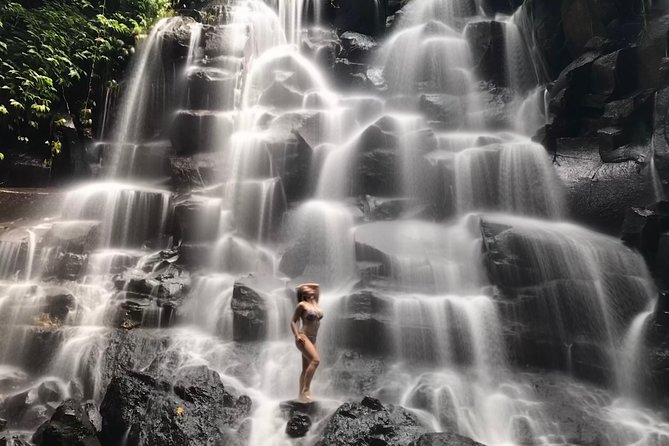
If you only have one day in Ubud and you still want that Bali waterfall fix, this kind of tight loop works. You’re not trying to cram five separate adventures across the island. You’re doing one region, one route, and a schedule that actually respects timing.
The biggest value is how the day is paced. You get a morning start, a few hours between stops, and enough time at each waterfall to actually look around and not just sprint for photos. The tour is also run in an air-conditioned vehicle, with mineral water included, so you start the day feeling human.
Also, it’s a small group. With a maximum of 10 travelers, you’re less likely to feel lost, and your guide can answer questions without shouting over a busload.
That said, this is still a full day. Plan your energy for walking on uneven ground, moving between sites, and getting back to Ubud when you’re ready to eat and crash.
You can also read our reviews of more tours and experiences in Ubud


Tukad Cepung Waterfall: the canyon light show at 7:00 am
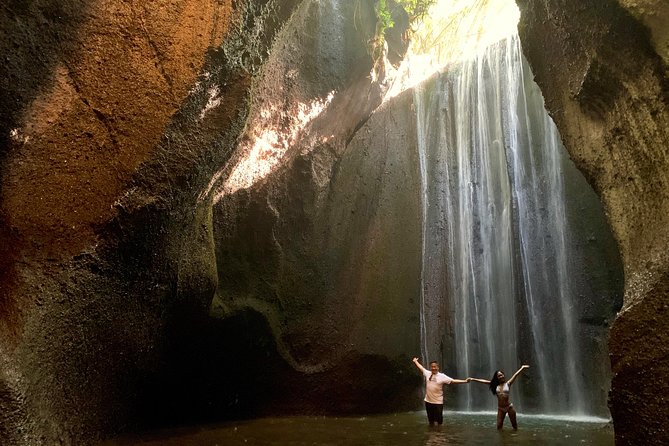
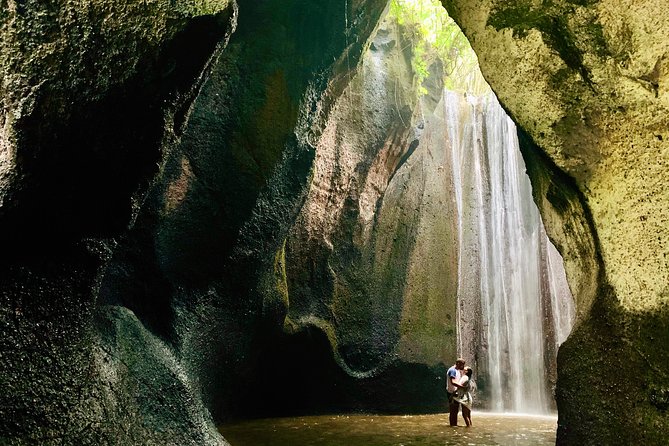
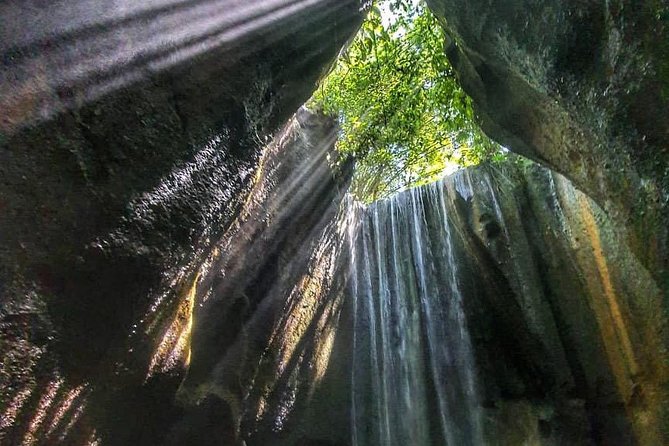
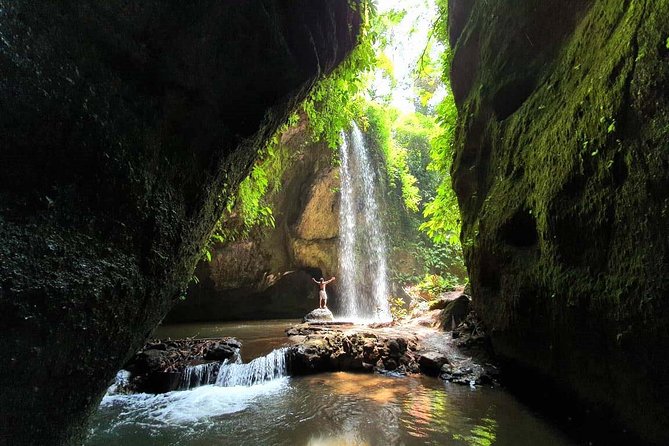
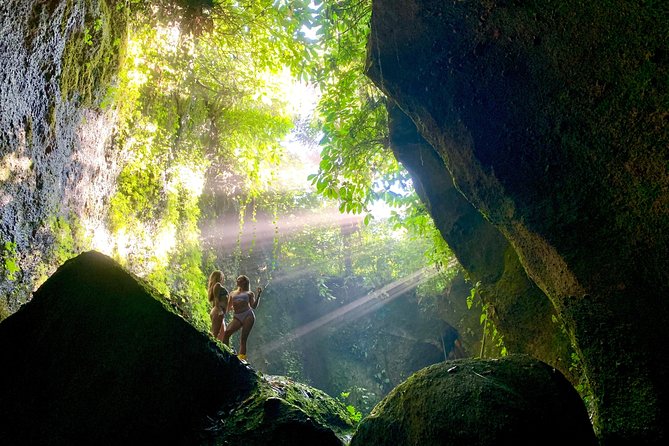
Tukad Cepung is the reason to wake up early. This waterfall is inside a canyon, and the main magic is how sunlight reaches the water channel. When you arrive in the morning, you get the best shot at that light effect without playing photo-line roulette.
The experience here isn’t just the waterfall itself. It’s the walk to the viewing area. You’ll move through a cave-like, canyon environment where the sound of water builds as you get closer. It’s a very different vibe than the open, front-facing waterfalls where you can see everything right away.
What you’ll love: the timing. Being there early changes the whole feel of the place, from the lighting to how comfortably you can shift position for photos.
Potential drawback: you may find the path more demanding than you expect. Expect natural, uneven terrain, and plan to take your time.
If you’re serious about photos, this stop is where you’ll get the biggest payoff. Charge your phone or camera before you go, because the canyon lighting can look dramatic on screens and you’ll want to capture it without rushing.
Tembuku Waterfall: a quieter village stop with free entry
After Tukad Cepung, you’ll head to Tembuku. This is one of the stops designed to be calmer than the famous areas. It’s described as a hidden waterfall inside the village, and the visit time is long enough to slow down.
The practical win is the crowd rhythm. When you get a quieter stop after a morning icon, the day feels balanced. You’re not just chasing famous names. You’re also seeing how locals live close to nature, and how a waterfall can be part of daily village scenery.
This one also has free admission, which matters for your budget. You get a full waterfall experience without the added gate fee.
What you’ll love: the calmer pace and the village setting.
Potential drawback: since it’s more local and less famous, you may not see the same dramatic “wow” structure as at the most photographed sites. It’s still worth it because the atmosphere is softer and less chaotic.
This stop is a good time to look for small details. Watch how people move around the falls, how the area is used, and how the waterfall fits into the village rhythm.
Kanto Lampo Waterfall: side-cascade rocks and big-photo potential
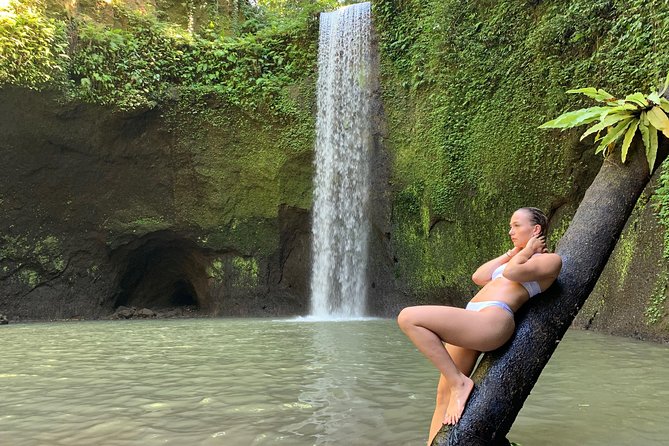
Kanto Lampo is one of Bali’s more anticipated waterfalls right now, and it earns that reputation. The look here is distinctive: wide rocks and side views that make the water seem like it’s spilling along a rock wall. It’s designed for photos, especially if you like angles and the layered feel of cascades.
You get about an hour here, which is usually enough to take photos, find a decent viewing spot, and spend a few minutes just watching the water move. This isn’t a long hike day, so an hour can feel just right if the ground is busy or the line of sight is limited.
What you’ll love: the photo-friendly rock-and-water design.
Potential drawback: because this is a popular spot, you’ll likely share space with more people than at Tembuku and Jehem.
One tip for a better Kanto Lampo experience: don’t treat it like a quick checklist. If you arrive and immediately shoot from the first angle, you may miss the strongest side-view compositions. Take 5 minutes to scan your surroundings first, then commit.
Entrance fees are not included for this stop, so budget for that too.
Jehem Waterfall: peaceful water, a natural pool, and time to breathe
Jehem is where the itinerary slows again. This stop is described as peaceful, with natural source water flowing into a natural pool. That pool is the big draw because you can swim if you want, and the setting feels less like a crowded photo platform.
Spending time at Jehem after Kanto Lampo is a smart move. It helps you balance the day: one popular waterfall for photos, then a calmer one where you can just be around nature. The change in pace is also practical. Your feet and shoulders get a breather before the final stretch.
There’s also free admission here, which is a nice budget break. When your day has both paid and free entry points, the overall value starts to look a lot better.
What you’ll love: the sense of quiet and the chance to swim in a natural pool.
Potential drawback: the pool and water conditions can affect comfort. If you’re not into swimming, you’ll still enjoy the waterfall and the nature around it, but the biggest payoff is for people who like to get a little wet.
If you do plan to swim, keep an eye on your own comfort and the footing around the pool. This is a natural setting, not a man-made resort zone.




Price and value: $44 for transfers, guide, and the right timing
At $44 per person, the headline cost looks low for a one-day waterfall route. Here’s where the value really comes from:
- Hotel pickup and drop-off in Ubud: the tour includes direct two-way transfers.
- Air-conditioned vehicle: you’re not baking in transit between sites.
- Driver as guide plus mineral water: you’re paying for more than just a car ride.
What you should know is that entrance fees are on your own for the waterfalls. Meals are also excluded. So the true total for the day depends on how many paid entry stops apply to you and what you choose for food.
Still, the structure helps. You get two free admission stops (Tembuku and Jehem), which offsets part of the paid ones. Tukad Cepung and Kanto Lampo are the stops where entrance fees are not included, so your costs concentrate there.
In plain terms: if you’re happy paying a little at gates for the big-name sites, this tour is good value because the transport, timing, and small-group flow are already handled.
One more detail that helps: the tour uses a mobile ticket. That can reduce friction on the day, especially if you don’t want to manage paper tickets.
Guides and the small details that matter
This is one of those tours where the guide can make the day feel lighter. The day runs smoothly because the driver is also acting as your guide, and several guides associated with this itinerary have been highlighted for being personable and helpful.
Some guide names you might recognize from prior departures include Alex, Putu Anom, Joe, Wayan Subur, and Ray. One review specifically noted that Wayan Subur spoke good English, and another noted how Alex was accommodating and connected culture with what you’re seeing.
Even if your guide isn’t named exactly the same as someone else’s, you can still expect a similar focus: timing to reduce crowd stress, simple navigation, and cultural context that helps the waterfalls feel like part of real life in Bali, not just a backdrop.
Also, consider this a photography-focused route. The itinerary is built around viewing angles and timing. If you want great shots without spending your whole day waiting, that matters.
What to bring (and what to plan around)
The tour encourages you to charge your phone or camera, and I agree with that. You’ll want battery for Tukad Cepung’s light effect and Kanto Lampo’s rock textures.
Beyond that, plan your day like this:
- Bring cash or a payment method that works for entrance fees at the paid stops.
- Wear footwear that handles wet, uneven surfaces. You’ll be walking in natural settings.
- Bring a light layer if mornings feel cool to you. Bali mornings can surprise you.
Meals are excluded, so you’ll either eat on your own schedule or rely on whatever breaks you get during the day. A full waterfall day can make you hungry fast, so plan for it.
Who this tour fits best in your Bali plan
This is ideal if you want:
- A one-day waterfall hit without spending your whole trip commuting across the island.
- A small-group vibe that feels personal rather than chaotic.
- A route that includes both major photo spots and quieter natural areas.
It’s also a good fit for couples, solo travelers, and friends who want a guided plan but don’t want to feel stuck in a big group.
You might choose something else if:
- You hate early mornings. The day starts at 7:00 am, and Tukad Cepung is the reason.
- You want a “no extra costs” day. Entrance fees and meals are not included.
- You’re looking for a long, trekking-style waterfall adventure. This is a time-managed circuit with about an hour to 1.5 hours at each stop.
Should you book Bali Waterfalls in One Day?
If your goal is simple—see several Bali waterfalls in one day, maximize the photo moments, and avoid the worst crowd timing—this tour is a strong choice. The early arrival at Tukad Cepung and the mix of more famous and less crowded stops make it feel efficient without being frantic.
I’d book it if you like waterfalls, you’re comfortable paying entrance fees at a couple stops, and you want the day handled for you with hotel pickup and a small group. I’d skip it if you want a fully all-inclusive day cost, or if you’re not into walking on natural terrain and potentially swimming in a natural pool.
If you’re on the fence, think about this: the itinerary is built around light, crowd control, and variety. That’s exactly what a one-day waterfall plan should do.
FAQ
What time does the tour start?
The tour starts at 7:00 am.
How long is the experience?
It runs about 6 to 7 hours.
Is hotel pickup included?
Yes. Two-way transfers are offered directly from your Ubud hotel.
Are entrance fees included for all waterfalls?
No. Entrance fees are excluded, and you pay them on your own for all waterfalls.
Is the group small?
Yes. The maximum group size is 10 travelers.
Are meals included?
No. Meals on tour are not included.
Can I swim at Jehem?
Jehem includes a natural pool, and the tour description notes that you can swim there.